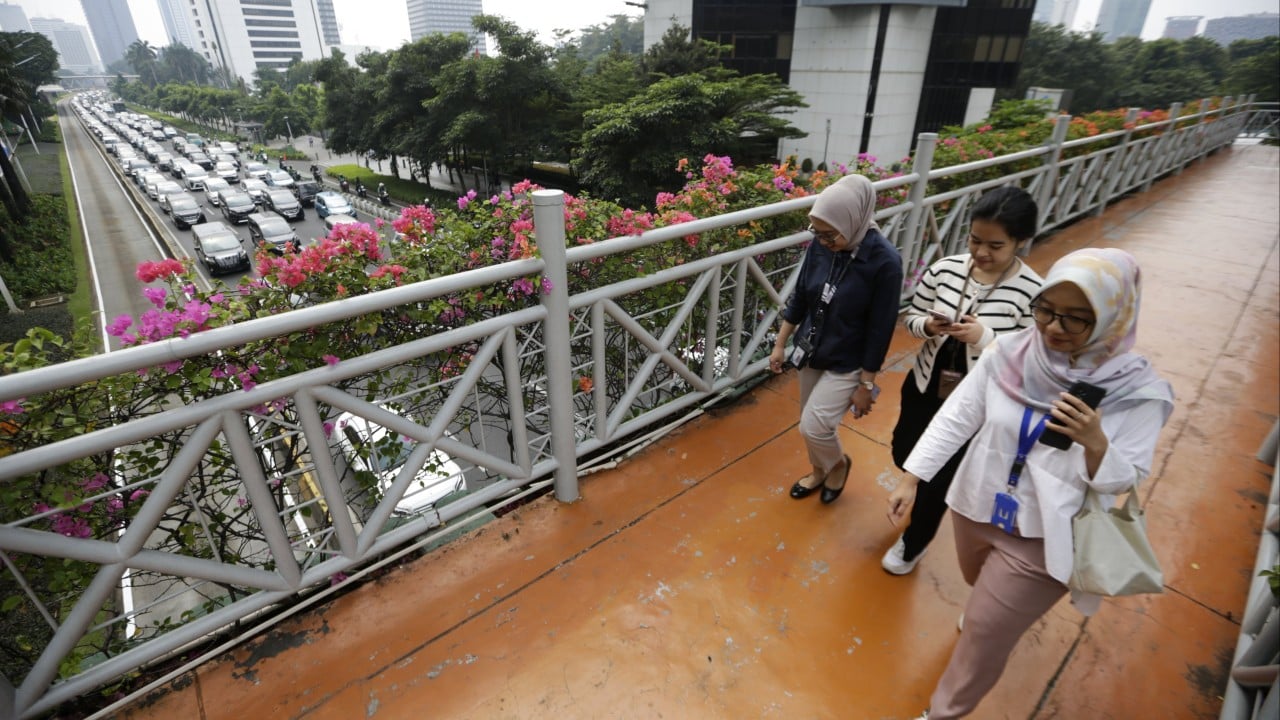
The latest round of "happiness" surveys across the Asia-Pacific region has produced a result so predictable it borders on professional negligence. Indonesia has once again been crowned the champion of workplace satisfaction. The headlines paint a picture of a soulful, resilient workforce that has mastered the art of work-life balance while their neighbors in Singapore and Tokyo wither under the fluorescent lights of corporate burnout.
It’s a lie.
Not a malicious lie, but a statistical illusion born from a fundamental misunderstanding of what "happiness" actually measures in a developing economy. When researchers ask an Indonesian worker if they are satisfied, they aren't measuring the quality of the management or the efficiency of the tech stack. They are measuring the distance between reality and a very low bar.
We are mistaking a lack of friction for a presence of fulfillment. If we continue to celebrate this "happiness" without interrogating the stagnant productivity and systemic underemployment behind it, we aren't praising a culture—we are patronizing a nation.
The Tyranny of the Grateful Workforce
In my years consulting for multinational firms trying to plant roots in Jakarta and Surabaya, I’ve seen the "happiness" metric weaponized. Regional directors love it because happy workers don't unionize, they don't jump ship for a 10% raise, and they don't complain about the lack of upward mobility.
But here is the reality: Indonesian workplace "satisfaction" is often a byproduct of cultural fatalism. The local concept of nrimo—the philosophy of accepting one’s lot in life with grace—is a beautiful social lubricant, but it is a lethal corporate KPI. When you combine a high degree of religious piety with a history of economic volatility, you get a workforce that is thankful to have a desk, regardless of whether that desk is attached to a dead-end job.
The surveys fail to account for the expectations gap. If you ask a software engineer in Singapore if they are happy, they compare their life to a global standard of elite performance and wealth. They are miserable because they are ambitious. If you ask a mid-level manager in Jakarta, they compare their life to the millions of their countrymen still struggling in the informal economy. They are "happy" because they are safe.
This isn't workplace engagement. It's survivalist relief.
The Productivity Paradox: Why Happy Doesn't Mean Healthy
If Indonesia has the happiest workers, why is its labor productivity lagging so far behind its peers? According to data from the Asian Productivity Organization (APO), Indonesia's labor productivity per person employed is a fraction of Singapore’s and significantly lower than Malaysia’s.
We have a "Happiness-Productivity Gap" that no one wants to talk about. The competitor article argues that Indonesian workers are more engaged. I argue they are more insulated.
In the Indonesian corporate structure, social harmony (the "Asal Bapak Senang" or "Keep the Boss Happy" culture) takes precedence over objective results.
- Conflict Avoidance: Critical feedback is viewed as a personal attack, so it is never given.
- The Attendance Fallacy: Presence is confused with performance. If everyone is smiling at the 4:00 PM coffee break, the manager marks it as a win.
- Stagnant Innovation: True innovation requires a level of dissatisfaction with the status quo.
If everyone is perfectly happy with how things are, why change? This collective contentment acts as a sedative. It prevents the necessary "creative destruction" that drives a modern economy forward. We are trading long-term economic dominance for short-term atmospheric pleasantness.
The Trap of the Informal Economy
One reason "workplace happiness" scores so high is that the people being surveyed are the lucky ones. They are the 40% in the formal sector. They have BPJS (healthcare), a pension plan, and a steady paycheck.
The "happiness" being reported is actually survivor's guilt masked as gratitude.
Go talk to the Gojek drivers, the street vendors, and the day laborers who make up the backbone of the Indonesian economy. They aren't in these surveys. The surveys target the air-conditioned offices of Sudirman and Kuningan. When you only interview the people who won the lottery, don't be surprised when they tell you the lottery is a great system.
Stop Measuring Smiles, Start Measuring Agency
The "People Also Ask" sections of business journals are obsessed with "How can I replicate Indonesian culture in my office?"
You shouldn't. Unless you want a workforce that will never tell you your product is failing until it's too late to fix it.
Instead of chasing a "satisfaction" score that is essentially a measure of how little your employees expect from you, you should be measuring agency.
- Can an employee challenge a senior executive without fear?
- Is the "happiness" derived from the work itself, or from the fact that the work is easy enough to ignore?
- Is your turnover low because you’re a great employer, or because your employees don't believe they can find anything better?
High turnover in a high-growth tech environment is often a sign of a healthy, competitive ecosystem where talent knows its value. Low turnover in a stagnant market is a sign of fear.
The Brutal Truth for Investors
If you are an investor looking at Indonesia and you see "Happiest Workforce," you shouldn't see an opportunity. You should see a red flag. It means you are entering a market where the labor force is conditioned not to push back.
In the short term, this is "seamless." In the long term, it means you will struggle to find leaders who can operate independently. You will find a workforce that excels at execution but fails at strategy. You will find that "happiness" is the greatest obstacle to the "growth mindset" you claim to value in your annual reports.
The Indonesian worker isn't happy because the system is working; they are happy because they have learned to survive the system.
Stop patronizing the region with fluff pieces about their "unbeatable spirit." If you want to actually help the Indonesian worker, start making them unhappy. Give them higher standards. Give them better tools. Give them the permission to be frustrated with mediocrity.
Contentment is the enemy of progress. If you want a winning team, stop looking for the one that smiles the most and start looking for the one that is the most bothered by the way things are currently done.
Happiness is a luxury for the retired. For a developing powerhouse, it’s a trap.
Burn the surveys. Increase the pressure. Give them a reason to be ambitious instead of just being grateful.