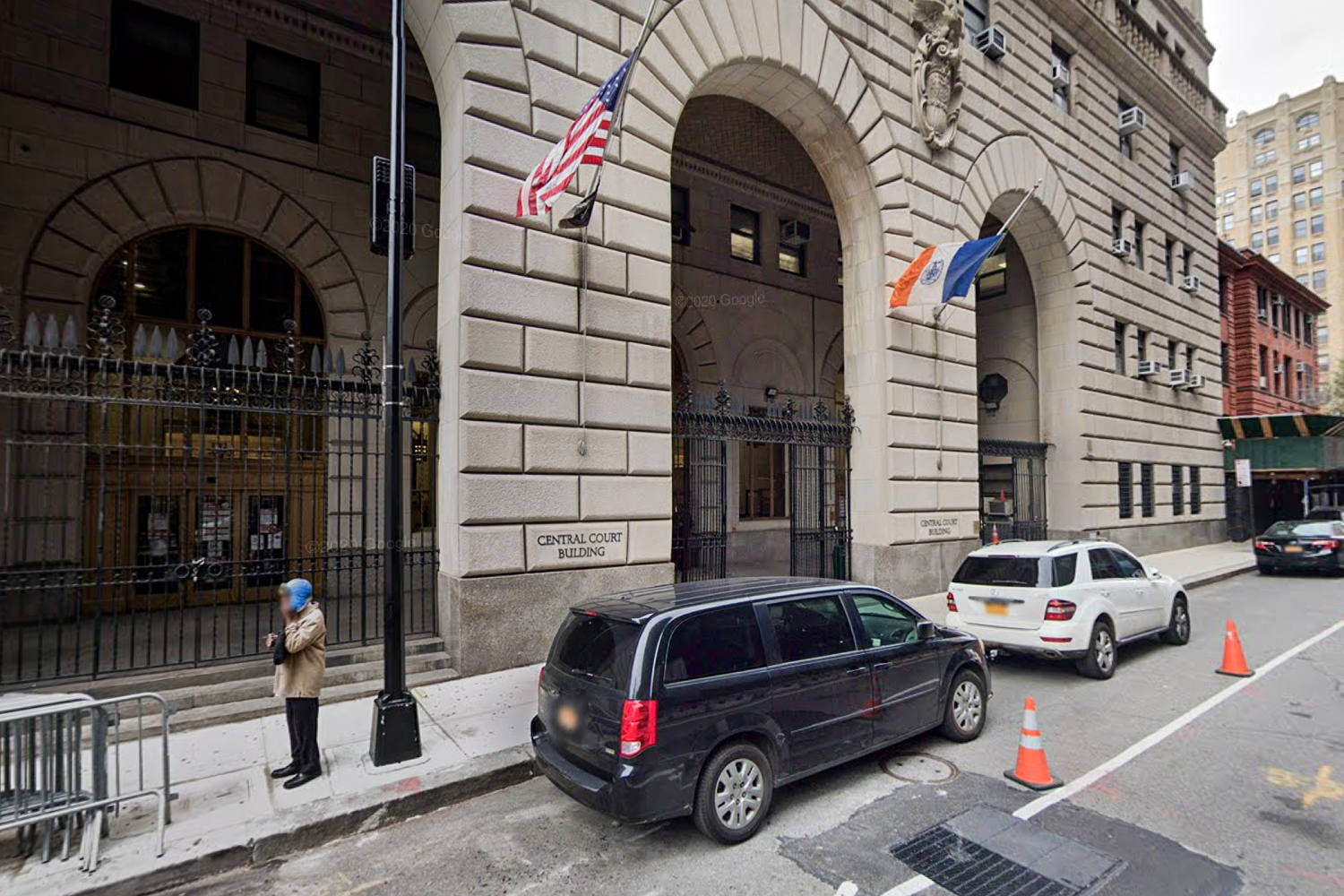
A heavily pregnant woman went into active labor and gave birth on a hard wooden bench inside Brooklyn Criminal Court, exposing severe systemic gaps within New York City’s overextended central booking system. While initial local reports framed the incident as a shocking, isolated medical anomaly, court personnel and legal defense attorneys confirm that the crisis was entirely predictable. The administrative gridlock that forces pregnant defendants to sit for up to 24 hours in squalid, high-stress environments before seeing a judge has turned the constitutional right to a speedy arraignment into a hazardous endurance test.
This incident is not a bizarre quirk of municipal timing. It is the direct consequence of structural failure. For a more detailed analysis into this area, we recommend: this related article.
The 24 Hour Bottleneck
New York State law requires that an arrested individual be brought before a judge for arraignment within 24 hours of their initial detention. In Brooklyn, meeting this statutory deadline has become increasingly rare due to systemic inefficiency.
When a pregnant individual enters the system, they face a gauntlet of administrative processing stages. The process begins at the local precinct, moves to the central booking holding cells, and eventually ends in the crowded waiting areas of the 120 Schermerhorn Street courthouse. Every single step along this pipeline is plagued by delays. For broader background on this topic, detailed reporting can also be found on Associated Press.
- Fingerprint Processing Backlogs: Delays at the state level regularly stall the return of official criminal history reports, holding up the drafting of formal complaints.
- The Officer Transit Delay: Transporting arresting officers from outlying precincts to downtown Brooklyn to sign paperwork creates massive administrative drag.
- The Central Booking Bottleneck: Hundreds of individuals are funneled through a single, understaffed intake system daily, creating an immediate operational logjam.
For a woman in the final weeks of pregnancy, these standard administrative delays carry severe physiological risks. The severe psychological distress of an arrest combined with prolonged sleep deprivation can actively induce premature labor.
Public defenders have long warned that the holding facilities beneath the courthouse are entirely unfit for medical triage. Air quality is poor, access to clean water is highly restricted, and defendants are forced to stand or sit on concrete floors for hours at a time. When a medical emergency inevitably manifests under these conditions, the system is fundamentally unequipped to respond.
The Failure of Courtroom Medical Triage
When the woman began showing clear signs of advanced labor on the courtroom bench, the institutional response was dangerously slow. Courthouses do not maintain full-time, specialized medical staff on-site. Instead, they rely on basic private security contractors and New York City court officers who possess only rudimentary first-aid training.
"We are trained to secure a room and call 911," says one veteran court officer who spoke on the condition of anonymity. "We are not emergency medical technicians, and we are certainly not qualified to deliver babies on a wooden bench in a public gallery."
The standard protocol during a courthouse medical emergency is to summon New York City EMS. However, the emergency response network in downtown Brooklyn is perpetually burdened by high call volumes and heavy traffic congestion.
By the time emergency medical services arrived at the scene, the delivery was already complete. Court officers and desperate family members had to use makeshift supplies to manage a highly sterile, high-risk medical procedure right in the middle of a public room.
This operational breakdown highlights a massive policy blind spot. While the city pours significant resources into courthouse security infrastructure—such as advanced magnetometers, biometric access points, and surveillance networks—it has completely neglected basic health and safety infrastructure for vulnerable populations trapped in legal limbo.
The Legal and Ethical Gray Zone
The holding of visibly pregnant defendants for prolonged periods without specialized medical supervision raises serious constitutional concerns. Under the Fourteenth Amendment, pretrial detainees have a clear right to adequate medical care. Forcing a laboring woman to navigate the standard central booking pipeline represents a blatant failure to provide that basic standard of care.
Public defenders frequently argue that prosecutors and judges rarely prioritize the cases of pregnant defendants to minimize their time in custody. Instead, these individuals are routinely subjected to the exact same administrative delays as every other person in the daily docket.
Standard Arraignment Timeline vs. Medical Reality
[ Precinct Arrest ] -> [ Central Booking Intake ] -> [ Courtroom Waiting Area ] -> [ Arraignment ]
0 Hours                12 Hours                      20 Hours                   24+ Hours
                       *High-stress environment* *Physical exhaustion* *Labor risk*
The issue extends far beyond the borders of Brooklyn. Across the country, major urban court systems are struggling to handle the complex medical realities of the people entering the criminal justice network. When a local system prioritizes strict bureaucratic processing over basic human biology, the results are both dangerous and humiliating.
The city cannot continue to treat these incidents as unpredictable freak occurrences. If the underlying administrative bottlenecks in the central booking pipeline are not aggressively addressed, the next courthouse medical emergency could easily end in tragedy rather than a frantic, improvised delivery on a public bench.
The solution requires an immediate, mandatory protocol that fast-tracks pregnant individuals directly through the intake process, bypassing the central booking bottleneck entirely to put them before a judge within hours of arrest. Until that operational shift happens, the courthouse floor will remain a hazardous environment for the most vulnerable citizens caught in the machinery of the state.