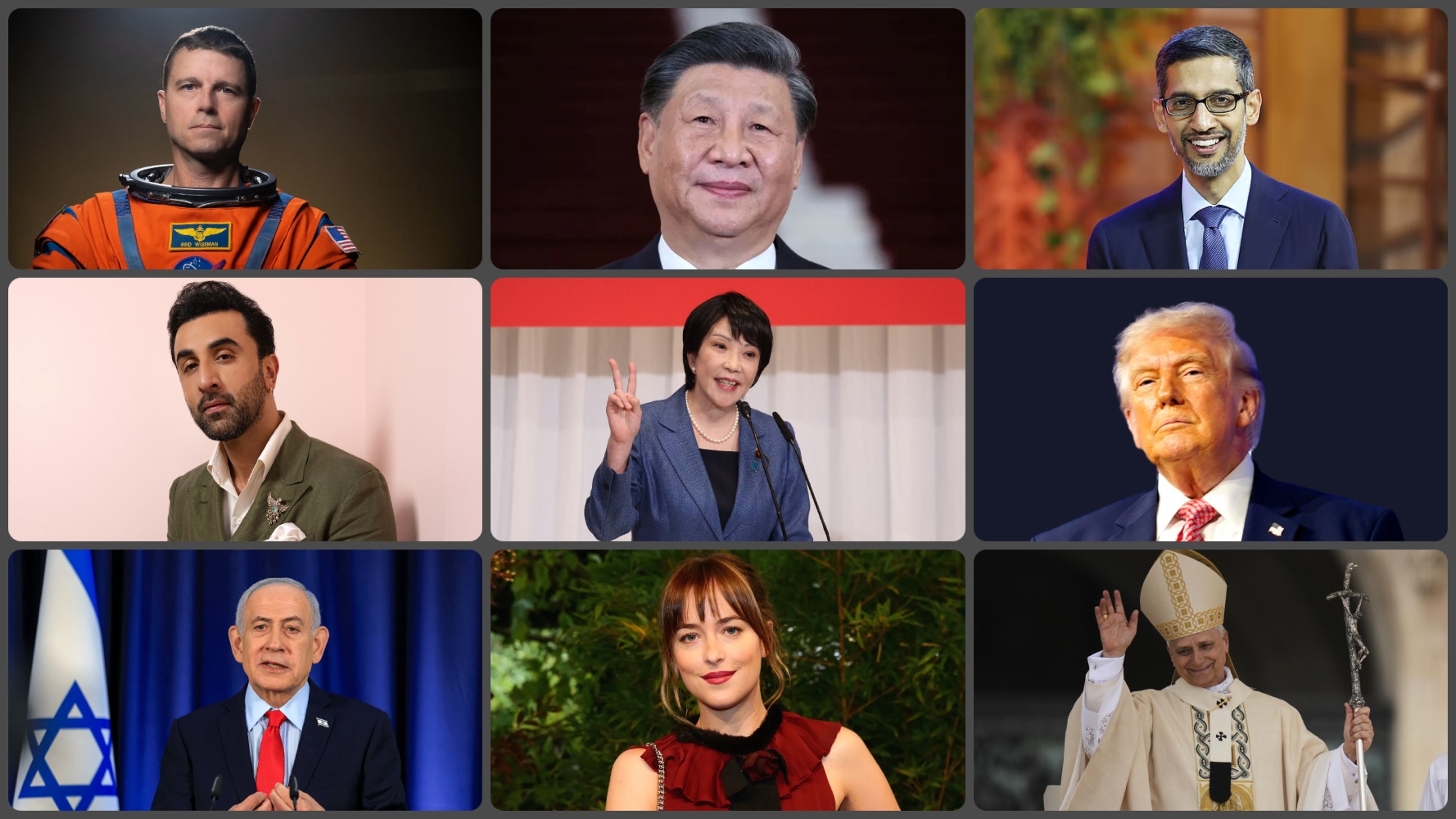
The annual ritual of the TIME100 list serves as a Rorschach test for global power, and the 2026 edition has just dropped with a predictable thud of heavy hitters and a few calculated surprises. By placing Donald Trump, Xi Jinping, and Sundar Pichai on the same glossy pedestal as actor Ranbir Kapoor, the magazine isn't just curateing a list of names. It is attempting to define the very currency of modern relevance. But behind the star-studded blurbs and the gala invitations lies a more complex mechanism of how we measure impact in a world where attention is more fragmented than ever.
The Geopolitics of Recognition
When you see Donald Trump and Xi Jinping flanking a list of "Leaders," it reflects a stubborn reality. Power still flows through the traditional corridors of Washington and Beijing. For Trump, this appearance marks a seventh entry, a testament to his unique ability to remain the sun around which the American political system orbits. Whether through policy or sheer presence, he remains an unavoidable variable in the global equation.
Xi Jinping's thirteenth appearance—the most of any living figure—speaks to a different kind of durability. It is the influence of a closed system that has successfully projected its will onto the global supply chain and regional security. Critics often argue that these lists confuse notoriety with influence, but in the boardroom of history, the two are frequently indistinguishable. If you can move markets or armies with a single speech, you belong on the list, regardless of the "why."
The Architect of the Intelligence Age
Sundar Pichai's inclusion under the "Titans" banner feels less like a celebration and more like a status report on the state of the human-machine interface. As CEO of Google, Pichai is no longer just managing a search engine; he is the steward of a transition into an AI-first reality. The magazine notes that few leaders have brought artificial intelligence to more people. This is an understatement.
Under Pichai, Google has pivoted from an information company to an intelligence utility. The influence here isn't just about stock prices or quarterly earnings. It is about the subtle ways generative models are rewriting the scripts of education, creative work, and scientific discovery. When billions of people rely on your tools to draft an email or diagnose a disease, your influence is baked into the very infrastructure of thought.
The Ranbir Kapoor Variable
The entertainment sector often feels like the "soft" side of the list, yet the inclusion of Ranbir Kapoor suggests a sharper strategic move by TIME. Kapoor isn't just a Bollywood star; he represents the sheer demographic weight of the Indian market. In an era where streaming platforms are desperate for global "crossover" hits, Kapoor’s influence is measured in theatrical footfalls across a subcontinent and a massive diaspora.
His presence on the list alongside figures like Alia Bhatt from previous years signals a shift in how the West views cultural exports. It is no longer about "discovery" but about acknowledging an existing powerhouse.
The Mechanics of Selection
How does one actually get on this list? Editor-in-Chief Sam Jacobs has stated there is no single metric, but as an industry analyst who has watched this machine for years, the pattern is clear. The selection process is a year-round dialogue between editors, reporters, and deep-pocketed sources.
The Hidden Tiers of Influence
| Category | Primary Metric | Example Figure |
|---|---|---|
| Leaders | Sovereign Power | Xi Jinping |
| Titans | Capital & Infrastructure | Sundar Pichai |
| Artists | Cultural Saturation | Ranbir Kapoor |
| Innovators | Technological Breakthrough | Reid Wiseman |
The "why" behind the list is often more interesting than the names themselves. Every entry is paired with a blurb written by another high-profile figure. This creates a validation loop. When Mark Zuckerberg writes about Jensen Huang, or Daniel Kaluuya writes about Dev Patel, it isn't just praise; it is a public handshake between elites. This reinforces a specific social architecture, a "who's who" that effectively gatekeeps the concept of prestige.
The AI Mirror
Perhaps the most significant development in the 2026 cycle is the heavy emphasis on the "Pioneers" and "Innovators" categories. We are seeing a list that is increasingly obsessed with the people building the next iteration of the world. This includes NASA's Reid Wiseman, commander of the Artemis II mission, and tech executives like Neal Mohan of YouTube.
Influence is moving away from purely political actors and toward those who control the platforms. If a politician wants to reach an audience, they must use Mohan's platform or navigate the algorithms governed by Pichai. This creates a secondary layer of power—the "Invisible Hand" of Silicon Valley that provides the stage for the political theater.
The Cost of Exclusion
What is missing is often as telling as what is present. Every year, the list faces criticism for its Western-centric lens or its tendency to ignore activists who operate outside of approved institutional frameworks. While the 2026 list makes efforts to include figures like Nepal's Prime Minister Balendra Shah, the overall composition still favors those who play within the established global order.
The list remains a high-end branding exercise. For the honorees, it is a tool for legacy building. For the readers, it is a map of the world as seen from a skyscraper in Midtown Manhattan. It is a useful map, certainly, but it is one that priorities the peaks and ignores the valleys.
Influence is ultimately about the capacity to change the future. Whether it’s through a trade policy in Beijing, a new large language model in Mountain View, or a cinematic masterpiece in Mumbai, the names on this list are the ones holding the levers. The real question isn't who is on the list, but what they intend to do with the momentum the list provides.