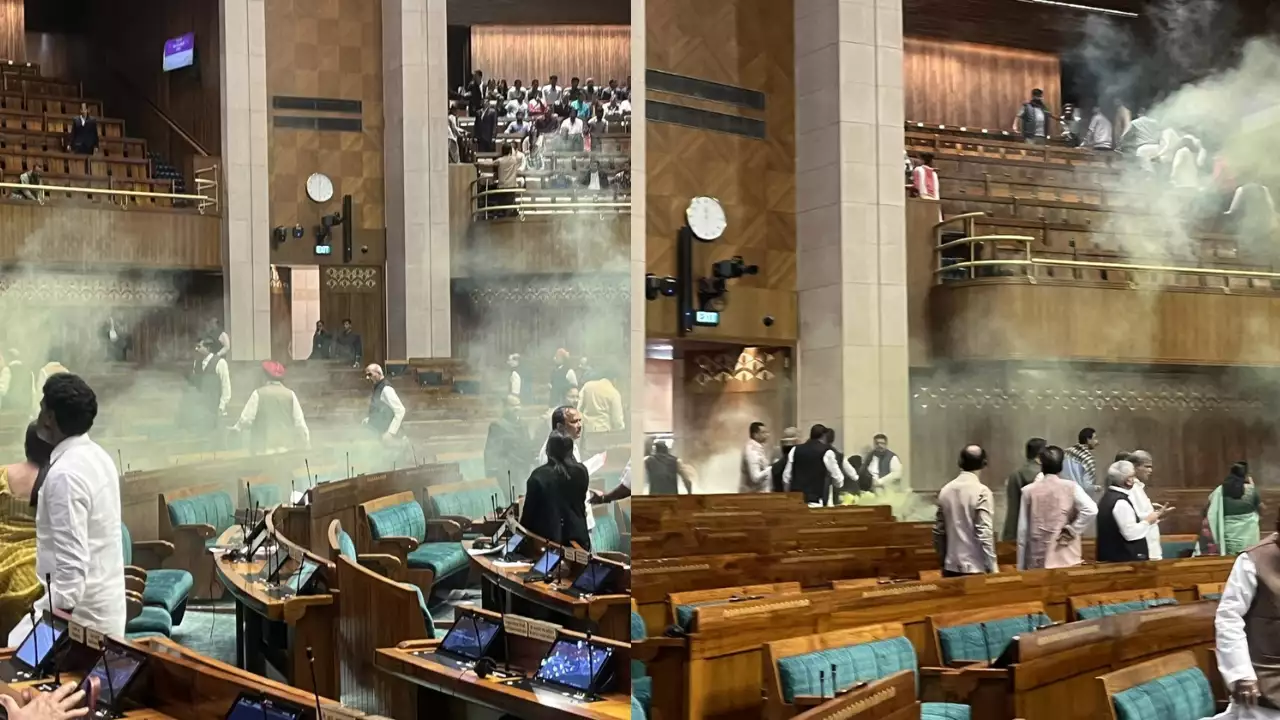
The Department of Justice is currently attempting to use a violent security breach as a battering ram against a long-standing legal challenge. Following a shooting incident at the Washington Hilton during the White House Correspondents’ Dinner, acting Attorney General Todd Blanche and the DOJ issued a blunt ultimatum to the National Trust for Historic Preservation: drop the lawsuit blocking the new $400 million White House ballroom or face an immediate motion for dismissal. The government's argument is centered on a singular, high-stakes claim: that preventing the construction of this 999-seat venue directly endangers the life of the President.
This isn't just a dispute over a building. It is a fundamental clash between executive power and the statutory guardrails designed to protect the nation's most iconic historic site. By framing a construction project as a "national security necessity," the administration is attempting to bypass the very congressional oversight that a federal judge previously ruled was mandatory. The National Trust has refused to blink, setting the stage for a June 5 hearing that will determine if the rubble of the demolished East Wing remains a construction site or becomes a monument to overreach.
The Demolition of Precedent
In late 2025, the administration shocked preservationists by completely leveling the White House East Wing. The goal was to replace the historic structure with a 90,000-square-foot ballroom—a footprint larger than the White House itself. The justification was twofold: the President needed a space large enough for grand-scale events, and the current off-site options, like the Washington Hilton, were security nightmares.
The legal reality is more complex. U.S. District Judge Richard Leon previously issued a preliminary injunction halting above-ground construction, famously noting that the President is the steward of the White House, not its owner. He agreed with the plaintiffs that the project requires explicit approval from Congress, which has not been granted. While a three-judge appeals panel recently stayed that injunction—allowing work to continue for now—the underlying question of legal authority remains unsettled.
The administration’s sudden pivot to use the Hilton shooting as legal leverage is a calculated maneuver. By demanding the National Trust withdraw its "frivolous" lawsuit by a Monday morning deadline, the DOJ is trying to win in the court of public opinion before they return to the court of law.
Private Money and Public Power
While the administration claims the project is funded by private donations, the lines between private gifts and public infrastructure are increasingly blurred. Public funds are already being used for the massive bunker construction and security upgrades beneath the site. This creates a strange hybrid: a privately-funded social hall sitting atop a publicly-funded fortress.
The security argument holds weight with some, including Senator Lindsey Graham and even Senator John Fetterman, who noted the vulnerability of the presidential line of succession during the Hilton gala. However, critics point out that the White House is a National Historic Landmark. Usually, any alteration to such a site requires a rigorous Section 106 review process under the National Historic Preservation Act. By skipping these steps, the administration isn't just building a ballroom; it is dismantling the process that ensures the American people have a say in how their heritage is managed.
The Hilton Dilemma
The Washington Hilton has hosted the Correspondents’ Dinner for decades, but it was never designed for modern secret service protocols for a 2,300-person guest list. The room is notoriously cramped, with chairs packed back-to-back. The DOJ’s letter to the National Trust called the venue "demonstrably unsafe," citing the "extraordinary security challenges" of its size and layout.
The proposed 1,000-seat White House ballroom wouldn't actually fit the Correspondents’ Dinner at its current scale. It would, however, allow the President to host state dinners and large briefings within the "hardened facility" of the White House perimeter. For the administration, the trade-off is simple: lose a piece of history to gain a tactical advantage. For the National Trust, the trade-off is a dangerous precedent where "security" becomes a magic word used to vanish federal laws.
A Site in Limbo
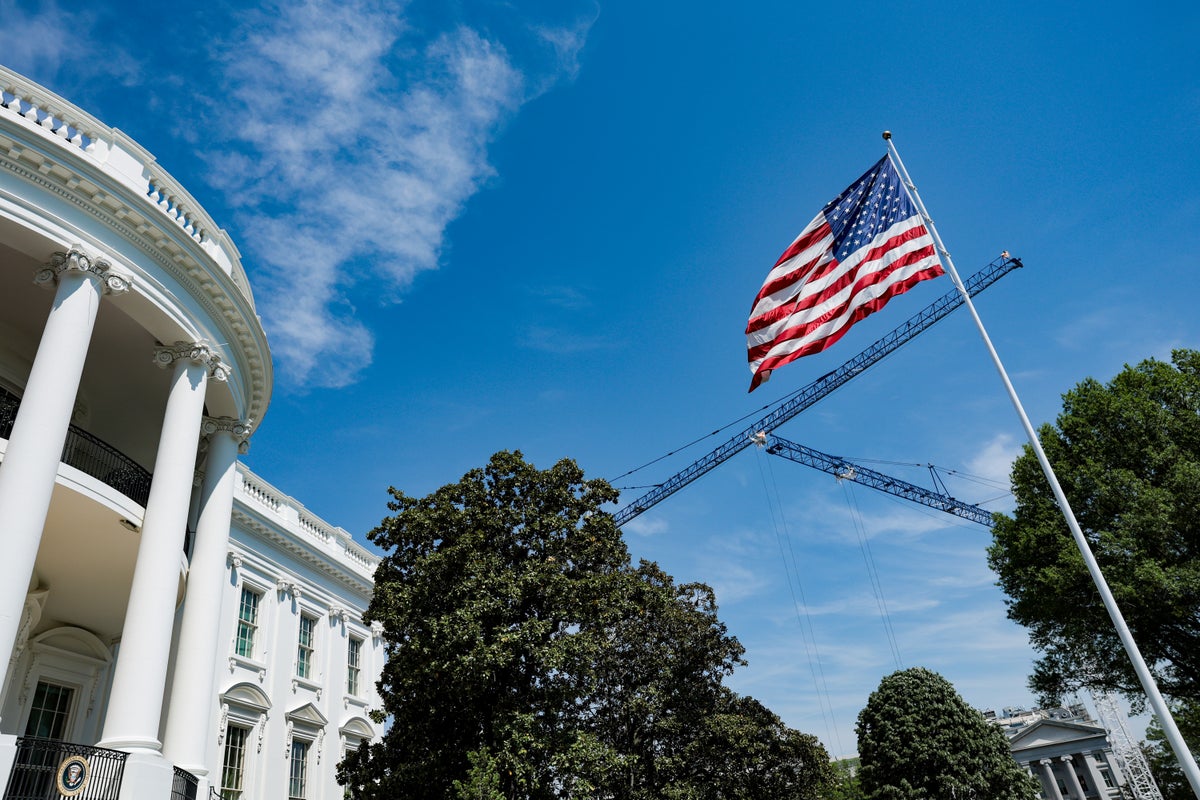
Right now, construction cranes dominate the view from the Washington Monument. The East Wing is gone, replaced by a deep excavation. If the National Trust wins in June, the administration could be forced to halt construction on a half-finished shell, leaving a literal hole in the side of the most famous house in the world.
The DOJ’s aggressive tactics suggest they are worried about the June 5 hearing. If the lawsuit was truly "frivolous," there would be no need to pressure the plaintiffs into a voluntary dismissal. The intensity of the government's response indicates that the National Trust’s argument—that the executive branch cannot unilaterally remodel the nation's house—has teeth.
The National Trust’s president, Carol Quillen, has made it clear that the group isn't against the idea of a ballroom. They are against the idea of a ballroom built in total disregard of the law. The administration could end the litigation tomorrow by simply seeking the congressional approval Judge Leon said they needed. Instead, they have chosen a path of legal escalation, banking on the idea that in a post-shooting environment, the public will value a secure ballroom more than a historic East Wing.
The rubble of the East Wing is currently being dumped at the East Potomac Golf Course, the subject of yet another lawsuit. This sprawl of litigation shows an administration moving at a speed that the legal system wasn't designed to handle. Whether the ballroom is finished by 2028 as the President predicts, or remains a shuttered construction site, depends entirely on whether the "national security" defense can successfully override the National Historic Preservation Act.
The immediate next step for any observer is the June 5 court date. That is where the rhetoric about "folly" and "safety" will have to face the cold reality of statutory limits.