The Investigation Obsession
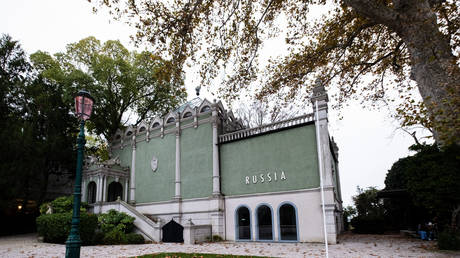
Venice is sinking, but the Italian government is busy investigating the Biennale. The specific target? Russian participation in a contemporary art exhibition. Bureaucrats are currently combing through paperwork and permits to see if "sanctioned entities" had a hand in the 2024 festivities.
This is not a triumph of rule of law. It is a pathetic admission that we no longer understand how soft power works.
The media paints this as a high-stakes hunt for oligarchic influence. They want you to believe that if a Russian artist displays a painting in a Venetian pavilion, it somehow strengthens a war chest in Moscow. This is a fundamental misunderstanding of the art world’s plumbing. If you want to stop a war, you freeze central bank assets and block semiconductor shipments. You don't audit a curator’s travel expenses from three years ago.
The Myth of the Neutral Canvas
Modern commentary assumes that art festivals should be sterilized environments. The "lazy consensus" suggests that by purging "problematic" nations, we preserve the moral integrity of the event.
This is a lie. The Venice Biennale has never been neutral. It was birthed in the heat of 19th-century nationalism. It survived the rise of fascism, the Cold War, and the messy dissolution of empires. Its entire value lies in its friction.
When you investigate an art show to ensure "compliance," you are effectively turning the Biennale into a branch of the Ministry of Foreign Affairs. You are telling the world that Western liberal democracies are so fragile that they cannot handle the presence of a dissenting or even a "hostile" aesthetic.
Soft Power is Not a Oneway Street
I have sat in rooms with cultural attaches who think they are playing 4D chess by "de-platforming" rivals. They are actually just shrinking their own reach.
Consider the mechanics of cultural influence. By allowing a Russian presence—even one that operates under a cloud of controversy—you maintain a tether. You keep a line of communication open with the very creative class that typically opposes authoritarianism from within.
When Italy launches a probe into the Biennale, they aren't hurting the Kremlin. The Kremlin loves it. It validates their narrative that the West is engaged in a "cancel culture" crusade against Russian identity. We are handing them a propaganda victory on a silver platter, and we're paying for the silver with taxpayer-funded investigations.
The Compliance Trap
The "People Also Ask" sections of the internet are currently obsessed with one question: "How can we ensure Russian money doesn't fund European art?"
The honest answer is: You can't. Not without destroying the art.
Global finance is a mess of shell companies and nested holdings. If you demand 100% purity in art funding, the Venice Biennale will become a local craft fair for Italian ceramics and nothing else. Every major art institution in the world—from the Met to the Louvre—sits on a foundation of money that would fail a modern moral audit.
Choosing to selectively investigate the "enemy of the month" is theater. It’s a performative gesture designed to make politicians look "tough on aggression" without having to make the hard choices that actually impact a battlefield. It’s cheaper to investigate a curator than it is to ship another battery of air defense systems.
Art as an Intelligence Asset
The status quo view is that bad actors use art to launder their image.
The contrarian truth? Art is the best way to read your enemy.
In the 1950s, the CIA famously funded Abstract Expressionism to show the world that American artists were "free" compared to the Soviet "Socialist Realists." They didn't do this because they liked Jackson Pollock’s drips. They did it because they understood that the cultural arena is where you demonstrate the superiority of your system.
By retreating into "probes" and "bans," we are signaling a lack of confidence in our own cultural dominance. We are saying we are afraid of a few sculptures.
Stop Trying to Sanitize the Salon
The instinct to "clean up" the Biennale is the same instinct that leads to boring, safe, corporate art. It leads to exhibitions that feel like a LinkedIn feed—curated for maximum "safety" and zero impact.
If a Russian artist wants to stand in Venice and present work, let them. If that work is propaganda, it will be shredded by the most cynical critics on the planet. If that work is a subtle critique of their own government, it provides a window into a closed society that no satellite image can replicate.
Instead of an investigation into "participation," we should be investigating why our own diplomatic class is so terrified of a conversation.
The Downside of the Disruption
I’ll be the first to admit: the contrarian path is messy. It means you might occasionally see a name on a donor wall that makes your skin crawl. It means you have to tolerate the presence of people you despise.
But the alternative is a sterilized world where art is just another form of government-issued ID. If we turn the Biennale into a vetted, "safe" space, we kill the very thing that made it prestigious for over a century.
We are currently watching the slow-motion suicide of European cultural prestige. Every time a prosecutor opens a file on a museum or a gallery for "political non-compliance," a collector in Singapore or Dubai laughs. They are building the new centers of the art world while we are busy checking the passports of oil paintings.
The Actionable Order
Stop looking for "unseen influences" in the art world and start looking at the results.
If the goal of an art festival is to provoke thought, then the "controversial" Russian pavilion has already succeeded more than the fifty "safe" pavilions next to it.
The Italian government needs to drop the probe, admit that art is inherently messy, and focus on real threats. If they want to fight a war, they should do it in the Donbas, not in the Giardini.
Burn the spreadsheets. Open the doors. Let the friction happen. That is the only way art survives.
Stop asking if a country "deserves" to be at the Biennale. The Biennale isn't a reward for good behavior. It’s a mirror. If you don’t like what you see in it, don’t blame the glass.
Go to Venice. Look at the art. Ignore the bureaucrats.
The investigation is the only thing here that is truly obscene.