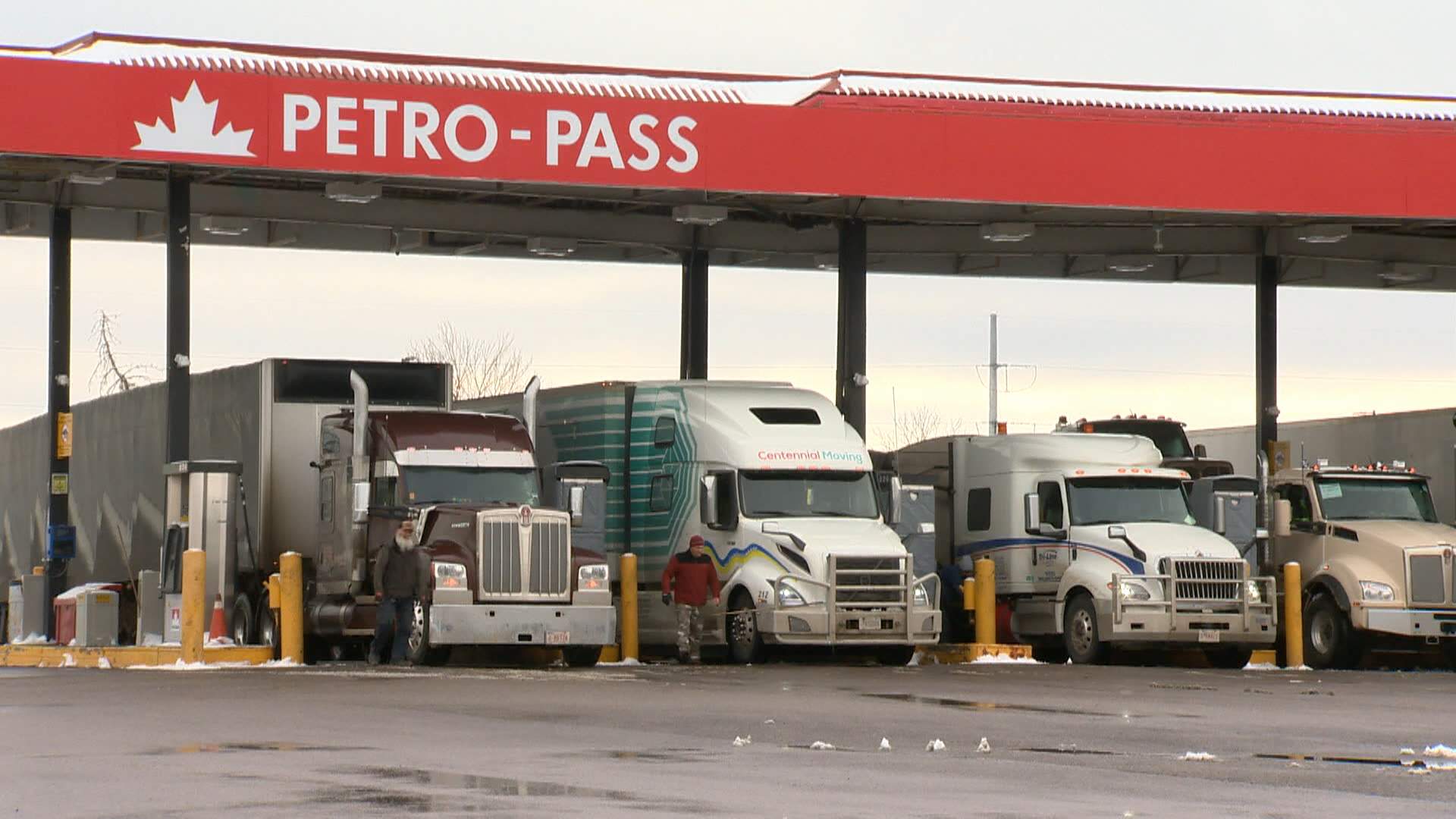
The global economy runs on a heavy, oily liquid that most people only think about when they are stuck behind a bus. While gasoline prices dominate the evening news and political debates, the real pressure on the average household is actually coming from the diesel pump. Diesel is the workhorse of civilization. It powers the container ships crossing the Pacific, the freight trains bisecting the continent, and the trucks that deliver every head of lettuce and pair of sneakers to your local store. When the price of this specific fuel spikes, it triggers a cascading effect that touches every shelf in every aisle.
We are currently witnessing a structural shift in how energy is priced, and the results are hitting consumer wallets with surgical precision. Unlike previous energy crunches, this isn't just about a temporary shortage or a single geopolitical flare-up. It is the result of a decade of underinvestment in refining capacity, a shift in global trade routes, and a regulatory environment that has made producing middle distillates—the category diesel falls into—more expensive than ever.
The math is simple but brutal. If a trucking company sees its fuel costs rise by 30 percent, it doesn't just eat that cost. It passes it to the distributor. The distributor passes it to the retailer. By the time you pick up a box of cereal, you aren't just paying for the grain and the sugar; you are paying for the several gallons of diesel it took to get that box from the factory to your hand.
The Death of the Refinery
To understand why diesel is becoming a luxury good, you have to look at the hardware. For years, the global refining sector has been shrinking in the West. It is a dirty, low-margin business that requires billions in capital and decades of lead time. Most of the refineries currently operating in the United States and Europe were built forty or fifty years ago.
Many of these facilities reached the end of their lives and were shut down during the 2020 demand collapse. They didn't come back online. Instead, they are being converted into "renewable diesel" plants or simply razed. While renewable diesel sounds like a solution, these plants often produce a fraction of the volume of their petroleum-based predecessors. We have traded high-volume reliability for low-volume compliance.
This has created a "bottleneck" effect. Even when crude oil prices are relatively stable, the cost of turning that crude into diesel—a metric known as the crack spread—can skyrocket. We are currently seeing crack spreads that are double or triple their historical averages. This means even if oil is $80 a barrel, the diesel produced from it is priced as if oil were $120. The infrastructure is tired, and it is struggling to keep up with a world that still demands physical goods at an increasing rate.
The Geopolitical Map is Being Redrawn
Diesel is a global commodity, but it is not distributed evenly. Historically, Europe relied heavily on Russian exports of vacuum gas oil and finished diesel to keep its economy moving. That trade flow has been severed. This isn't just a matter of "buying from someone else."
When Europe looks to the Middle East or the United States for diesel, it increases the distance the fuel must travel. Shipping fuel thousands of miles instead of hundreds adds a significant "logistics tax" to every gallon. More importantly, it ties up more tankers for longer periods, driving up shipping rates across the board.
- Longer routes mean higher insurance premiums for cargo.
- Competition for tankers leaves smaller nations priced out of the market.
- Refining hubs in India and China are now the dominant players, giving them unprecedented leverage over Western inflation rates.
The result is a fragile supply chain where a single refinery fire in Louisiana or a strike in France can cause price ripples felt in a grocery store in Tokyo. We have lost the "buffer" that used to protect consumers from volatility.
Agriculture and the Coming Food Cost Shock
If you want to see where the diesel crisis becomes a humanitarian issue, look at the farm. Modern industrial agriculture is essentially the process of turning diesel and fertilizer into calories. Tractors, harvesters, and irrigation pumps almost exclusively use diesel engines because of their torque and durability.
Farmers operate on razor-thin margins. When diesel prices stay elevated for an entire planting and harvest season, the cost of the crop is locked in at a higher price point months before it hits the market. This is why food inflation often persists long after other prices have settled.
"You can't grow corn with an electric tractor. Not yet, and not for a long time. Every increase in fuel is an increase in the cost of bread."
This sentiment is echoed by analysts who track the Producer Price Index (PPI). While the Consumer Price Index (CPI) gets the headlines, the PPI shows the pressure building at the start of the chain. Currently, that pressure is at a boiling point.
The Myth of the Quick Fix
Politicians often suggest that releasing oil from strategic reserves will lower prices. This is a misunderstanding of the problem. Strategic reserves are mostly light, sweet crude oil. Releasing crude does nothing if you don't have the refinery capacity to turn it into diesel. It is like giving a starving person a bag of raw wheat but no mill to grind it.
Furthermore, the transition to electric vehicles (EVs) has almost no impact on the diesel market. While passenger cars are moving toward electrification, the heavy-duty transport, construction, and shipping industries are decades away from a viable electric alternative. The energy density required to move a 40-ton truck 500 miles is simply not available in current battery technology.
This creates a "trapped demand" scenario. Since these industries cannot switch fuels, they must pay whatever the market demands. This inelasticity is exactly why diesel prices can remain high even when the broader economy starts to slow down.
Why the Supply Chain is Still Brittle
The logistics industry tried to implement "Just in Time" inventory management to save money. This system assumes that the cost of moving goods will always be low and predictable. That assumption is dead.
Companies are now forced to hold more inventory to guard against price spikes and delivery delays. Holding inventory costs money—warehouse space, insurance, and the cost of capital. These "hidden" costs of the diesel crisis are what will keep inflation "sticky" for the foreseeable future.
Critical Factors to Watch
- The US Gulf Coast Output: If this region suffers a major hurricane season, the global diesel market will go into a tailspin.
- Chinese Export Quotas: Beijing often restricts fuel exports to keep domestic prices low, which can instantly starve the global market of millions of barrels.
- The Rail Labor Market: As rail becomes a more fuel-efficient alternative to trucking, the pressure on rail infrastructure increases.
The End of Cheap Logistics
We are entering an era where the cost of distance is going up. For thirty years, it didn't matter if a product was made 5,000 miles away because shipping was virtually free in the grand scheme of the product's price. Diesel at $5.00 or $6.00 a gallon changes that fundamental truth.
This isn't just a "spike" in costs; it is a re-rating of the global economy. Companies are beginning to look at "near-shoring"—moving production closer to the end consumer—not because of labor costs, but because the fuel cost of shipping has become a permanent liability.
The consumer is the final shock absorber in this system. You will see it in "fuel surcharges" on your bills, "delivery fees" on your apps, and the shrinking size of packages on the shelves. The diesel crisis is a quiet tax on existence, paid every time something is moved, grown, or built.
If you are waiting for a return to the low-cost energy era of the 2010s, you are looking at a map that no longer exists. The infrastructure has changed, the politics have changed, and the fuel that moves the world is being re-priced for a much more expensive future.
Watch the crack spreads at the refineries if you want to know where your grocery bill is headed. Everything else is just noise.
-01.png)


