The diplomatic scramble to prevent a full-scale conflagration between Israel and Hezbollah has hit a wall that no amount of Western mediation seems able to scale. While envoys shuffle between Beirut and Tel Aviv with maps and de-escalation proposals, the fundamental reality remains unchanged. Hezbollah is not merely a participant in Lebanese politics; it is the state's shadow. Any ceasefire or border demarcation deal hinges on a paradox where the group must agree to diminish its own strategic relevance for a national stability it has historically exploited.
The current crisis stems from a calculated gamble by the party’s leadership to tie the fate of the Lebanese border to the war in Gaza. This "linkage" strategy has effectively paralyzed traditional diplomacy. For the United States and France, the goal is a return to a modified version of UN Security Council Resolution 1701. For Hezbollah, however, the status quo provides exactly what they need: a permanent state of "controlled friction" that justifies their massive arsenal outside the control of the Lebanese Armed Forces.
The Myth of the Rational Actor
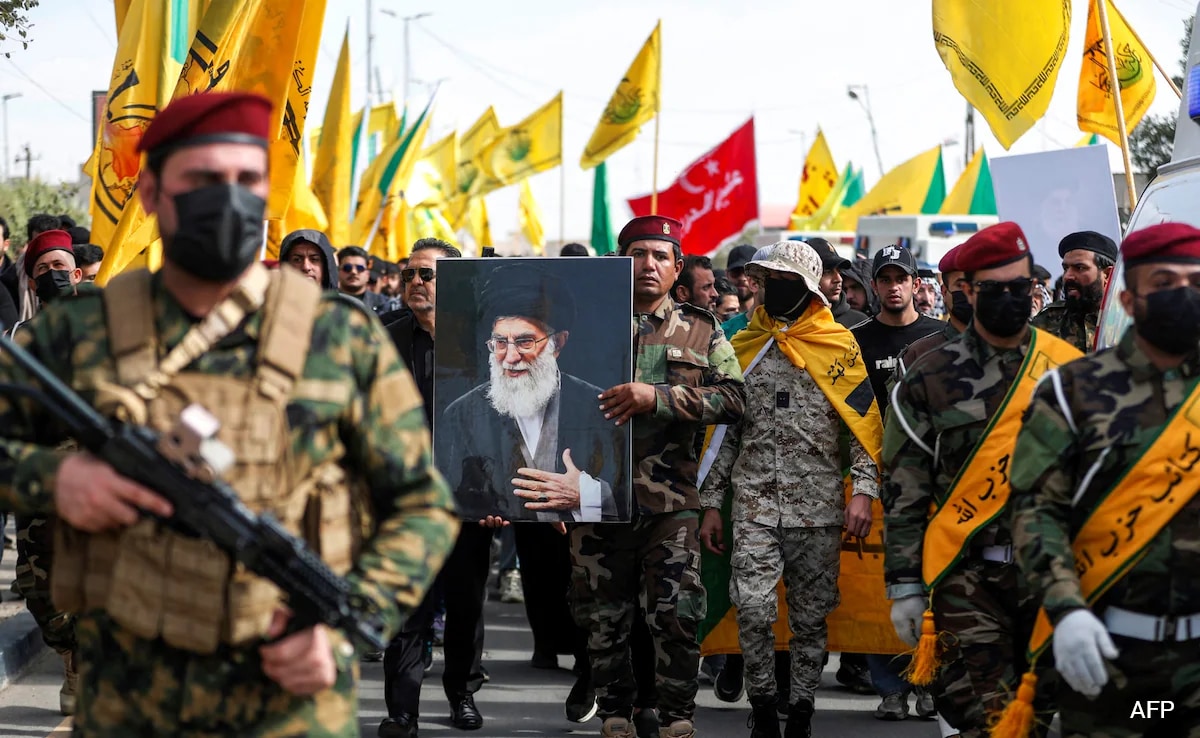
Western diplomats often treat Hezbollah as a rational political entity that will eventually choose the economic survival of Lebanon over a regional sectarian war. This assumption is flawed. Hezbollah operates on a dual-track logic. Domestically, it functions as a social services provider and a political heavyweight. Regionally, it is the crown jewel of Iran’s forward defense strategy.
When mediators propose a ten-kilometer withdrawal of Hezbollah’s elite Radwan Force from the Blue Line, they are asking the group to surrender its primary tactical advantage: the ability to threaten an immediate ground incursion into northern Israel. To expect the group to trade this leverage for vague promises of Lebanese economic aid is to misunderstand their entire reason for existence. They do not view the collapse of the Lebanese economy as a terminal threat to their power. In fact, a weakened state makes a private militia more essential to its constituency.
Money and Munitions
The financial mechanics of the group remain largely insulated from the hyperinflation destroying the rest of Lebanon. While the average Lebanese citizen has seen their savings vanish, Hezbollah operates a parallel economy. They utilize a network of cash-based exchanges and charitable front organizations like Al-Qard al-Hassan, which functions as a de facto bank for their supporters.
This financial independence means that international sanctions aimed at the Lebanese state do not exert the same pressure on the militia. While the Lebanese government is desperate for an IMF bailout, the group's leadership looks toward Tehran. This divergence in interests creates a massive vacuum at the negotiating table. The official Lebanese representatives—the Prime Minister and the Speaker of Parliament—cannot commit to terms that Hezbollah has not vetted, yet they lack any mechanism to force the group’s hand.
The Buffer Zone Illusion
The proposal to deploy more Lebanese Army (LAF) troops to the south is the centerpiece of current diplomatic efforts. The logic suggests that a stronger national presence would crowd out the militia. History tells a different story. Since 2006, the LAF has operated in the south alongside UNIFIL, yet Hezbollah’s infrastructure has only grown more sophisticated.
The LAF is in a precarious position. It is an institution funded largely by the United States but composed of a rank-and-file that reflects the country’s sectarian makeup. Forcing the LAF into a direct confrontation with Hezbollah to clear the border would likely result in the army’s disintegration along sectarian lines. This is the "hidden veto" that Hezbollah holds over any security arrangement. They know the state cannot disarm them without committing suicide.
Israel’s Shifting Red Lines
On the other side of the fence, the Israeli perspective has undergone a radical transformation. Prior to the events of October, the Israeli defense establishment was largely content with "managing the conflict." That era is over. The displacement of over 80,000 Israeli civilians from the Galilee has created a political pressure cooker in Jerusalem.
The Israeli government is no longer looking for a "piece of paper" or a symbolic withdrawal. They are demanding a verifiable change in the security architecture of the north. If diplomacy fails to move Hezbollah’s anti-tank missiles out of range of Israeli homes, the likelihood of a massive preemptive strike increases daily. The window for a "soft" solution is closing because the Israeli public will no longer accept a return to the October 6 status quo.
The Iranian Long Game
To understand why the border remains hot, one must look toward the regional chessboard. For Iran, Hezbollah is the ultimate deterrent against an Israeli or American strike on its nuclear facilities. Sacrificing Hezbollah’s position in southern Lebanon for the sake of Lebanese domestic peace is a non-starter for the IRGC leadership.
The group’s involvement in the current conflict serves to distract Israeli resources and keep the "axis of resistance" relevant. They are playing for time. Every day the border remains active is a day that Israel's economy bleeds and its military stays stretched thin. This is a war of attrition where the suffering of the Lebanese people is a secondary concern.
The Failure of UNIFIL
The United Nations Interim Force in Lebanon (UNIFIL) finds itself in an impossible situation. With a mandate that requires coordination with the Lebanese government, the peacekeepers are often blocked from accessing sensitive sites. "Local residents"—frequently a euphemism for plainclothes Hezbollah members—regularly obstruct UN patrols.
This toothless enforcement has turned the border region into a theater of the absurd. The UN reports violations, the Lebanese government ignores them, and Hezbollah continues to build tunnels and observation posts. Any new diplomatic deal that relies on the current UNIFIL structure is destined to fail because the peacekeepers lack the authority to use force to implement their mandate.
The Cost of the Deadlock
Lebanon is a country of ruins, but the southern border is where the most dangerous structural cracks are appearing. The agricultural sector in the south has been decimated by white phosphorus and constant shelling. Farmers cannot reach their groves. Schools are closed. This isn't just a military standoff; it is the slow-motion destruction of a region's social fabric.
The tragedy is that the Lebanese state has no agency in its own survival. The decisions are made in bunkers in Beirut and offices in Tehran. The Lebanese people are passengers on a bus where the driver is intentionally steering toward a cliff to see if the person chasing them will blink first.
Hard Truths on the Blue Line
There is no "win-win" scenario here. A diplomatic solution requires Hezbollah to accept a loss of prestige and tactical positioning, which contradicts their ideology of permanent resistance. Conversely, a military solution would result in a level of destruction that would make the 2006 war look like a minor skirmish.
The international community continues to treat the symptoms—the border skirmishes—rather than the disease, which is the total capture of the Lebanese state by a non-state actor. Until the fundamental power imbalance in Beirut is addressed, any border agreement will be nothing more than a temporary pause in an inevitable escalation. The reality on the ground is that the militia has successfully decoupled its interests from the national interest, leaving the "diplomacy" to operate in a vacuum of irrelevance.
The path forward requires more than just drawing lines on a map. It requires an admission that the current framework of Lebanese sovereignty is a fiction. Without a centralized authority capable of holding a monopoly on force, international treaties are merely suggestions. The border will remain a flashpoint as long as Hezbollah finds more value in the threat of war than in the stability of a peace they did not design.