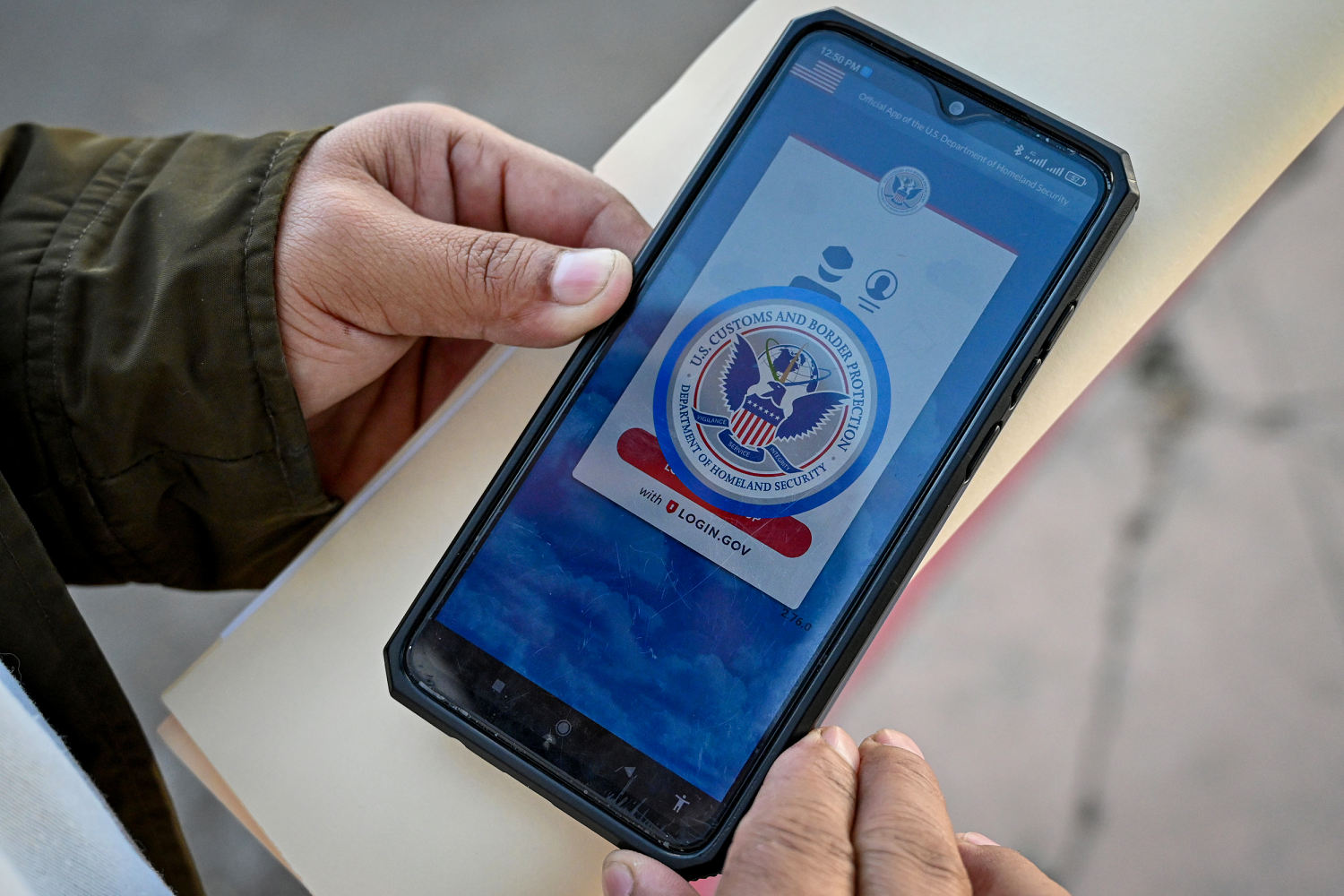
The phone screen glows in the dark of a cramped apartment in Chicago. A man named Mateo—let’s call him that, though his name is one of thousands—stares at a notification from an app called CBP One. For months, this digital interface has been his lifeline. It was the narrow gate through which he was allowed to enter the United States legally, under a program known as humanitarian parole. He has a job. He pays for his own bread. He follows the rules.
Then, the rumors started. The political winds shifted. A new directive sought to pull the rug out from under him, threatening to terminate the very legal status that allowed him to breathe without looking over his shoulder. Recently making waves lately: Regional Friction and the Doctrine of Strategic Defiance.
This isn't just about paperwork. It is about the definition of a promise. When the government tells a human being, "If you use this app and wait your turn, you can stay," what happens when that same government tries to delete the agreement mid-sentence?
A federal judge just provided the answer. And for Mateo, it means the world doesn't end today. More insights on this are explored by NPR.
The Digital Border and the Human Cost
The Biden administration’s use of the CBP One app was designed to bring order to chaos. Instead of desperate scrambles across the Rio Grande, migrants were encouraged to schedule appointments and apply for parole from the safety of a screen. It was a technocratic solution to a primal human problem. Thousands took the deal. They entered the country with a temporary legal shield, a work permit, and a sense of fragile stability.
But stability in American immigration policy is an oxymoron.
Under the threat of a sudden policy reversal, the Department of Homeland Security moved to end these parole grants for those already within the interior. The logic was cold: the program had served its purpose, or perhaps the political optics had become too heavy to carry. Suddenly, people who had built lives over the last two years found themselves staring at an expiration date that hadn't been there before.
Imagine the psychological weight of that. You have a lease. You have a manager who relies on you to open the shop at 6:00 AM. You have a daughter who finally stopped having nightmares about the journey north. Then, a memo from a distant office in Washington D.C. suggests that your "legal" status was merely a suggestion.
The legal battle that followed wasn't just a clash of statutes; it was a fight over the fundamental fairness of the American system.
The Ruling That Froze Time
The recent court intervention didn't happen in a vacuum. It was a response to the reality that the executive branch cannot simply flip a switch on the lives of hundreds of thousands of people without a rigorous legal justification. The judge’s block on the termination of parole is a massive speed bump for those who wanted a swift, total purge of these migrants.
The core of the argument rests on "settled expectations." In the world of law, this means that if the government tells you a door is open, they can’t slam it on your fingers while you’re walking through without a very good reason. The judge looked at the move to end parole and saw something arbitrary.
When the government acts in a way that is "arbitrary and capricious," the courts are supposed to step in. It is one of the few remaining guardrails in a system that often feels like it's hurtling off a cliff. For now, the termination is halted. The status quo remains. The work permits stay valid.
But the victory is a quiet one. It doesn't solve the underlying crisis; it merely prevents a new one from being manufactured overnight.
The Weight of a Work Permit
We often talk about immigration in terms of "flows" and "surges." We use water metaphors that strip away the skin and bone of the participants. But consider the economics of a single work permit.
A permit isn't just a piece of plastic. It is the ability to open a bank account. It is the right to buy car insurance so that if you get into a fender-bender on the way to your construction site, you aren't hauled off in zip ties. It is the tax revenue generated by a person who is no longer "under the table" but "on the books."
When the administration moved to end parole, they weren't just targeting "migrants." They were targeting the labor force of American cities. They were targeting the stability of neighborhoods where these individuals have integrated. The judge's ruling recognizes that you cannot untangle these lives from the American fabric without causing significant, irreparable tears.
There is a specific kind of cruelty in a system that invites you in through the front door only to claim later that the door was never actually unlocked. It creates a class of people who are perpetually suspended in mid-air. They are not "illegal," yet they are not quite "settled." They live in the hyphen.
The Invisible Stakes of Executive Power
This case highlights a deeper, more systemic tension in American life: the tug-of-war between the White House and the Judiciary. For years, immigration policy has been shaped not by the halls of Congress, but by executive orders and court-ordered stays. It is a messy, inconsistent way to run a superpower.
One president opens a program; the next tries to kill it; a judge in a different state puts it on life support.
This "ping-pong" governance has a high human cost. It turns people into political capital. In the legal filings, the arguments are about "statutory authority" and "parole power." But in the hallways of immigration clinics, the conversation is about whether or not it’s safe to sign a two-year lease.
The judge’s block is a temporary reprieve, a moment of silence in a very loud room. It forces the government to justify why it wants to uproot people who followed the exact path the government itself laid out. It demands accountability for the promises made via a smartphone app.
The Myth of the Easy Fix
There is a segment of the population that believes the solution is simple: just send them back. But the "back" they refer to is often a place of systemic collapse, or worse, a place where these individuals no longer have a home because they sold everything to get here legally through the Biden-era app.
The legal reality is that these migrants entered under a specific authority. They weren't "gate-crashers." They were invitees. To revoke that invitation en masse is a logistical and moral nightmare that the court is currently unwilling to entertain.
The complexity of the law reflects the complexity of the human condition. We want borders that are secure, but we also want a government that keeps its word. We want a system that works, but we are often unwilling to do the hard work of legislating a permanent solution. So, we rely on judges to hold the line.
The block on the termination of parole is a reminder that the law is not just a weapon for the powerful; it can also be a shield for the vulnerable. It suggests that even in a highly polarized environment, there are still rules about how a government must treat those it has allowed into its house.
The Long Road to Certainty
Mateo still has his job. His daughter is still in school. The phone screen still glows, but the notification he feared didn't come today.
The legal battle will continue. There will be appeals, higher courts, and more heated rhetoric on the evening news. The "invisible line" of legal status will continue to shift, sometimes by miles and sometimes by inches.
But for a moment, the frantic ticking of the clock has stopped. A judge’s pen has provided a breath of air to hundreds of thousands who were beginning to suffocate under the weight of uncertainty. It is a fragile victory, written in legalese and filed in a quiet courthouse, but its impact is felt in the steady heartbeat of a man who can finally close his eyes and sleep, knowing that for one more night, he is exactly where he was told he could be.
The ink on the ruling is dry, but the lives it protects remain in a state of perpetual motion, waiting for the next gust of wind to decide which way the door will swing.