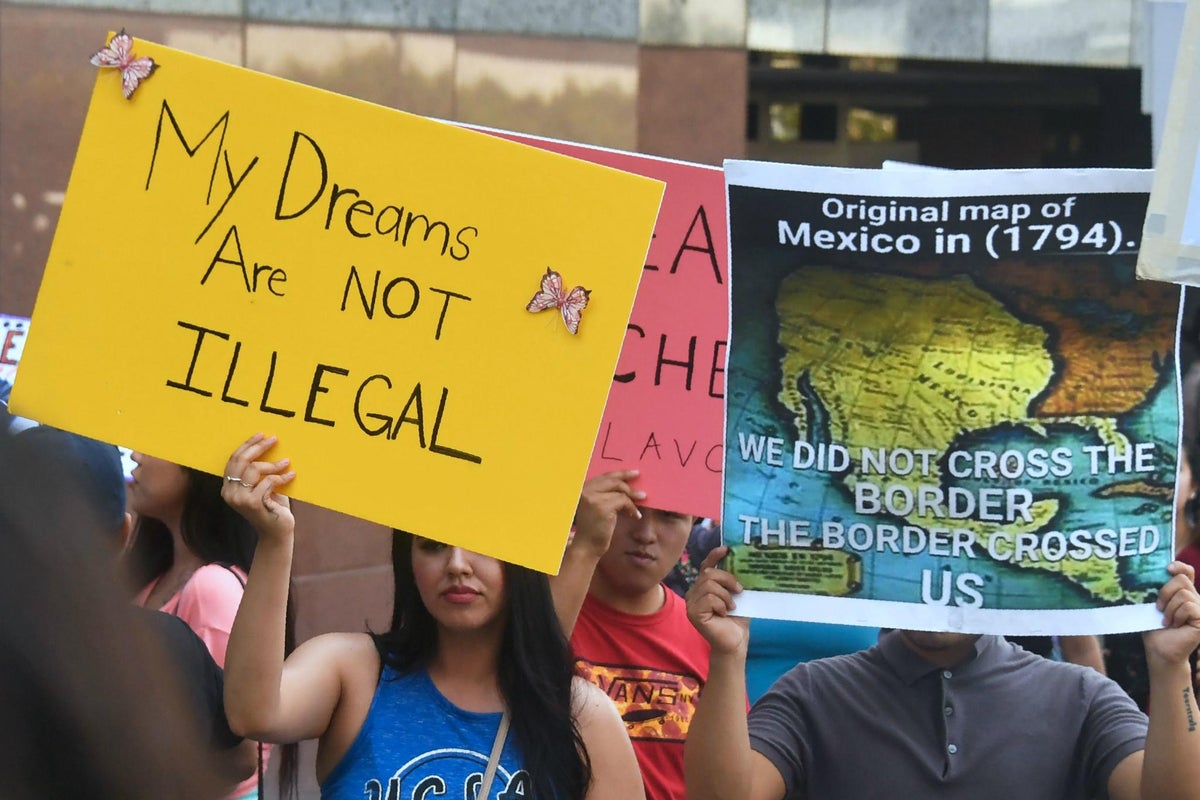
The bureaucratic machinery of the United States Citizenship and Immigration Services (USCIS) is currently grinding through a backlog that has effectively paralyzed the lives of thousands of DACA recipients. For those enrolled in the Deferred Action for Childhood Arrivals program, a simple delay in processing a renewal application is not a mere administrative hiccup. It is a catastrophic failure that triggers a domino effect of job losses, the suspension of driver’s licenses, and the immediate threat of deportation. While the political debate often centers on the legality of the program itself, the immediate crisis is operational. The system is failing because the safeguards meant to prevent status gaps have eroded, leaving "Dreamers" in a legal vacuum where they have the right to remain but no valid paperwork to prove it to an employer or a police officer.
The Expiration Date No One Can Beat
For over a decade, DACA recipients have lived in two-year increments. The deal was straightforward: provide the government with your address, your workplace, and your fingerprints, and in exchange, you receive a temporary reprieve from deportation and a work permit. However, that deal is currently breaking down. Current federal guidelines suggest that applicants file for renewal between 120 and 150 days before their current status expires. Yet, a growing number of individuals who follow these rules to the letter are seeing their permits expire while their applications sit in "pending" status at regional processing centers. If you found value in this article, you might want to read: this related article.
The consequences are instant. Most HR departments use the E-Verify system, which flags expired work authorizations immediately. An employer who keeps an undocumented worker on the payroll faces stiff federal penalties, meaning well-intentioned companies are often forced to fire some of their most experienced employees. This is not a hypothetical risk. It is a reality for thousands of nurses, engineers, and teachers who find themselves escorted out of their buildings because a government clerk hasn't clicked a button in a Maryland or Nebraska processing center.
Mechanical Failures in the Paperwork Factory
To understand why this is happening, you have to look at the internal logistics of USCIS. The agency is almost entirely fee-funded, meaning it relies on the money paid by applicants rather than Congressional appropriations. When the pandemic hit, application volumes fluctuated wildly, and the agency struggled with staffing. While other federal agencies transitioned to digital workflows, USCIS remained tethered to a staggering amount of physical paperwork. For another look on this event, check out the recent update from USA Today.
Even as digital filing became more common for DACA, the "adjudication" process—the actual human review of the file—remained a bottleneck. There is no "auto-extension" for DACA work permits like there is for certain other visa categories. If a green card holder or someone with Temporary Protected Status (TPS) faces a delay, they often receive an automatic 180-day or 540-day extension. DACA was specifically excluded from these blanket extensions. This policy choice creates a hard ceiling. Once that plastic card expires, the legal shield vanishes.
The Biometrics Bottleneck
A significant portion of the delay stems from the biometrics requirement. Every renewal involves a background check, and in many cases, the government insists on a new set of fingerprints and a new photo. During periods of high volume or office closures, the appointments for these sessions back up for months. Even when USCIS announces they will "reuse" old biometrics to speed up the process, the software systems frequently glitch, requiring manual intervention that adds weeks to the timeline.
The Cost of Living in the Gap
When a DACA recipient loses their status, they don't just lose their paycheck. In many states, the right to drive is tied directly to a valid Employment Authorization Document (EAD). Without a license, a person cannot legally drive to the very post office they are visiting to check for their new permit. They cannot pick up their children from school without risking an encounter with law enforcement that could lead to detention.
The psychological toll is immense. We are talking about a demographic that has been vetted by the government multiple times. They have passed background checks every two years for a decade. These are not strangers to the system; they are its most scrutinized participants. To be shoved back into the shadows because of a mailing delay or a server error feels less like a policy and more like a betrayal of the original promise made in 2012.
Financial Hemorrhaging
The financial impact extends beyond the individual. When a DACA recipient is forced into an unpaid leave of absence, the government loses tax revenue. Social Security and Medicare contributions stop. The employer incurs the cost of recruiting and training a replacement, or the loss of productivity from an empty seat. It is an economically illiterate way to manage a workforce.
A Policy Choice Masked as a Technicality
Critics argue that the delays are a feature, not a bug. By failing to provide the same automatic extensions granted to other groups, the government maintains a level of precarity that keeps the DACA population on edge. However, even if one takes a purely cynical view of immigration policy, the current backlog is a failure of basic governance. If a government agency accepts a $495 fee for a service, it has a functional and ethical obligation to provide that service within a reasonable timeframe.
The "why" behind the lack of auto-extensions is often buried in the "Notice of Proposed Rulemaking" documents that rarely see the light of day in mainstream news. The administration has the executive authority to grant these extensions. They have chosen not to, citing the unique legal challenges DACA faces in the court system. They fear that changing the "mechanics" of the program might give conservative states more ammunition in their ongoing lawsuits to end the program entirely. It is a defensive crouch that uses the lives of the applicants as a shield.
The Myth of the 150-Day Safety Margin
The government tells applicants to file early, but filing too early can actually result in a rejection or the loss of time on the new permit. If you file at 180 days, your application might be sent back. If you file at 150 days and the government processes it in 30 days, your new two-year window starts immediately, effectively "stealing" four months from your previous permit. It is a gambling game where the house always wins, and the player is always at risk of being "out of status" or overpaying for shortened coverage.
Regional Disparities
The experience of a Dreamer also depends heavily on which "lockbox" or service center receives their file. Data shows that the California Service Center may move at a completely different speed than the one in Vermont. An applicant has no choice in where their file goes. It is determined by their zip code, creating a "geographic lottery" where your ability to keep your job depends on the efficiency of a specific building hundreds of miles away.
Breaking the Cycle of Delays
Fixing this does not require a massive act of Congress or a transformation of the border. It requires three specific, boring, and highly effective administrative changes.
- Implement Automatic Extensions: Align DACA with other visa categories by granting a 180-day extension to anyone who has a timely-filed renewal receipt.
- Decouple Biometrics: Use the existing "reuse" policy as the default, not the exception. The government already has the fingerprints of every DACA recipient on file.
- Digital Parity: Ensure that the online filing system is not just a digital version of a paper form, but a streamlined process that flags missing information instantly, preventing the "Request for Evidence" (RFE) loops that can add months to a case.
The current situation is a quiet crisis. It doesn't involve images of people crossing rivers or climbing fences. It involves people sitting in living rooms, refreshing a website, watching a "days remaining" counter hit zero. It is the sound of a phone call to a boss explaining that a permit hasn't arrived. It is the sight of a nurse's badge being handed back to a supervisor. The machinery is broken, and until the administration treats the DACA backlog as a failure of basic operations, thousands of people who have done everything right will continue to be punished for the government's inability to process its own mail.
Stop looking at the border and start looking at the processing centers; that is where the real disaster is unfolding.