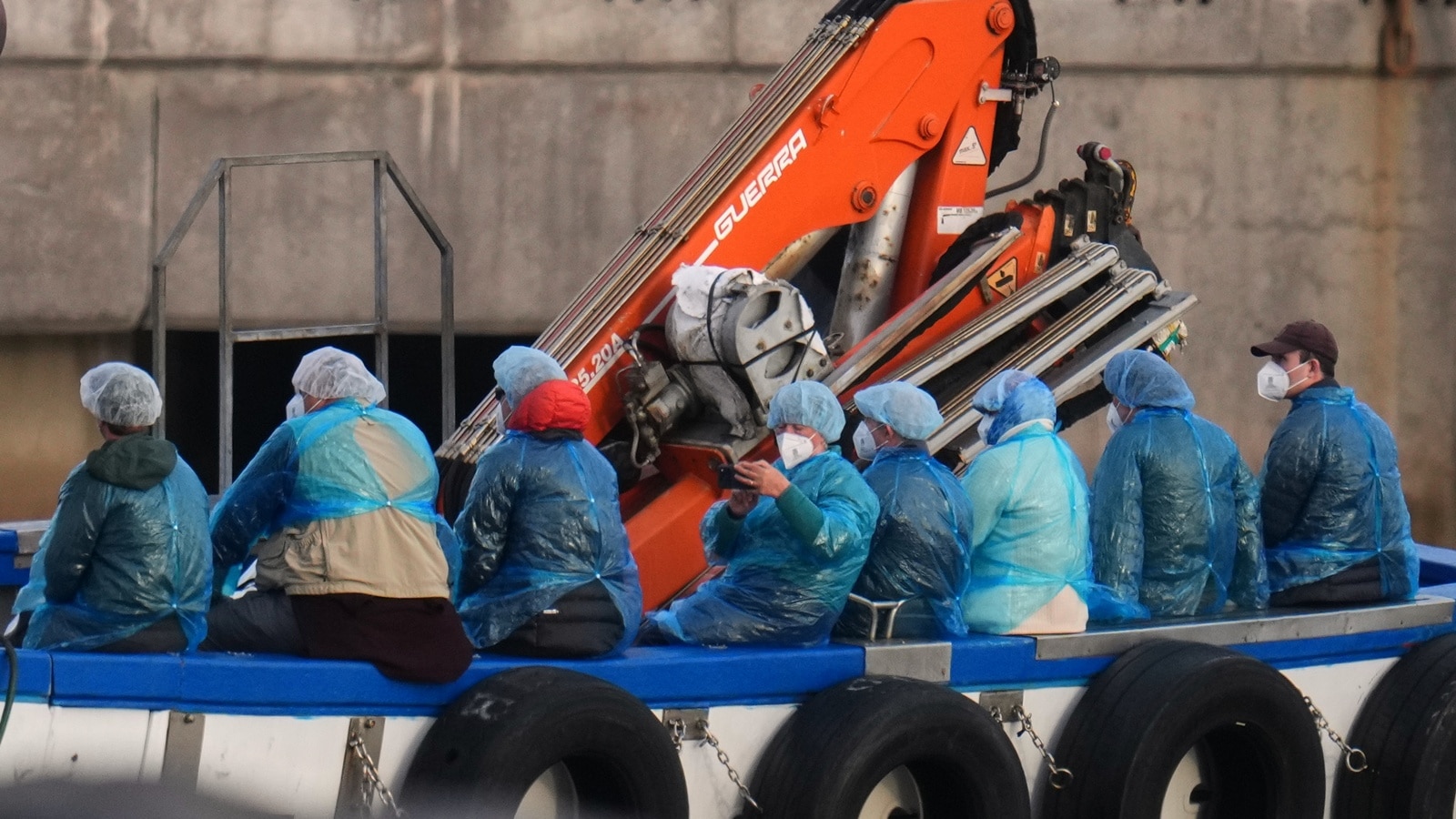
The sea has a way of erasing the world behind you. When the gangplank rises and the shore shrinks into a thin, golden line, the rules of the land seem to dissolve. You are in a floating city, a sanctuary of white linen and endless horizons. But on a recent voyage, a silent passenger boarded without a ticket, hiding not in a suitcase or a dark corner of the hold, but in the very air of a cabin.
A French citizen, seeking the solace of the waves, found something else entirely. After disembarking from a cruise ship that had already been flagged for a hantavirus outbreak, the passenger tested positive. It sounds like a headline from a different century, a relic of the days when ships carried more than just vacationers. Yet, here we are.
Hantavirus is not a name we usually associate with the salt spray of the ocean. We think of dusty barns. We think of rustic cabins in the woods. We think of the scratch of tiny feet in an attic. But the virus is indifferent to the luxury of a deck chair.
The Biology of a Shadow
To understand the threat, you have to understand the host. Hantaviruses are carried by rodents—specifically, certain species of mice and rats. They don't get sick. They simply carry. The virus is shed through their saliva, urine, and droppings.
It is a microscopic hitchhiker. When these waste products dry, they can become aerosolized. A person breathing in that dust, perhaps while moving a box or sleeping in a room where a rodent once scurried, unknowingly inhales the pathogen. Once inside the lungs, the virus begins its slow, methodical work. It targets the very vessels that keep us alive, causing them to leak fluid into the lungs.
It is a physical betrayal. Your own body, trying to fight, ends up drowning in its own defenses.
In the case of this cruise ship, the narrative is still being written. Health officials are tracing the steps of the infected, looking for the source. Was it a supply crate? A stowaway rodent in the galley? Or did the infection begin far from the ship, only to manifest while the vessel was at sea?
The Weight of the Wait
Imagine the internal monologue of a passenger who receives that notification. You are back home, perhaps still feeling the phantom sway of the ship in your legs. Then, the phone rings. Or the email lands.
"You may have been exposed."
The incubation period for hantavirus is a cruel stretch of time. It can take anywhere from one to eight weeks for symptoms to appear. For two months, every cough is a question mark. Every slight ache in the joints feels like the beginning of the end. Every feverish flush is scrutinized.
Fatigue. Muscle aches. Chills. These are the early signs. They are frustratingly common, mimicking a dozen other less lethal ailments. But for someone on a "hit" ship, they are a siren. If the disease progresses to Hantavirus Pulmonary Syndrome (HPS), the mortality rate climbs toward 40 percent.
Numbers like that don't just inform. They haunt.
The Illusion of Total Safety
We live in an era of sanitized travel. We expect our environments to be scrubbed, filtered, and monitored. We view the natural world as something to be viewed through a panoramic window, not something that can permeate the glass.
But ships are complex ecosystems. They are steel labyrinths that touch many ports, take on thousands of tons of cargo, and house thousands of people. They are not airtight bubbles. The presence of hantavirus on a vessel challenges our sense of control. It reminds us that the wild world is persistent. It finds the gaps. It finds the vents. It finds the lungs.
When we talk about "outbreaks," we often focus on the logistics. We discuss quarantine protocols, the cleaning of ventilation systems, and the legal liabilities of the cruise line. We look at the "what" and the "how." But the "who" is where the story truly lives.
Consider the French traveler. They weren't a statistic when they booked the trip. They were someone looking for a sunset. Now, they are a case study in the unpredictability of the modern world. They represent the bridge between our desire for adventure and the biological reality of our planet.
The Ghost in the Machine
Modern medicine is a marvel, but it has few answers for hantavirus. There is no specific cure, no vaccine, no "magic bullet" pill. Treatment is supportive. It is a battle of endurance. Doctors can provide oxygen, they can manage the fluid, they can wait for the body to either win or lose.
This lack of a quick fix is what makes the virus so formidable in the public imagination. We are used to things we can solve with a prescription. Hantavirus demands a different kind of respect—one rooted in prevention and vigilance.
The response to this positive test must be more than just a deep clean of a single ship. It is a prompt to look at the global supply chains that feed these floating cities. Rodents are the ultimate opportunists. As we expand our reach into new corners of the globe, and as our transport networks become more intricate, the paths for these viruses to travel become shorter and faster.
The Long Echo
The passenger in France is currently the focus of medical attention, but the ripple effects extend across the ocean. Every person who shared that deck, every crew member who worked the corridors, now carries a piece of that story with them.
The sea is still there. The horizons remain wide. But the air feels a little different now. It is a reminder that we are never truly alone, even in the middle of the Atlantic. We carry our biology with us, and sometimes, the world carries its own hidden life right back to us.
The real stake isn't just the health of one person. It is the realization that our safety is a fragile, shared agreement. It depends on the person who inspects the cargo, the engineer who maintains the air scrubbers, and the transparency of health agencies when things go wrong.
We don't need to live in fear, but we must live with awareness. The invisible stowaway is always looking for a way aboard. Our only defense is to keep the lights on, the air moving, and the truth in plain sight.
Somewhere, another ship is preparing to leave port. The passengers are laughing, dragging suitcases, dreaming of the blue. They will look at the water and see a mirror. They should also look at the wind and see a mystery.


