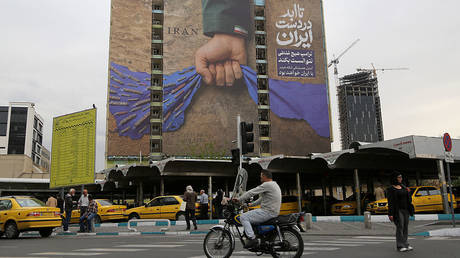
Walk through the streets of Tehran today and you won’t see people dancing. There are no massive victory parades or sighs of relief that can be heard from a mile away. Instead, there's a heavy, grinding silence. It’s the kind of quiet that follows a massive explosion, where your ears are ringing and you’re just waiting for the next hit. The two-week ceasefire between the United States and Iran, brokered by Pakistan on April 8, 2026, feels less like a peace treaty and more like a tactical timeout.
If you’re wondering why Iranians aren’t celebrating, it’s because they’ve seen this movie before. They know that a "10-point plan" on a screen in Washington or a "two-phase framework" discussed in Islamabad doesn't mean the missiles stop forever. For the average person in Isfahan or Shiraz, the war didn't just happen on news feeds. It happened in their grocery stores where prices tripled overnight and in the terrifying hum of drones over Tehran. They’re skeptical because they’ve learned the hard way that "peace" is often just a fancy word for "reloading."
The Strait of Hormuz Standoff
The biggest sticking point right now isn't just about who fired first. It’s about the money. President Trump made it clear on Truth Social that any deal is dead on arrival unless the Strait of Hormuz opens completely and immediately. To the U.S., the Strait is a global artery that Iran has no right to clog. To Tehran, those waters are their only remaining leverage.
Iran has been running a tiered "toll" system, charging ships to pass through what they claim are their territorial waters. It’s a desperate move to fund a war-torn economy. Trump’s response? A total blockade of any vessel that pays those tolls. This "open for all or open for none" policy has turned the Persian Gulf into a giant game of chicken. If the ceasefire was supposed to ease the global oil crunch, it’s failing. Shipping companies aren't willing to risk a multi-million dollar tanker on the hope that a two-week pause actually holds.
Why the Nuclear Red Lines Won't Budge
I’ve spent years tracking these negotiations, and the current impasse is the most rigid I’ve ever seen. The U.S. 15-point plan demands a total dismantling of Iran’s nuclear facilities. We’re talking about giving up every ounce of enriched uranium. On the flip side, Iran’s version of the deal—the one they call a "workable basis"—includes the "acceptance of enrichment."
Basically, both sides are asking the other to surrender their core identity.
- The U.S. Perspective: A nuclear-armed Iran is an existential threat to Israel and regional stability.
- The Iranian Perspective: Their nuclear program is the only reason they haven't been invaded yet.
When Vice President JD Vance sat down with Mohammad-Bagher Ghalibaf in Islamabad, the tension was thick enough to cut. Vance’s rhetoric suggests he wasn't there to negotiate; he was there to accept a surrender. Iranians see this and they don't see a partner for peace. They see a superpower trying to finish a job it started with "Operation Epic Fury."
The Lebanon Loophole
If you want to know why this ceasefire is so fragile, look at Lebanon. Iran and the Pakistani mediators say Lebanon is part of the deal. The U.S. and Israel say it isn't. While the "war" in Iran technically paused, Israel launched "Operation Eternal Darkness" in southern Lebanon, hitting 100 targets in 10 minutes.
To an Iranian, this looks like a scam. They see their allies in Hezbollah getting hammered while they’re told to keep their hands in their pockets. You can't have a regional ceasefire that only applies to certain zip codes. It’s like telling a guy you won't punch him in the face while you're kicking his brother in the shins. It doesn't build trust; it builds resentment.
The Human Cost of Hyperinflation
Politics aside, the real story is the economy. Sanctions were already biting hard before the 2026 war started. Now, the Iranian Rial is basically wallpaper. President Masoud Pezeshkian wrote an open letter to the American people asking them to "look beyond the machinery of misinformation," but for most Iranians, they’re just looking for affordable bread.
The U.S. has signaled a willingness to unfreeze assets, but only if Iran blinks first. This "incentive" feels like a bribe to a starving person. People in Tehran are exhausted. They’ve lived through decades of "maximum pressure," and they’re starting to realize that no matter who is in the White House or the Bee-sat, the result is the same for them: more struggle.
What Happens When the Two Weeks Are Up
We are currently in a 15-to-20 day window of "negotiations." But let’s be real. You don't solve forty years of animosity in two weeks, especially when both sides are still accusing each other of violations. Reports of strikes near Tehran and Isfahan continue to trickle in despite the official "halt."
If you’re looking for a silver lining, it’s that they’re talking at all. This is the first face-to-face meeting at this level since 1979. That’s something. But don't mistake a conversation for a conversion. The red lines in Washington and Tehran aren't drawn in pencil; they’re etched in stone.
Expect the next few days to be a flurry of "leaks" and "proposals" that go nowhere. The U.S. will likely ramp up the blockade pressure, and Iran will likely keep the Strait of Hormuz closed. If you’re an investor or just someone watching the gas prices, don't hold your breath for a "Grand Bargain." We’re looking at a long, cold stalemate where the only certainty is more uncertainty.
Watch the ship tracking data in the Gulf. If those tankers start moving without paying tolls, maybe there's a chance. If not, the ceasefire is just a countdown to the next round of sirens. Keep your eyes on the mediator reports from Islamabad; that’s where the real temperature of the room is being taken, away from the Truth Social posts and the state media rhetoric.