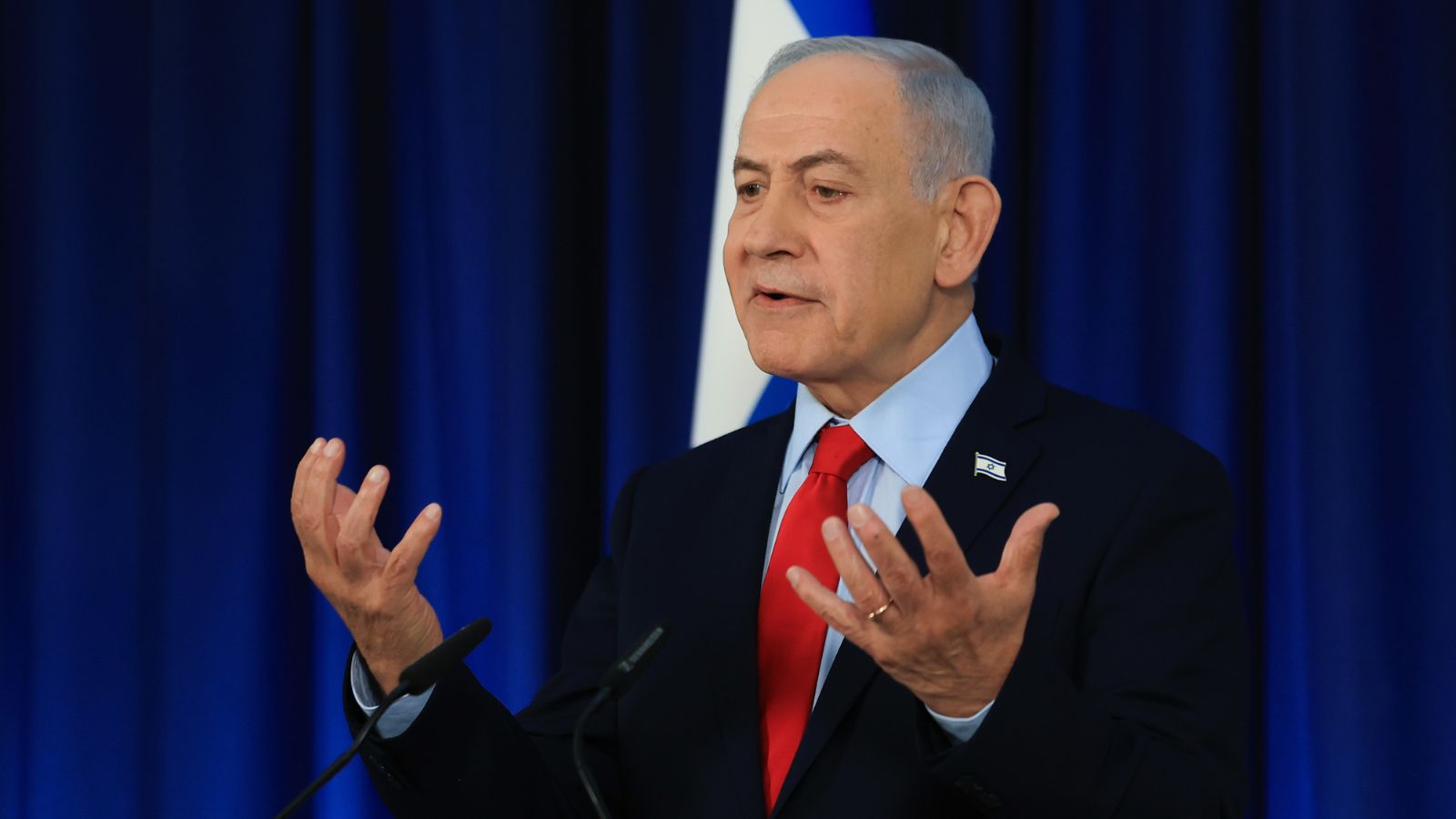
The rockets have stopped falling, and that’s bad news for Benjamin Netanyahu.
For weeks, the war with Iran provided a convenient, if horrific, pause button for the most significant criminal trial in Israeli history. When the missiles are flying, nobody’s talking about Case 4000. But the two-week ceasefire brokered by the U.S. and Pakistan hasn't just cleared the skies over Tel Aviv; it’s cleared the path for the Jerusalem District Court to reopen its doors. You might also find this related story useful: The Strait of Hormuz Toll Trap and the Myth of the Open Waterway.
On Sunday morning at 9:30 a.m., Netanyahu’s corruption trial resumes. It’s a jarring shift. One day he’s a wartime leader negotiating the survival of a "civilization," as Donald Trump put it, and the next he’s a defendant sitting on a hard wooden bench listening to testimony about expensive cigars and media bribery.
This isn't just a scheduling update. It’s a political collision. The state of emergency that froze the judicial system is over, and the "emergency" of Netanyahu's legal future is back in the spotlight. As discussed in recent coverage by TIME, the results are widespread.
The End of the War-Time Shield
When the war broke out on February 28, the Justice Ministry placed the courts under a "special emergency" format. This wasn't a conspiracy to help the Prime Minister; the entire country was under fire. Schools closed, businesses shuttered, and non-urgent legal matters were shelved. Netanyahu’s trial, which has dragged on since 2020, was parked indefinitely.
Now that the emergency regime has expired, the court’s spokesperson was blunt. Hearings will resume "as usual," running Sundays through Wednesdays.
You’ve got to see the irony here. Netanyahu has built his recent political identity on being the only man who can handle Iran. But the moment he secures even a "fragile" peace—as J.D. Vance calls it—the legal system he’s been battling for years immediately moves to check him. He’s essentially a victim of his own diplomatic success.
What’s Actually Happening in that Courtroom
If you haven’t kept up with the nuances of the cases, you’re not alone. It’s a mountain of evidence that’s been building for years. But the resumption on Sunday brings us back to the meat of the allegations.
- Case 4000 (The Bezeq-Walla Affair): This is the big one. Netanyahu is charged with bribery, fraud, and breach of trust. The claim? He allegedly pushed for regulatory changes worth hundreds of millions of dollars to the Bezeq telecommunications group. In exchange, he supposedly got favorable coverage from the Walla! news site.
- Case 1000 (The Gifts Case): This reads like a Hollywood script. It involves allegations that Netanyahu received around $195,000 worth of luxury goods—pink champagne, high-end cigars, jewelry—from billionaires like Arnon Milchan.
- Case 2000 (The Yedioth Ahronoth Affair): This focuses on a "quid pro quo" deal where Netanyahu allegedly discussed weakening a rival newspaper in exchange for better coverage from one of Israel’s largest media outlets.
On Sunday, we're diving back into Case 4000. Specifically, we're looking at defense witnesses and the grueling process of cross-examination. It’s slow. It’s tedious. And it’s exactly what Netanyahu doesn't want to be doing while a volatile ceasefire with Iran hangs by a thread.
The Trump Factor and the Pardon Push
The wild card in all of this is the man in the White House. Donald Trump hasn't been shy about his feelings. He’s publicly urged Israeli President Isaac Herzog to grant Netanyahu a pardon. Trump’s logic is simple: Netanyahu shouldn't be "distracted" by a trial while dealing with Iran.
But pardoning a sitting Prime Minister in the middle of a trial is almost unheard of in Israel. It would be a legal earthquake. While the Justice Ministry is reportedly reviewing materials related to a pardon request, there’s no indication an escape hatch is opening anytime soon.
Critics argue that a pardon now would destroy the principle that no one is above the law. Supporters say the country is too fractured to handle a trial and a war simultaneously. Honestly, both sides are right in their own way, which is why the tension is so high.
A Prime Minister in Two Worlds
Netanyahu is currently living a double life. In one world, he’s the commander-in-chief, coordinating with the IDF and dealing with the fact that the Iran ceasefire doesn't even apply to the fighting with Hezbollah in Lebanon. In the other world, he’s "Defendant Netanyahu."
Think about the mental gymnastics required. One hour you’re discussing the enrichment levels of Iranian uranium, and the next you’re arguing with a prosecutor about whether a specific box of cigars constitutes a bribe.
His popularity has taken a hit. Recent polls show the public is exhausted. With elections looming in October, the timing of this trial’s resumption couldn't be worse for his Likud party. Every day he spends in court is a day his opponents can talk about "corruption" instead of "security."
Why Sunday Matters
Sunday marks the return to "normalcy," but in Israel, normalcy is a battlefield. The court sessions in Jerusalem and Tel Aviv will serve as a constant reminder that the war didn't make Netanyahu’s legal problems disappear; it just postponed the inevitable.
If the ceasefire holds, the trial becomes the dominant story in the country. If the ceasefire breaks—which many expect it will—the trial might be paused again. This creates a perverse incentive structure where the Prime Minister's personal freedom is arguably tied to the state of national conflict.
If you're following this, don't look for a quick resolution. This trial has no end date in sight. The prosecution alone listed over 300 witnesses. We’re in for a long, ugly summer of testimony.
Your next steps for staying informed:
- Watch the Sunday morning updates: The first hour of the trial's resumption will set the tone for how aggressive the defense plans to be after the break.
- Monitor the "emergency" status: If hostilities with Iran or Hezbollah ramp up again, the Justice Ministry could re-impose the emergency court restrictions at a moment's notice.
- Track the pardon review: Any official leak from the Justice Ministry regarding the "new materials" they are reviewing for the pardon request will be a major market-mover for Israeli politics.