Stop blaming the drums of war for a dry tap in Tehran.
The conventional narrative—the one being peddled by pundits and mainstream outlets—is that regional conflict and the looming shadow of strikes are the primary drivers of Iran's water collapse. They want you to believe that if the missiles stopped flying, the rivers would start flowing.
That is a convenient lie. It is a fairy tale told to mask decades of catastrophic engineering ego and a "hydromanic" obsession with self-sufficiency that has done more damage to the Iranian Plateau than any foreign kinetic action ever could.
War isn't the crisis. War is just the stress test that is exposing a foundation made of sand.
The Myth of the War-Driven Thirst
The lazy consensus suggests that geopolitical instability prevents infrastructure maintenance and halts international investment. While true on paper, it ignores the reality that Iran has spent the last forty years building more dams than almost any other nation on earth.
We aren't looking at a lack of investment. We are looking at the wrong investment.
Iran's water bankruptcy is a structural, self-inflicted wound. The "security-first" mindset led to a desperate push for food self-sufficiency in a desert. To achieve this, the state incentivized the mass cultivation of water-intensive crops like wheat and rice in regions where they have no business growing. They didn't need a war to deplete their aquifers; they did it with subsidies and a drill bit.
The Damming of a Nation
If you want to find the real culprit, look at the concrete.
The Iranian government, often through entities linked to the revolutionary guard, turned dam construction into a national religion. They dammed every pulse of water they could find. The result? They increased surface area, which in a region with blistering evaporation rates, is essentially a high-speed way to throw water into the sky.
Take the Gotevand Dam. Engineers ignored warnings about salt formations in the reservoir area. Now, the dam serves as a massive salinization engine, ruining the Karun River's water quality downstream. That wasn't a "war crisis." That was an engineering arrogance crisis.
The Subsidence Trap
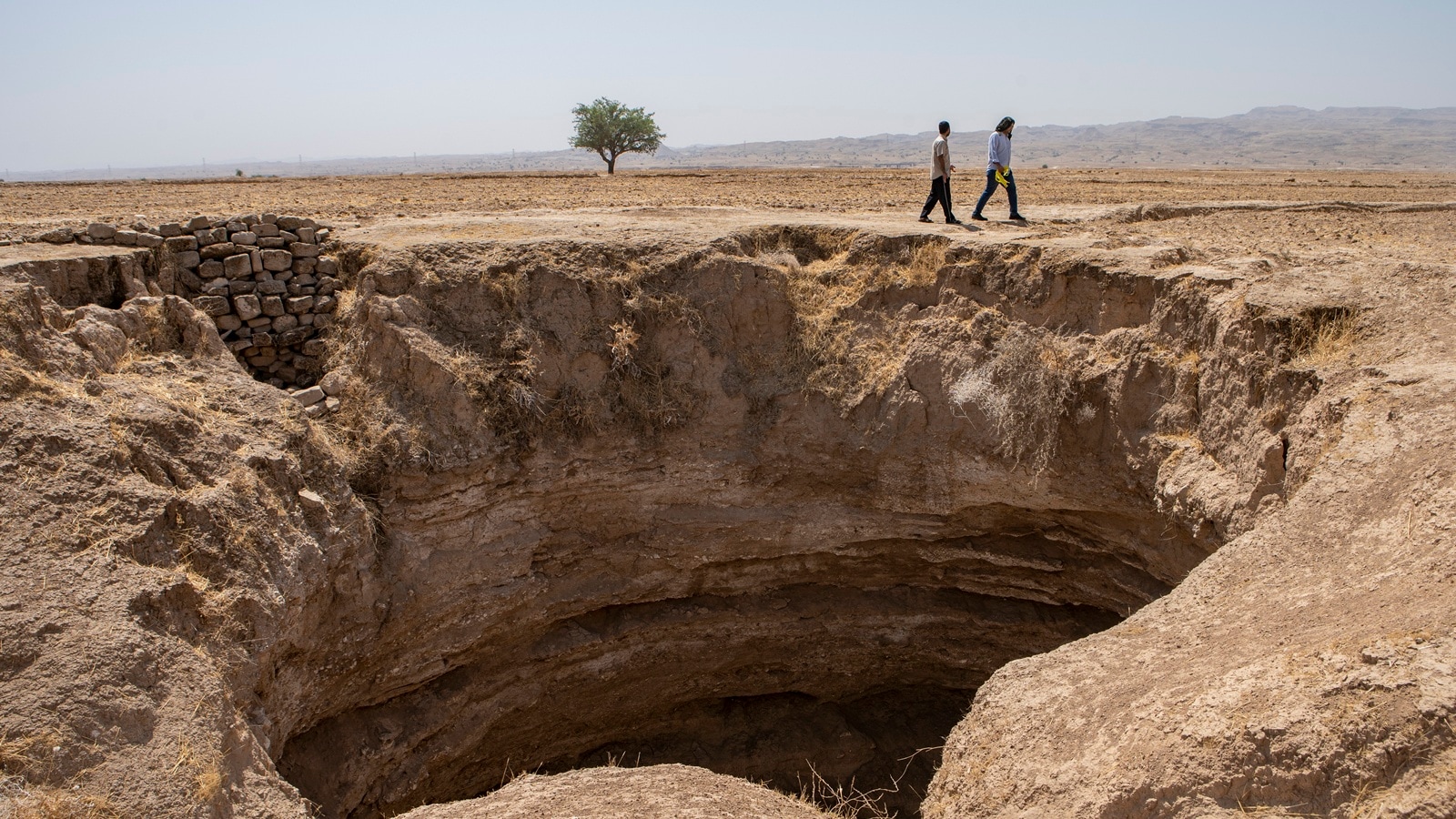
When you mismanage surface water, you force the population to look down. Iran is currently experiencing some of the fastest land subsidence rates on the planet. Parts of the Tehran plain are sinking by 25 centimeters per year.
This isn't just "dry soil." When an aquifer is over-pumped to the point of subsidence, the geological structure collapses. The storage capacity is gone forever. You could have a thousand years of rain starting tomorrow, and that water would have nowhere to go. It would just sit on the surface and evaporate.
I have seen planners in other arid regions try to "engineer" their way out of physics. It never works. You cannot build your way out of a deficit when your currency is a finite natural resource.
The Misplaced Fear of Desalination
The "experts" argue that desalination is the silver bullet that war is preventing. This is a fundamental misunderstanding of the energy-water nexus.
Iran sits on some of the world's largest gas reserves. They have the energy. What they lack is the honesty to admit that pumping desalinated water from the Persian Gulf up to the high-altitude central plateau is an energetic absurdity. It is a thermodynamic nightmare.
Building massive pipelines to "fix" the desert isn't a solution; it's a massive transfer of wealth to construction firms that ignores the root cause: an agricultural sector that consumes 90% of the country’s water while contributing less than 10% to the GDP.
Dismantling the People Also Ask
Does war cause water shortages? Only at the margins. It breaks pipes and stops pumps. But in Iran, the "shortage" is actually a "bankruptcy." You can fix a pipe. You cannot fix a dry, collapsed aquifer that took ten thousand years to fill.
Can international aid fix Iran's water issues? No. Throwing money at a system that prioritizes "security crops" over hydrologic reality is like pouring water into a sieve. The issue is policy, not just plumbing.
Is climate change the main culprit? Climate change is the multiplier, not the cause. It makes the margins tighter, but Iran’s water was stolen by bad policy long before the temperature started climbing. Blaming climate change is an easy out for bureaucrats who don't want to admit they drained the country dry.
The Brutal Reality of the Modern Siege
The real "war" is being fought between the central government and the rural provinces. When the water runs out in Isfahan or Khuzestan, the state diverts what's left to the capital to prevent urban unrest.
This creates a domestic siege.
The farmers aren't being thirsty because of a foreign blockade. They are thirsty because the water that should be in their fields is being piped to industrial complexes or kept in reservoirs to keep the lights on in Tehran.
Why the "Green" Solutions Fail
You’ll hear talk about "modern irrigation" and "drip systems." Here is the contrarian truth: in a closed basin, more efficient irrigation often leads to more water consumption, not less. This is known as Jevons Paradox. When farmers find they can grow more with less water per acre, they simply plant more acres.
Unless you cap the total volume of water used, "efficiency" is just a faster way to reach zero.
The High Cost of the Self-Sufficiency Myth
The core of the problem is a psychological hang-up. The Iranian leadership views food imports as a vulnerability. They remember the blockades. They remember the history of foreign interference.
But by trying to be "invulnerable" through local farming, they have made the nation fragile. They have traded a manageable risk (importing grain) for an existential catastrophe (running out of water).
You can buy wheat on the open market even during a conflict. You cannot buy a new water table.
The Technical Fallacy of "Transfer Projects"
Current "solutions" involve massive inter-basin transfers—taking water from the "wet" areas to the "dry" areas. This is essentially robbing Peter to pay Paul, except Peter is already broke and Paul has a hole in his pocket.
These projects destroy the ecosystems of the source regions, leading to dust storms and salt flats, which then blow back over the "productive" regions, killing the very crops the water was moved to save. It is a feedback loop of incompetence.
The Only Way Out (And Why It Won't Happen)
To actually solve this, Iran would need to do the unthinkable:
- Kill the Agriculture Myth: Pivot away from being a wheat producer. Become an importer of "virtual water" by buying food from water-rich nations.
- Price Water for What It's Worth: Stop subsidizing the destruction of the environment. If water costs what it actually costs to extract, the waste stops overnight.
- De-Dam the Nation: Start removing the structures that are choking the natural recharge of the land.
This will not happen. It is politically suicidal. It challenges the power of the revolutionary institutions that build the dams and the patronage networks that control the land.
So the next time you see a headline about "War and Water," remember this: the war is an excuse. The water is a casualty of a state that chose to drink its own future to survive its own past.
The tap is dry because the state turned it off.
Actionable Order: Stop Looking at the Border. Look at the Dam.
If you are an investor, a policy analyst, or a student of the Middle East, stop tracking the missiles to understand the thirst. Track the reservoir levels and the subsidence rates.
That is where the real collapse is happening.
The missiles are just the sound of a house falling down that was already rotten to the core.