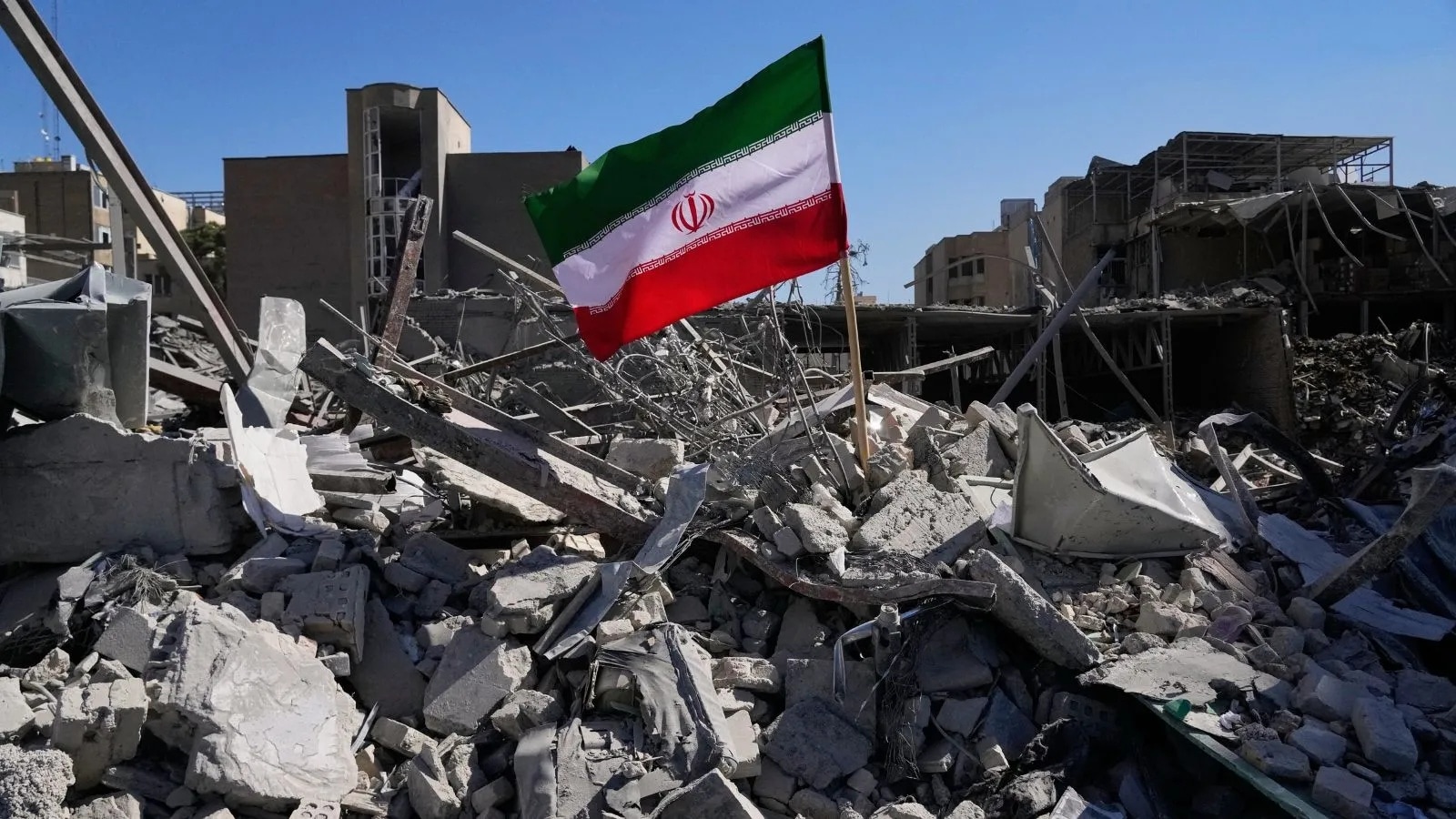
You don't expect your evening news anchor to whip out an automatic rifle, take it apart on live television, and simulate shooting a foreign nation's flag. Yet, that's exactly what just happened on Iranian state media.
If you're trying to figure out how close the Middle East is to a full-scale regional collapse, look no further than Tehran's television studios. Over the past few days, the Islamic Republic of Iran Broadcasting (IRIB) networks turned their standard programming into a bizarre, highly militarized public spectacle. Mainstream news hosts are trading their teleprompters for Kalashnikovs and PK machine guns.
This isn't an accident or a rogue stunt by radical presenters. It's a calculated, government-coordinated psychological operations campaign designed to project absolute defiance. The real motivation behind these broadcasts reveals a deeper sense of desperation inside the regime than their aggressive posturing lets on.
Behind the Studio Firearm Drills
The broadcasts crossed a line from aggressive rhetoric into surreal political theater on May 15 and 16. On the Ofogh network, prominent presenter Hossein Hosseini hosted a segment featuring a masked member of the Islamic Revolutionary Guard Corps (IRGC). Right there on set, the IRGC operative gave Hosseini live instruction on basic firearm handling.
Hosseini didn't just learn how to load the assault rifle. He disassembled it, reassembled it, and then went a step further. He pointed the weapon and mimed firing a shot directly at a flag of the United Arab Emirates (UAE). This provocative move drew immediate, fierce condemnation from the Gulf Cooperation Council (GCC).
On IRIB Channel 3, another well-known anchor, Mobina Nasiri, appeared live while holding an assault rifle. She told viewers that the weapon had been sent directly to her from a public gathering in Tehran's Vanak Square. Nasiri stated that "in case of need," she and all Iranian women would step onto the battlefield.
Around the same time, IRIB Channel 1 started broadcasting segments framing civilian weapons drills inside local mosques and city squares as essential "public defense." The network urged the public to save fuel, water, and electricity, explicitly stating that cutting back on domestic consumption directly aids the civil defense strategy against foreign enemies.
What Triggered Tehran's Studio Panic
This dramatic shift to prime-time combat training didn't happen in a vacuum. It coincides with an incredibly dangerous spike in geopolitical tensions involving Iran, Israel, the United States, and neighboring Gulf states.
- The UAE Nuclear Plant Strike: A drone attack targeted the Barakah nuclear power plant in the UAE, sparking a fire. While UAE authorities stated the fire didn't compromise safety operations, the strike has driven regional anxieties to a fever pitch.
- Failed Beijing Diplomacy: Iranian state-aligned outlet Nowandish reports that a regional neighbor privately warned Tehran that a return to active combat is highly likely, following a total deadlock in Beijing-mediated diplomatic talks.
- Stalled Nuclear Negotiations: Tensions between Washington and Tehran reached a boiling point after U.S. officials warned that the "clock is ticking" on stalled nuclear negotiations. This comes as Iran continues to enrich uranium near weapons-grade levels.
Iranian officials are actively priming the population for a worst-case scenario. Former IRGC commander and current parliament member Ismail Kowsari appeared on state media to demand universal combat readiness. He stated that every man and woman must be prepared to confront any forces if the country faces an incursion.
The Strategy of Televised Deterrence
When you look past the shocking imagery of a news anchor handling an early East German MPi-KMS rifle on a slick television set, you have to ask yourself who this display is actually for. It serves three distinct tactical purposes for a regime under immense pressure.
First, it is an explicit message to foreign intelligence agencies and defense departments. By broadcasting basic weapons handling and automatic rifle mechanics on public television, Tehran is signaling that it plans to fight asymmetric, total warfare if Western or Israeli forces launch a ground operation or significant airstrikes. It's an attempt to project the image of an instantly mobilizable population.
Second, it acts as a tool to control a deeply unhappy domestic population. The regime is dealing with severe, compounding internal crises. The domestic economy is in a historic freefall, basic goods are scarce, and authorities have heavily cracked down on widespread political dissent.
By flooding the airwaves with existential wartime messaging, the government hopes to paralyze internal opposition through fear. The implicit message to ordinary citizens is clear: dissent during a time of national survival is treason. In fact, Iranian police chief Ahmadreza Radan recently confirmed thousands of domestic arrests, targeting alleged spies and opposition figures since the security situation deteriorated.
Third, it's a frantic effort to keep the regime's core loyalists motivated. The hard-core support base that attends government rallies and populates the paramilitary Basij forces is exhausted and demoralized. Showing familiar, trusted TV anchors embracing the militia aesthetic is an ideological shot in the arm for the state's remaining faithful.
Reading Between the Propaganda Lines
Despite the dramatic declarations on live television, don't assume the Iranian government is actually handing out live ammunition to its general public.
The National Council of Resistance of Iran (NCRI) and various domestic analysts point out a glaring contradiction. The regime knows that actually arming its heavily dissatisfied civilian population would be incredibly dangerous to its own survival. While state TV hosts show off rifles in sterile studios, the state continues to heavily police, disarm, and execute citizens who independently obtain weapons or use force against state security apparatuses.
This isn't a true mass-mobilization drive like we've seen in other global conflicts. It is tightly controlled media stagecraft.
Historically, when authoritarian governments start putting armed media personalities on the airwaves, it often signals profound internal panic rather than secure military strength. Many commentators on Iranian social media have pointed out the striking parallel to the final days of Muammar Gaddafi's regime in Libya in 2011, when state TV anchors famously brandished firearms on live broadcasts just days before the government collapsed.
What Happens Next
The situation is highly volatile, and the risk of a miscalculation on either side is at an all-time high. To stay properly informed on how this media campaign matches the reality on the ground, focus your attention on these specific indicators:
- Monitor the Strait of Hormuz: Watch for any changes in Iranian naval deployments or official threats to close shipping lanes. This remains Tehran's primary economic lever.
- Track Domestic Energy and Supply Quotas: Pay close attention to whether the state starts rationing fuel, water, or electricity in major cities like Tehran and Isfahan. If the civil defense warnings on Channel 1 turn into mandatory rations, it means the leadership expects imminent infrastructure strikes.
- Watch Gulf State Security Reprisals: Track how the UAE and Saudi Arabia respond to the broadcast provocations and the recent drone incidents. Increased diplomatic isolation from its immediate neighbors will leave Iran with virtually no economic safety valves.
The televised firearm drills are a stark reminder that modern conflicts are fought on digital screens and in information ecosystems long before they escalate on the ground. Tehran is using its airwaves to draw a hard line in the sand, but the extreme nature of the display shows just how thin the margin for error has become.