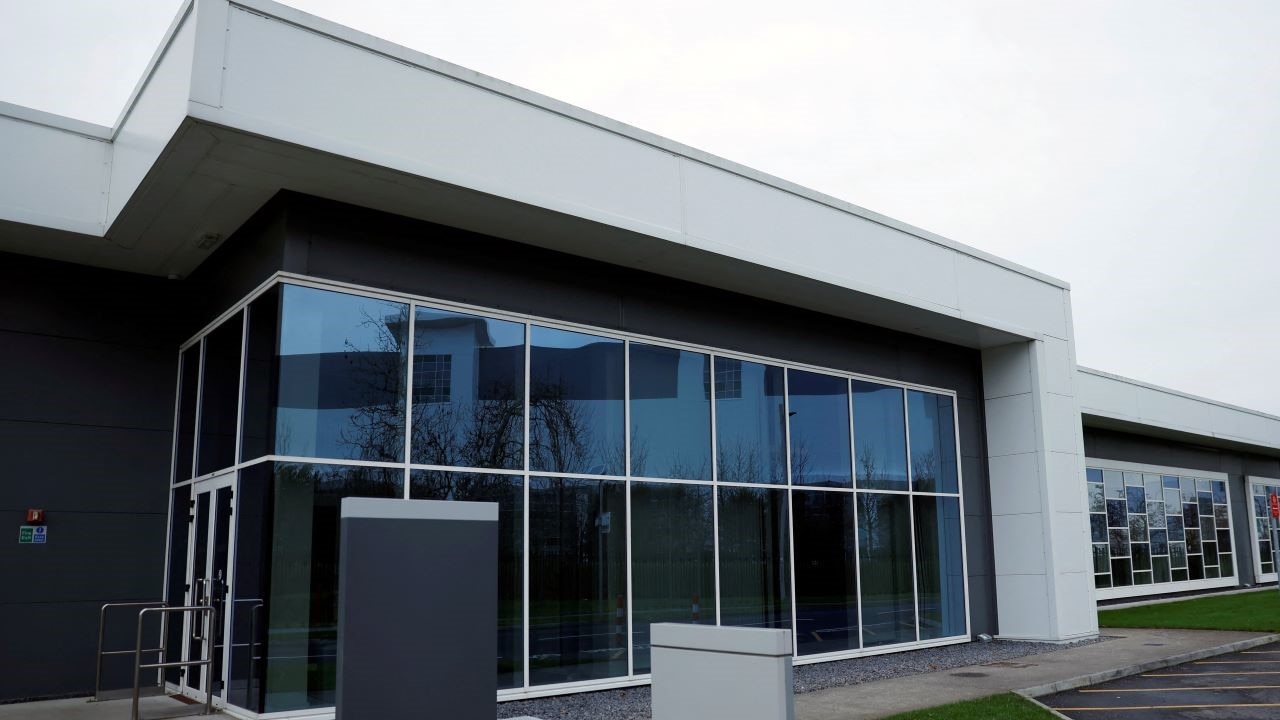
The press releases are glowing. They speak of "innovation," "energy independence," and a "new era for Irish tech." They want you to believe that a data center plugging itself directly into a private gas-fired power plant is a masterstroke of engineering and environmental stewardship.
It is a lie.
What we are actually witnessing is the white flag of a failing national infrastructure. When a multi-billion-dollar industry decides it can no longer rely on the state to provide basic utilities, that isn't progress. It’s a retreat into feudalism. We are building digital fortresses while the rest of the country’s energy strategy crumbles under the weight of unrealistic targets and a refusal to face the physics of the grid.
The Gas-Fired Elephant in the Room
The competitor narrative suggests this move "eases pressure on the national grid." That is a convenient way to say the grid is currently so brittle it cannot fulfill its primary function. By building its own gas plant, this data center isn’t "saving" energy for the rest of Ireland; it is simply jumping the queue by burning fossil fuels in a private backyard where the optics are easier to manage.
Let’s look at the chemistry. You cannot claim to be "green" while spinning up gas turbines. The marketing departments will use words like "transitionary" or "hydrogen-ready." In the industry, we know "hydrogen-ready" is a hollow phrase used to soothe regulators. There is no large-scale green hydrogen infrastructure in Ireland. There won't be for a decade, if ever.
By building a private gas plant today, you are locking in carbon emissions for the next 20 to 30 years. You are bypassing the collective effort to decarbonize the national energy mix in favor of a reliable, dirty, and isolated solution.
The Myth of Energy Independence
People often ask: "Isn't it better if they generate their own power?"
No. It is a disaster for the economics of a modern society.
The strength of a national grid lies in diversity and balancing. When you have a massive consumer like a data center integrated into the grid, its demand can—in a functional system—be used to incentivize more renewable builds. By going "off-grid," these facilities are effectively opting out of the social contract of energy.
They take the economic benefits of being in Ireland—the low corporate tax, the skilled workforce, the cool climate—but they refuse to participate in the shared challenge of building a sustainable power network. They are cherry-picking the infrastructure they want and building a moat around the rest.
I’ve seen this play out in emerging markets where the state can't keep the lights on. Companies buy their own generators, hire their own security, and pave their own roads. We used to call that a "developing economy." Now, we're calling it "high-tech innovation" in Dublin.
The Physics of Failure
Standard articles on this topic ignore the Second Law of Thermodynamics and the sheer inefficiency of small-scale thermal generation compared to utility-scale plants.
$$\eta = \frac{W}{Q_H}$$
The efficiency ($\eta$) of a private, localized gas turbine will rarely match the thermal efficiency of a massive, state-of-the-art combined cycle gas turbine (CCGT) plant operated by a national utility. By fragmenting power generation into smaller, private pockets, we are actually increasing the total amount of gas burned per megawatt-hour produced.
It is a net loss for the planet, wrapped in a win for the corporate balance sheet.
The Data Center Scapegoat Strategy
The Irish government is caught in a pincer movement. On one side, they need the massive tax receipts and investment from Big Tech. On the other, they have a public rightfully angry about the possibility of winter blackouts.
The "privately powered" model is a political gift. It allows the government to say, "Look, they aren't taking your electricity," while ignoring the fact that these companies are still consuming the nation’s limited gas supply, occupying land, and contributing to the carbon footprint that the citizens will eventually be taxed for.
We are creating a two-tier society.
- The Digital Elite: Privately powered, climate-controlled, and always online.
- The Public: Subject to the whims of an aging grid, soaring prices, and "demand management" schemes.
Stop Asking if it’s "Innovative"
The wrong question is being asked. The media asks: "How does this help the grid?"
The real question is: "Why has the Irish state failed so spectacularly that companies are forced to build their own 19th-century power solutions?"
The answer is a toxic mix of NIMBYism (Not In My Backyard) and a refusal to invest in nuclear or massive subsea interconnectors fast enough. Instead of fixing the foundation, we are letting the richest tenants build their own basements and telling everyone else to be grateful for the reduced load.
The Brutal Reality of "Hydrogen Ready"
If you hear a spokesperson mention "hydrogen-ready," demand to see the storage tanks. Demand to see the electrolyzers. Demand to see the pipeline.
They don't exist.
To run a data center on green hydrogen requires a massive amount of renewable energy—energy that Ireland currently doesn't have a surplus of. To create that hydrogen, you’d need to overbuild wind farms to a degree that would make current planning objections look like a polite tea party.
The "privately powered" data center is a gas plant. Period. Calling it anything else is a PR exercise designed to bypass the moratorium on new data center connections in the Greater Dublin Area. It is a loophole, not a breakthrough.
The Cost of the Moat
There is a hidden cost to this isolationism. When these centers go off-grid, the "system charges" that usually help maintain the national wires are bypassed. The remaining users—small businesses and households—are left to pick up the tab for a grid that is becoming more expensive to maintain and harder to balance.
We are witnessing the "death spiral" of the utility model in real-time. As the biggest players leave the system to fend for themselves, the system becomes less viable for those left behind.
The Only Honest Path Forward
If we actually wanted to solve this, we wouldn't be cheering for private gas plants. We would be demanding:
- Mandatory Heat Export: Data centers produce massive amounts of low-grade heat. Instead of venting it into the Irish rain, they should be legally required to plug into district heating systems for local housing.
- On-Site Long Duration Energy Storage (LDES): Not just batteries for 15 minutes of backup, but iron-air or flow batteries that can support the grid during low-wind periods.
- Nuclear Integration: Small Modular Reactors (SMRs) are the only way to provide the baseload these facilities need without the carbon cost of gas.
But these solutions are hard. They require long-term thinking and political courage. Gas engines in a shed are easy.
The Verdict
This isn't a milestone for Irish tech. It is a warning.
It tells us that our energy policy is so broken that the only way to keep the internet running is to return to the era of the "company town," where the factory provides its own light and the rest of the world sits in the dark.
Stop celebrating the fact that a trillion-dollar company found a way to stop sharing the grid. Start worrying about what happens to everyone else when the biggest players stop caring if the grid works at all.
If you want to build a data center in 2026, you shouldn't be allowed to just "bring your own gas." You should be forced to fix the system you’re profiting from. Anything else is just organized abandonment.
The lights are on in the data hall, but the vision is pitch black.