The headlines are vibrating with the same predictable rhythm. "Israel bolsters UAE defense." "A new era of Abraham Accords security." It sounds like a strategic masterstroke. It looks like a tectonic shift in Middle Eastern power dynamics.
It is actually a sophisticated piece of theater.
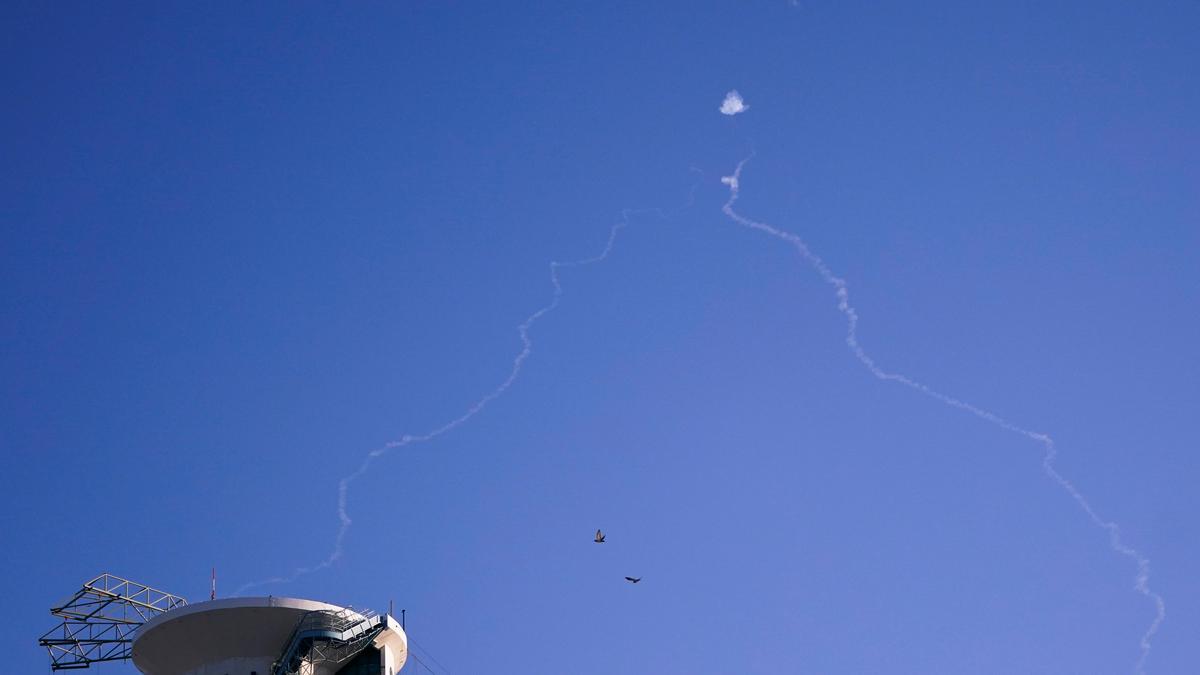
If you believe that sticking a few Tamir interceptor batteries on Emirati soil fundamentally changes the security calculus against Iran, you have been sold a bill of goods. The mainstream media is obsessed with the optics of the sale. They are ignoring the physics of the intercept. The deployment of the Iron Dome to the United Arab Emirates isn't a military solution; it is a diplomatic handshake wrapped in expensive carbon fiber and radar waves.
The Geography of Failure
The Iron Dome was designed for a very specific, very narrow problem. It was built to stop short-range rockets and artillery shells launched from Gaza or Southern Lebanon. These are "dumb" projectiles following predictable ballistic arcs over distances of 4 to 70 kilometers.
Now, look at a map.
The distance across the Persian Gulf from Iran to the UAE varies, but we are talking about a theater that demands defense against sophisticated cruise missiles and high-velocity ballistic threats. The Iron Dome is world-class at hitting a Qassam rocket made of water pipes. It is not, and has never been, the primary shield against a coordinated swarm of Shahed drones or precision-guided cruise missiles launched from hundreds of miles away.
When people ask, "Can the Iron Dome protect the UAE?" they are asking the wrong question. The right question is: "Why are we using a flyswatter to stop a hawk?" The UAE already operates the THAAD (Terminal High Altitude Area Defense) and Patriot systems. Those are the heavy hitters. The Iron Dome is essentially the "close-in" security guard. It is there to catch what leaks through, yet the narrative suggests it’s the new backbone of the region. It isn't.
The Interoperability Lie
The biggest myth in defense tech is that you can just "plug and play" different systems. Security analysts love to talk about a "Middle East Air Defense" alliance as if it’s a unified LAN party.
It is a nightmare of coding and ego.
Israel’s defense architecture is built on a proprietary "gold standard" of data integration. For the Iron Dome to be truly effective in the UAE, it needs to talk—instantly and without friction—to Emirati sensors, US satellite feeds, and perhaps even Saudi radar.
I have seen defense contractors burn through billions trying to get two different radio frequencies to shake hands. Real-time data sharing between nations that were technically enemies a few years ago is a massive hurdle. You don't just hand over the source code for your most successful interceptor. Israel is rightfully paranoid about its tech leaking. The UAE is rightfully protective of its sovereignty.
What you get is a "walled garden" deployment. The batteries sit there, but they aren't fully integrated into a seamless regional net. They are standalone sentinels. In a high-speed drone swarm scenario, every millisecond of latency in a fragmented command structure is a hole in the sky.
The Cost-Efficiency Trap
Let's talk about the math of attrition. This is where the "lazy consensus" of the media really falls apart.
A single Tamir interceptor missile costs roughly $40,000 to $50,000. The drones being launched by regional proxies often cost less than $20,000. In some cases, significantly less.
If an adversary launches a swarm of 50 low-cost drones, and you fire 100 Iron Dome interceptors to ensure a 90% kill rate, you have just spent $5 million to stop $1 million worth of lawnmower engines and plastic. This is not a sustainable defense strategy. It is an economic drainage pipe.
Israel can justify this because its territory is tiny and the population density is high. Every "hit" prevented is a massive saving in civilian life and infrastructure. But the UAE is a different beast. Its critical infrastructure—oil refineries, desalination plants, and gleaming skyscrapers—is spread out. You cannot "Iron Dome" a desert. You can only protect tiny pockets.
The Sovereignty Tax
There is a darker nuance that the "Abraham Accords" cheerleaders won't touch. When a country buys an Israeli defense system, they aren't just buying hardware. They are buying a permanent seat for Israeli technicians and "advisors" in their backyard.
You don't just drop off an Iron Dome battery and leave a manual in the glove box. These systems require constant maintenance, proprietary software updates, and specialized personnel. By deploying these batteries, the UAE has effectively handed a piece of its domestic security keys to Jerusalem.
This creates a fascinating, albeit risky, dependency. If tensions flare up or if political winds shift in the Knesset, the "support" for those batteries becomes a massive lever of influence. It’s the ultimate "subscription model" for national survival.
The Psychological War
So, if the physics are questionable and the math is bad, why do it?
Because the Iron Dome is a brand.
It is the most famous defense system on the planet. Its presence sends a signal to Tehran that is far more powerful than the actual kinetic capability of the missiles. It says: "We are now one team." It’s a psychological operation disguised as a procurement contract.
The UAE knows that the Patriot system is their real shield. But the Patriot doesn't get the same headlines. The Patriot doesn't represent a "new era" of Arab-Israeli cooperation. The Iron Dome is the mascot of the alliance.
Why the "Common Wisdom" is Dangerous
The danger of believing the hype is that it leads to a false sense of security. If the Emirati public—and more importantly, the investors in Dubai and Abu Dhabi—think they are now under an impenetrable "Iron" umbrella, they are ignoring the reality of modern asymmetric warfare.
Cyber attacks don't care about interceptor missiles. Subsurface threats to shipping don't show up on Iron Dome radar. The focus on this specific hardware is a distraction from the much more complex, much more "grey zone" threats that actually define the modern Middle East.
Stop looking at the launch canisters. Start looking at the data links and the unit costs.
The deployment isn't a wall. It's a billboard.
The moment we stop treating defense procurement like a sports trade and start treating it like the brutal, cold calculus of physics and finance, we see this for what it is. Israel didn't just send missiles to the UAE; they sent a very expensive, very loud message. But if the drones ever truly swarm, the message won't be the thing that saves the city.
The Iron Dome is the most successful PR campaign in military history. Don't mistake the marketing for the mechanics. Use the system for what it is: a high-priced insurance policy that you hope you never have to actually claim, because the fine print on regional defense is a lot more complicated than the brochure suggests.
Buy the missiles. Secure the alliance. Just don't expect the sky to turn into a solid sheet of metal when the real pressure starts. Underneath the "Iron," the air is still very, very thin.