Israel has officially approved a staggering multi-billion dollar expansion of its air force, committing to the purchase of two new combat squadrons from the United States to secure a qualitative military edge that lasts for decades. The deal, announced on May 3, 2026, involves the acquisition of 25 Lockheed Martin F-35I Adir stealth fighters and 25 Boeing F-15IA aircraft. This move pushes the total projected F-35 fleet to 100 jets and finalizes a long-debated shift toward a heavy-hitting, "high-low" mix of stealth and raw payload capacity.
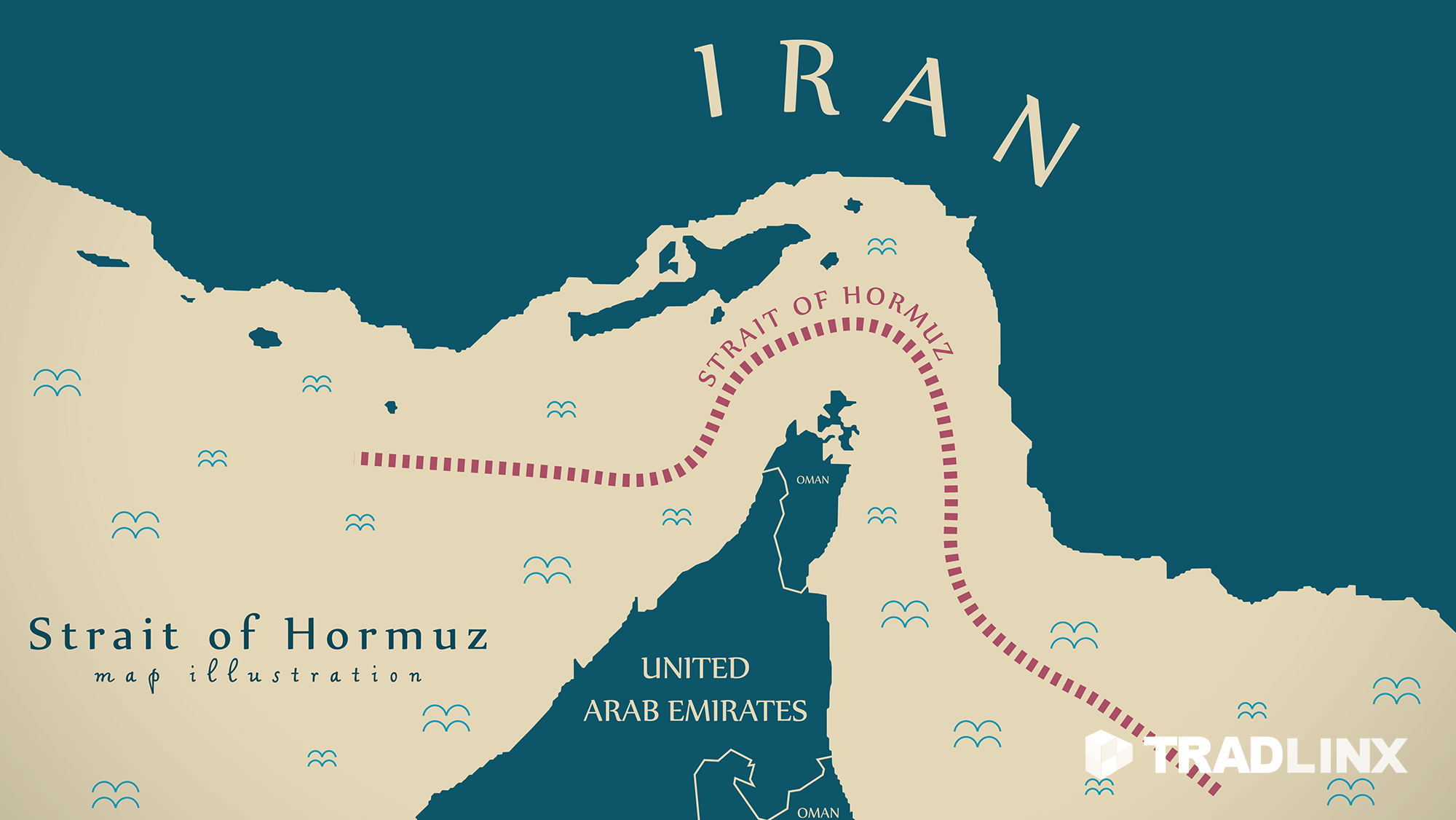
While the headlines focus on the hardware, the underlying reality is a massive restructuring of regional power dynamics. Israel is not just buying planes; it is responding to the visceral lessons of the recent "Operation Roaring Lion" conflict with Iran. The Israeli Ministry of Defense is effectively betting the house on a 350 billion shekel ($119 billion) "Shield of Israel" plan, a ten-year roadmap designed to ensure that no regional adversary can challenge the skies over the Middle East.
The Logic of the Double Buy
To the casual observer, buying two different types of fighter jets at once seems redundant. However, the operational reality of modern aerial warfare demands a division of labor that a single platform cannot provide. The F-35 provides the "invisible" eyes and ears, penetrating sophisticated integrated air defense systems (IADS) to take out high-value targets without being detected. It is a flying supercomputer, but it lacks the internal space to carry the massive ordnance required for a sustained campaign against hardened underground facilities.
Enter the F-15IA. This is the Israeli-specific variant of the F-15EX Eagle II, a platform that can carry up to 29,500 pounds of weapons. It is the "truck" of the air force. Once the F-35s have kicked down the door and blinded the enemy’s radar, the F-15IAs follow through to deliver the heavy blows.
This procurement marks a significant victory for Boeing, which has fought to keep the F-15 production line alive in St. Louis. The December 2025 contract, valued at approximately $8.6 billion, provides a much-needed stabilizer for the American aerospace giant. For Israel, these jets represent a technological leap, incorporating domestic avionics and specialized electronic warfare suites that allow them to communicate seamlessly with the stealthier F-35s.
Lessons from the Iran War
The 40-day conflict with Iran earlier in 2026 changed everything for the Israeli Air Force (IAF). Despite the perceived dominance of stealth technology, the sheer scale of drone swarms and ballistic missile volleys encountered during the war proved that quantity has a quality of its own.
The IAF logged over 15,000 flight hours during that period, exhausting airframes and highlighting the limits of the current fleet. Some of the older F-15s in the inventory date back to the late 1970s. These "baz" (falcon) aircraft are literally flying on borrowed time, with metal fatigue becoming a critical safety concern. Replacing them is no longer a luxury; it is a prerequisite for national survival.
Furthermore, the friendly-fire incident in April 2026, where three U.S. Air Force F-15Es were lost over Kuwaiti airspace, underscored the chaos of modern high-intensity conflict. It taught Israeli planners that even the best pilots and planes are vulnerable in a crowded, electronically contested battlespace. The new F-15IAs are expected to include advanced "Identify Friend or Foe" (IFF) systems and autonomous flight aids to mitigate these risks in future engagements.
The $119 Billion Financial Tightrope
The sheer cost of this buildup is difficult to overstate. Israel recently approved its 2026 budget with record-high defense spending, a move that has sparked quiet concern among economists about the long-term health of the civilian economy. While much of the purchase is funded through U.S. Foreign Military Financing (FMF)—essentially American taxpayer dollars recycled back into the U.S. defense industry—the maintenance, infrastructure, and personnel costs fall squarely on the Israeli taxpayer.
The "Shield of Israel" plan is more than just a shopping list for jets. It includes:
- Infrastructure upgrades at Nevatim and Tel Nof airbases.
- Space-based assets for enhanced targeting and communication.
- Autonomous flight integration to allow manned jets to control "loyal wingman" drones.
- Logistics and sustainment packages that span twenty years.
This is a deep-strike strategy. The goal is to reach any point in Iran or the broader region with overwhelming force. By the time the final deliveries arrive in the early 2030s, the IAF will be one of the most concentrated collections of advanced air power on the planet, trailing only the United States, China, and perhaps a few major NATO powers in terms of total fifth-generation airframes.
Strategic Autonomy and the U.S. Relationship
The deal cements the U.S.-Israel strategic bond at a time when political tensions often dominate the news cycle. By committing to these platforms, Israel is tethering its logistical tail to American factories for the next forty years. This creates a mutual dependency: Washington gains a highly capable proxy that can project power in the Middle East, while Jerusalem gains access to technology that is withheld from almost every other nation.
However, there is a catch. The F-15IA and F-35I are not "off-the-shelf" products. Israel insists on installing its own software and electronic warfare systems, a process that has historically led to delays. The first F-35s from the newest order are not expected to arrive until 2028, and the first F-15IAs may not touch down until 2031.
In the interim, the IAF must bridge the gap with its existing fleet. This means more NIS 80 million upgrade packages for aging F-16s and a frantic maintenance schedule for the veteran F-15I Ra’am fleet. The "Shield of Israel" is a vision for the future, but the threats are very much in the present. The race is now on to see if these advanced squadrons can be integrated before the next regional conflagration tests the limits of the existing line of defense.