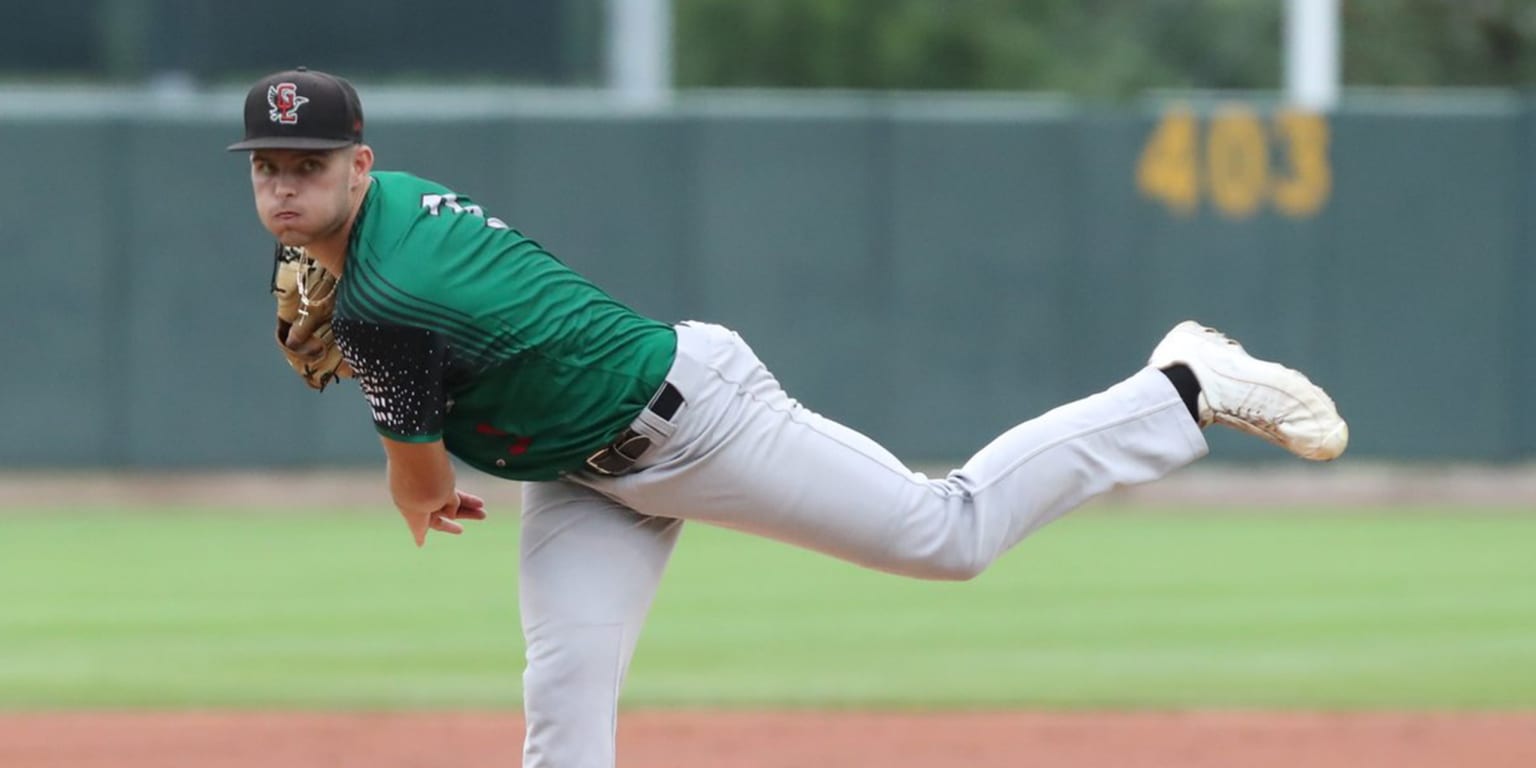
Jackson Ferris didn't just change zip codes when the Chicago Cubs traded him to the Los Angeles Dodgers. He changed worlds. For a 20-year-old left-hander with a high-velocity ceiling and the kind of "looseness" scouts drool over, landing in the Dodgers organization feels like winning the developmental lottery. It's a sentiment Ferris himself has leaned into, describing the transition as a breath of fresh air.
Most people look at the Michael Busch trade and see a swap of a blocked infielder for a high-upside arm. That's the surface-level view. The real story is how the Dodgers identify pitchers who are slightly "off-kilter" and provide them with the hyper-specific data they need to dominate. Ferris wasn't broken in Chicago. He was just waiting for a room full of biomechanical experts to tell him exactly why his fastball carries the way it does.
Why the Dodgers Pitching Lab is Different
Every team has a "lab" now. If a franchise doesn't have high-speed cameras and Rapsodo monitors, they aren't trying. But the Dodgers have a reputation for a reason. They don't just collect data to show it to the player. They translate it into a language that 20-year-olds can actually use on the mound.
When Ferris arrived, he didn't get a 50-page binder of confusing spin rate charts. He got a clear plan. The Dodgers saw a kid with a 6-foot-4 frame and a natural ability to create "flat" approach angles. That's a fancy way of saying his fastball looks like it's rising even when it isn't. It's a nightmare for hitters.
The Dodgers don't try to make everyone throw the same way. They aren't a factory producing identical robots. Instead, they look at what a guy like Ferris does naturally and they crank the volume to ten. If your curveball has elite vertical drop, they make you throw it until the hitter's knees buckle. If your delivery is a bit deceptive, they tell you to stay "funky."
Stepping Into a Culture of High Expectations
Ferris spent his 2023 season in Low-A Myrtle Beach. He was good. He struck out 77 batters in 56 innings. But the Midwest League is a long way from Dodger Stadium. Moving into the Los Angeles system means entering an environment where the "standard" is a World Series trophy every single October.
That kind of pressure can crush some kids. For Ferris, it seems to have had the opposite effect. He’s joined a group of peers that includes guys like River Ryan and Gavin Stone. When you see everyone around you throwing 98 mph with a "wipeout" slider, you realize that "pretty good" isn't going to cut it.
The Dodgers emphasize a specific type of mental toughness. They want their pitchers to be aggressive. Don't nibble at the corners. Don't worry about the walk rate as much as the strikeout-to-swinging-strike ratio. For a young lefty who sometimes struggled with command, this "attack-first" philosophy is liberating. It removes the fear of making a mistake.
The Technical Tweaks That Matter
Scouts always liked the Ferris heater. It sits mid-90s and touches higher. But the Dodgers noticed something about his release point. By making a small adjustment to how his front foot lands, they've helped him stay "on top" of the ball better. This creates more consistent spin.
Then there’s the changeup.
- In the Cubs system, it was a work in progress.
- In the Dodgers system, it’s becoming a legitimate weapon.
- He’s learned to kill the spin, making the ball "fall off a table" right as it reaches the plate.
It’s about the "tunneling" effect. The Dodgers are masters at making a pitcher's three or four different pitches look identical for the first 30 feet of their flight. By the time the hitter realizes it isn't a fastball, it’s too late. Ferris has the athletic twitch to pull this off better than almost anyone in his age bracket.
Breaking the Chicago Mold
There’s no shade intended toward the Cubs here. They’re a well-run organization. But the Dodgers are the gold standard for a reason. They spend more. They hire more. They research more. Ferris mentioned the communication is just different in LA. There’s a directness that cuts through the noise.
He’s not a "prospect" to them in the sense of a lottery ticket. He’s a specialized asset. The organization treats its top arms like precision instruments. If a pitcher feels a slight tweak in his mechanics, there’s a coach with a tablet and a 3D overlay of his delivery ready to fix it before the next inning starts.
That level of support breeds confidence. You can see it in Ferris's mound presence. He isn't thinking about his mechanics anymore. He’s just throwing. That’s the "breath of fresh air" he’s talking about. It’s the feeling of knowing that the people behind you have accounted for every variable.
What to Watch for in the Coming Months
Ferris is climbing the ladder fast. His ceiling is a front-of-the-rotation starter, the kind of lefty who can anchor a staff for a decade. But he has to prove the command issues are in the rearview mirror. The Dodgers are betting that their "simplified" approach will lead to more strikes.
If he keeps the walks down, he won't be in the minors for long. The Dodgers have shown they aren't afraid to promote teenagers or early 20-somethings if the stuff plays. Ferris has the "stuff." Now he has the system.
Keep an eye on his strikeout totals in Double-A. That's usually the true test for a young power pitcher. If he's still missing bats at that level, the Dodgers have found another cornerstone. You don't trade a guy like Michael Busch unless you're certain the return is special. Jackson Ferris is looking more "special" with every start.
Go find a scouting video of his recent bullpen sessions. Watch the way the ball jumps out of his hand. It doesn't look like he’s trying hard, yet the catcher's mitt pops like a firecracker. That’s the efficiency the Dodgers preach. That’s the future of the Los Angeles rotation. If you're a fan, get used to the name. If you're a hitter, start praying for a hanging curveball.