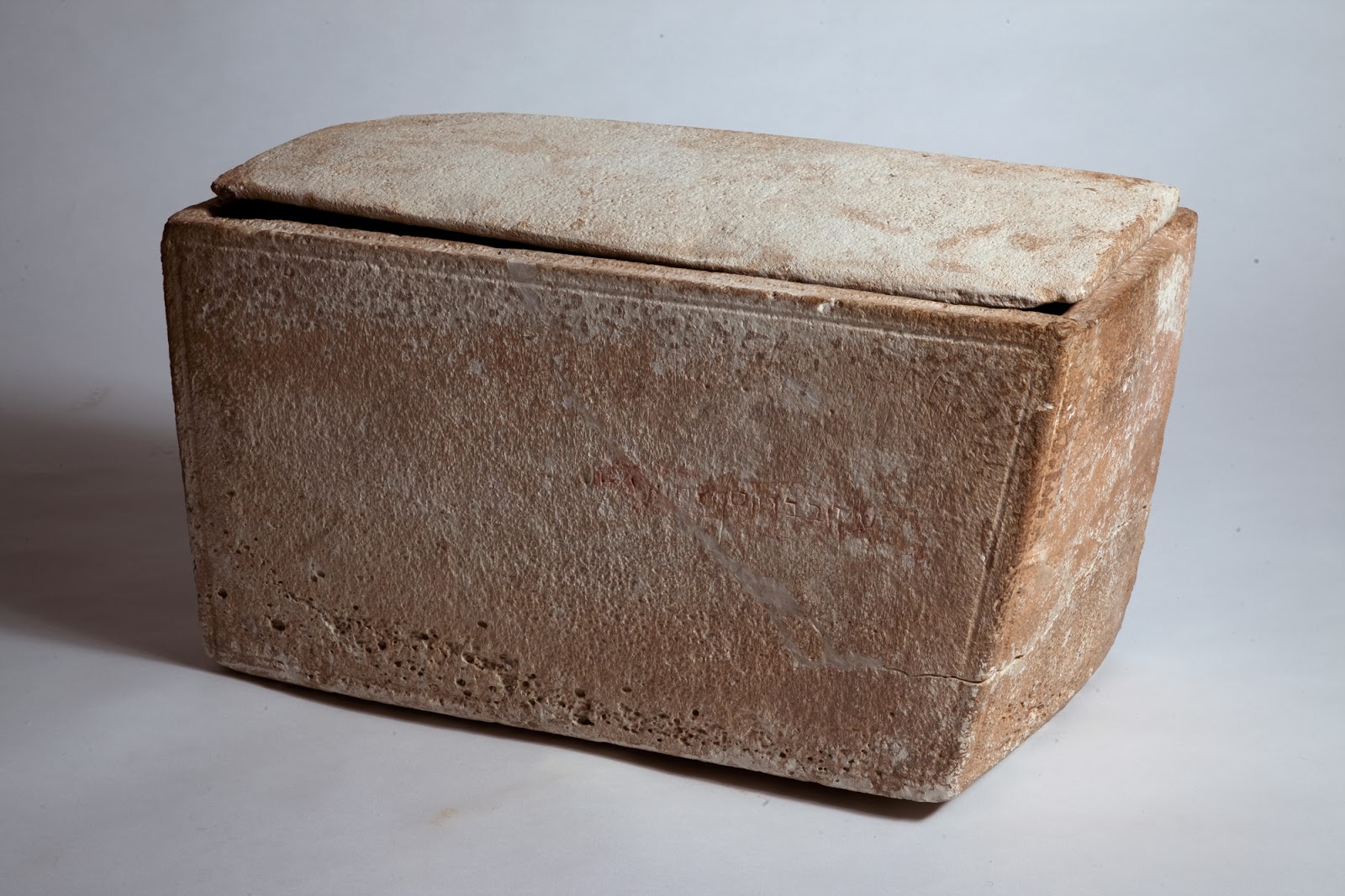
History isn't always written by the winners. Sometimes, it's etched into limestone boxes found in the back of a dusty antiquities shop. If you're looking for a "smoking gun" that proves Jesus of Nazareth existed exactly as the Gospels describe, you won't find a signed photograph or a birth certificate. Archaeology doesn't work that way. Instead, we have the James Ossuary. This small, unassuming bone box carries an inscription that sent shockwaves through the halls of the Sorbonne and the Israel Antiquities Authority. It’s arguably the most significant piece of physical evidence we have, but it comes with a side of legal drama and scientific warfare that would make a novelist blush.
Most skeptics and believers agree on one thing. Jesus was a real person. Even the most hardened secular historians don't really argue against his existence anymore. But there's a massive difference between "a guy named Jesus lived" and "this specific man was the brother of a prominent leader in Jerusalem." That’s where the James Ossuary changes the conversation. Read more on a connected topic: this related article.
The box that shouldn't exist
In 2002, an inscription on a 2,000-year-old limestone burial box was revealed to the world. It read: "James, son of Joseph, brother of Jesus."
Think about the odds. In first-century Jerusalem, people were buried in these boxes, called ossuaries, after their flesh had decayed. It was a standard practice for about a hundred years. Thousands of these boxes exist. Most of them are plain. Some say "John son of Pete" or something equally generic. But to have a brother mentioned? That’s incredibly rare. You only mentioned a brother if that brother was someone of immense social importance. More reporting by NBC News delves into comparable views on this issue.
If this box is authentic, it’s the first primary-source physical evidence of Jesus. It doesn't just mention him; it places him in a specific family structure that matches the New Testament accounts perfectly. James, the brother of Jesus, was the leader of the early church in Jerusalem. His death in 62 AD is recorded by the historian Josephus. The timeline fits. The geology fits. But the path to accepting it has been anything but smooth.
The forgery trial of the century
Not long after the discovery, the Israel Antiquities Authority (IAA) stepped in. They claimed the first part of the inscription—"James, son of Joseph"—was old, but the second part—"brother of Jesus"—was a modern forgery added to hike up the price. They arrested the owner, Oded Golan. They called it the "forgery of the century."
I followed the trial closely. It lasted seven years. They called dozens of experts. They looked at the "patina," which is the thin layer of grime and microorganisms that builds up on stone over centuries. The IAA experts claimed the patina inside the letters was a "forged soup" made of chalk and water.
But then the defense brought in their own heavy hitters. Scientists from the Geological Survey of Israel looked at the same stone. They found that the patina wasn't just a surface layer. It contained microorganisms that take decades, if not centuries, to grow. Even more telling, they found traces of gold in the inscription, likely from the box being cleaned or handled by wealthy owners over generations.
In 2012, the judge ruled that the state failed to prove the forgery. Golan was acquitted of the forgery charges. While the court didn't officially declare the box "authentic" (that's not a judge's job), the scientific consensus shifted back toward the middle. Many top-tier paleographers, like André Lemaire, still stand by the inscription's integrity.
Probability and the power of a name
Let's talk numbers. Jerusalem wasn't a metropolis. It was a provincial capital. Skeptics often say, "Jesus, Joseph, and James were common names." Sure, they were. It’s like finding a box that says "Jim, son of Bill, brother of Dave" in a small town today.
Statisticians have actually crunched these numbers. Camil Fuchs, a professor of statistics at Tel Aviv University, analyzed the frequency of these names in the first century. He estimated that in a city of Jerusalem’s size, there would only be about 1.71 people named James who had a father named Joseph and a brother named Jesus who were prominent enough to be mentioned on an ossuary.
Basically, the math says this is him.
The fact that "brother of Jesus" is there at all is the clincher. You didn't put brothers on graves. It wasn't the custom. You defined yourself by your father. The only reason to break that tradition was if the brother was the reason people knew who you were. For the leader of the Jerusalem church, having Jesus as a brother was his entire identity.
Beyond the box other physical markers
The James Ossuary doesn't exist in a vacuum. While it’s the most direct "name-drop," other finds anchor the Gospel narratives in physical reality. Take the Pilate Stone, found in Caesarea Maritima in 1961. Before that, critics claimed Pontius Pilate was a fictional character or a minor official whose role was exaggerated. Then, archaeologists flipped over a piece of carved limestone being used as a step in a theater and found his name and title: "Pontius Pilatus, Prefect of Judea."
Then there’s the Caiaphas Ossuary. Found in 1990, this incredibly ornate box contains the bones of a man identified as the High Priest who presided over the trial of Jesus. Unlike the James Ossuary, which is plain, the Caiaphas box is highly decorated, reflecting his status and wealth.
When you put these pieces together—the stone of the man who ordered the execution, the box of the man who led the trial, and the box of the brother of the accused—the historical landscape stops being a Sunday school story. it becomes a cold, hard archaeological record.
Why people still doubt it
The biggest hurdle for the James Ossuary isn't the science. It's the "provenance." Provenance is the history of where an object has been. Because the box wasn't found in a controlled, professional dig by archaeologists, but was instead purchased from a dealer, its history is murky.
In the world of archaeology, if you didn't dig it out of the ground yourself and record exactly which layer of dirt it came from, it’s considered "tainted." This is a fair rule. It prevents looting and protects history. But "unprovenanced" doesn't mean "fake." It just means we have to work harder to verify it.
The suspicion also comes from the sheer convenience of the find. It’s almost too perfect. For many secular scholars, a physical object that confirms the New Testament is a bitter pill to swallow. It challenges the idea that the Gospels are purely mythological.
The stone doesn't lie
Science has tools now that we didn't have twenty years ago. We can use electron microscopes to look at the isotopic signature of the stone. We know the James Ossuary is made of Jerusalem limestone. We know the patina is consistent with the humidity levels found in the Silwan area of Jerusalem.
If you want to understand the life of Jesus, you have to look at the material culture he left behind. He was a stone worker (the Greek word tekton often means stonemason, not just carpenter) living in a world of stone. He was buried in stone. His followers were remembered on stone.
Don't wait for a grand announcement from a museum to decide what you believe. The evidence is already sitting in a climate-controlled room in Israel. The James Ossuary survived two millennia, a high-stakes trial, and the intense scrutiny of the world's best geologists. It’s still standing.
If you’re interested in seeing the data for yourself, look up the peer-reviewed reports from the Biblical Archaeology Review. They’ve archived the entire technical debate. You should also check out the works of Dr. Craig Evans, who has written extensively on how these archaeological finds change our "historical Jesus" models. Stop looking at history as a set of ideas and start looking at it as a collection of artifacts. The truth is usually buried under a few feet of dirt. Go find it.