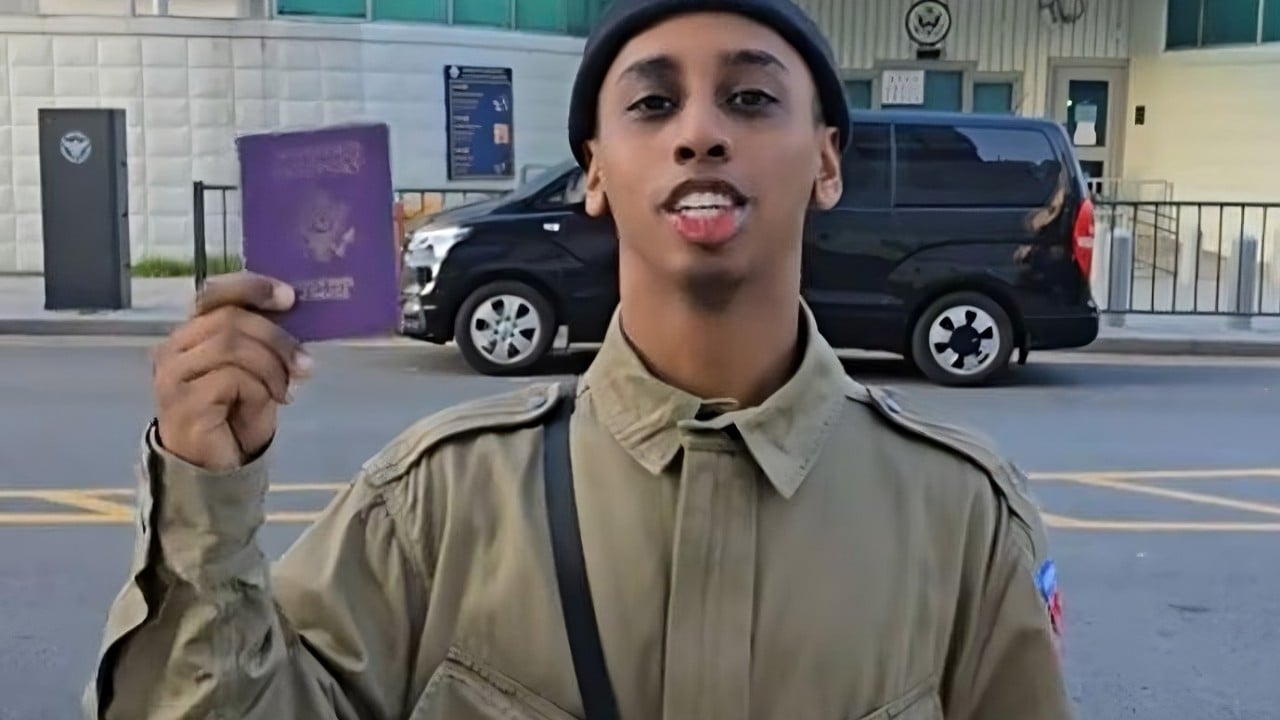
Johnny Somali finally pushed South Korean authorities too far. The American live-streamer, whose real name is Ramsey Khalid Ismael, received a jail sentence in Seoul after a string of incidents that sparked national outrage. It wasn't just one mistake. It was a calculated campaign of harassment and cultural disrespect that hit a breaking point when he decided to kiss a statue dedicated to "comfort women."
You can't just walk into a foreign country and treat their most painful historical traumas like props for your "engagement" numbers. South Korea is a nation that remembers its history deeply. When Somali filmed himself kissing a Peace Statue in Seoul—a symbol representing women who were forced into sexual slavery by the Japanese military during World War II—he wasn't just being "edgy." He was attacking the collective dignity of a people.
The Seoul Central District Court didn't find his antics funny. A judge sentenced him to one year in prison. This wasn't a snap judgment. It followed months of public fury, physical confrontations on the street, and a legal system that decided to make an example out of a creator who thought online clout provided legal immunity.
The Statue Incident That Broke the Internet for All the Wrong Reasons
The Peace Statue, or Sonsoyeonsang, isn't some random piece of street art. It represents tens of thousands of victims. For Koreans, these statues are sacred ground. Somali’s decision to kiss the statue while dancing and filming it for a live audience was a middle finger to the survivors.
Local residents weren't going to let it slide. Video after video surfaced of Somali being confronted by Korean citizens. In some clips, he was chased down. In others, he was punched. While vigilante justice is a messy legal gray area, the public sentiment was clear. People were done. They wanted him out or behind bars.
The court noted that his behavior showed a complete lack of remorse. He claimed it was all for "content," but the law doesn't care about your subscriber count. The judge emphasized that his actions were provocative and disrupted public order. It wasn't just about the statue. He was also accused of obstructing business at a convenience store where he poured instant noodles on a table and harassed staff.
When Live Streaming Becomes a Criminal Offense
The "IRL" (In Real Life) streaming community has a massive problem. It rewards the most toxic behavior. The more chaos you cause, the more "donations" and "bits" fly into your account. Somali thrived on this. He traveled through Japan and South Korea specifically looking for ways to upset the locals because he knew anger sells.
This jail sentence sends a massive shockwave through the streaming world. If you think you're untouchable because you have a camera in your hand, you're wrong. International laws apply to YouTubers just like everyone else. In fact, they might apply even more strictly when you're broadcasting your crimes to thousands of witnesses in real-time.
South Korea has strict laws regarding public nuisance and defamation. They also have a very low tolerance for foreigners who come in and disrupt the social fabric. By sentencing him to a full year, the court is saying that "content creation" is not a valid defense for harassment.
A Pattern of Disrespect Across Asia
Somali didn't start this in Korea. He had already been kicked out of Japan for similar behavior. In Osaka, he was arrested for trespassing on a construction site and playing loud music in a restaurant. He famously yelled "Fukushima" and "Nagasaki" at Japanese passengers on a train, mocking the nuclear tragedies that killed hundreds of thousands.
He didn't learn his lesson. He just changed locations.
When he arrived in South Korea, he doubled down. Beyond the statue incident, he was seen harassing women on the street and making xenophobic comments. This wasn't a one-time lapse in judgment. It was a business model built on being a jerk.
Legal Consequences of Obstruction of Business
In South Korea, "Obstruction of Business" is a serious charge. If you walk into a shop, make a mess, and prevent the owner from serving customers, you can face years in prison. Somali thought pouring ramen on the floor was a joke. The convenience store owner didn't.
The court combined several charges to reach the one-year sentence. These included:
- Obstruction of business
- Public nuisance
- Minor assault (linked to confrontations during his streams)
The prosecution actually wanted a longer sentence. They argued that his actions were predatory—he chose victims who were unlikely to fight back, like convenience store clerks and statues of deceased victims.
The Myth of the Apology Video
Before his sentencing, Somali tried to play the "I'm sorry" card. He posted a video where he apologized to the Korean people, claiming he didn't realize the significance of the statue.
Nobody bought it.
You don't get to spend weeks mocking a culture and then claim ignorance the moment the handcuffs click shut. The judge saw through the performative apology. True remorse involves changing behavior before the police get involved. Somali only started "learning about history" when his passport was seized.
What This Means for Travel and Creators
If you're a creator traveling abroad, your "freedom of speech" doesn't override another country's laws. Many Western streamers assume that because they can get away with certain stunts in the US or UK, those rules apply everywhere. They don't.
South Korea is a "high-trust" society. People generally follow the rules and expect others to do the same. When a foreigner enters that space and intentionally breaks those unspoken (and spoken) rules, the backlash is swift and severe.
This case is a reminder that being a guest in a country requires a baseline of respect. If you can't provide that, you shouldn't be surprised when the host country decides to lock the door.
Next Steps for Responsible Content
If you're planning on filming in South Korea or any other foreign country, do these things first:
- Research historical "no-go" topics. Some things aren't up for debate or humor.
- Respect business owners. If they ask you to stop filming, stop immediately.
- Understand local privacy laws. South Korea has very strict rules about filming people's faces without permission.
- Don't treat tragedies as content. It’s never worth the "clout."
Johnny Somali is now sitting in a cell because he thought he was bigger than the culture he was visiting. He's not. And neither is anyone else with a smartphone and an internet connection. Don't be that guy. Respect the places you visit, or stay home. It's really that simple.



