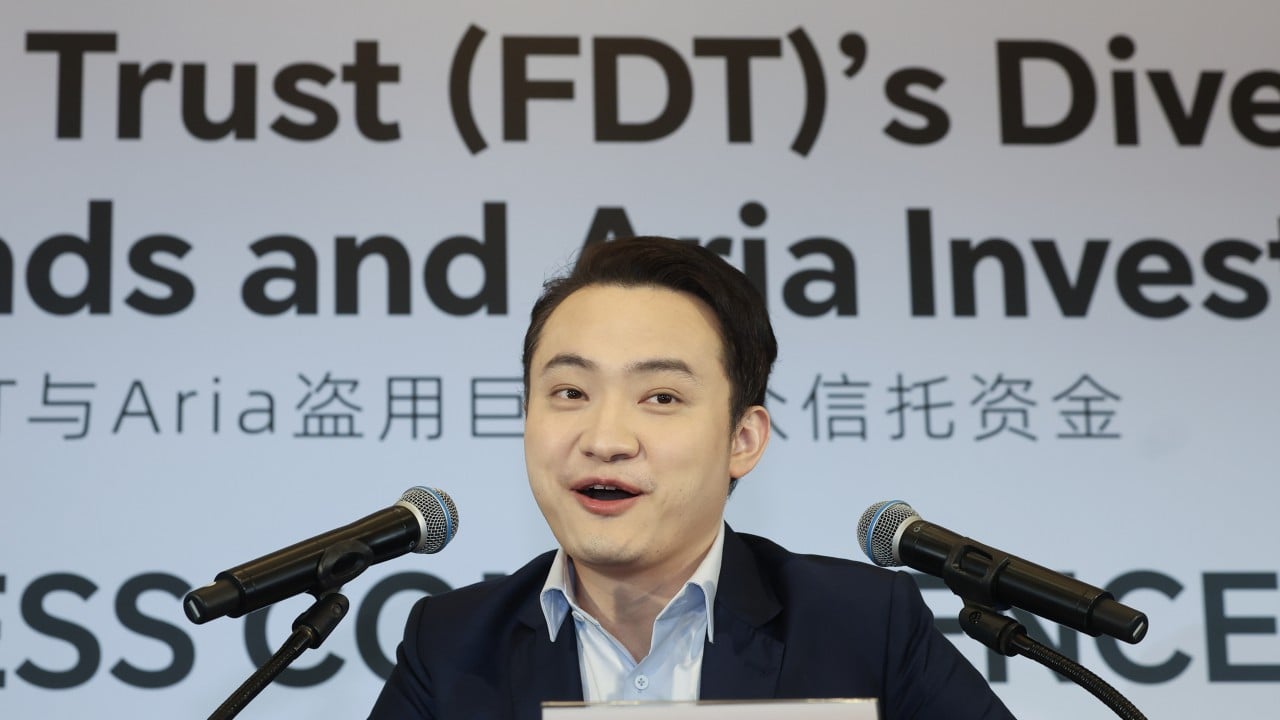
The US$10 million settlement between Justin Sun, his affiliated entities—Tron Foundation, BitTorrent Foundation, and Rainberry Inc.—and the US Securities and Exchange Commission (SEC) represents more than a legal resolution; it is a calculated quantification of regulatory risk. By paying a fraction of the capital raised through the initial offerings of TRX and BTT, Sun has effectively converted a potentially existential litigation threat into a fixed operational cost. This maneuver highlights a recurring pattern in the digital asset sector where the "price of peace" is negotiated based on the SEC’s ability to prove jurisdictional nexus versus the defendant's desire for global liquidity access.
The Mechanics of Unregistered Securities Offerings
The core of the SEC's complaint rested on the classification of TRX and BTT as investment contracts under the Howey Test. The framework for this classification is built upon three specific operational failures by the Tron ecosystem.
- Expectation of Profit from Managerial Efforts: The SEC argued that the value of TRX and BTT was inextricably linked to the promotional and development activities of Sun and his foundations. Unlike decentralized protocols where value is derived from organic utility, the Tron ecosystem relied on centralized market-making and aggressive celebrity endorsements to signal value to investors.
- The Secondary Market Wash Trading Scheme: Between April 2018 and February 2019, Sun allegedly directed employees to engage in over 600,000 wash trades of TRX between accounts he controlled. This created a false perception of market depth and liquidity. The objective was not immediate profit through sales but the manipulation of the asset's "velocity" and "attractiveness" to retail investors.
- Bounties and Airdrops as Distributions: The SEC challenged the notion that "free" tokens do not constitute a sale. By distributing TRX and BTT in exchange for social media promotion (bounties) or to existing holders (airdrops), the Tron entities were effectively bypasssing registration requirements while still achieving the economic result of a public offering: widespread distribution to increase network effects and token price.
The Cost-Benefit Calculus of the US$10 Million Fine
From a corporate strategy perspective, the US$10 million figure is a negligible line item when compared to the total treasury value of the Tron ecosystem. To understand why the SEC accepted this amount, one must look at the jurisdictional friction inherent in the case.
The defendants were largely offshore entities. While the SEC successfully argued that the "wash trading" occurred on US-based platforms and targeted US investors, the cost of a protracted trial against a non-resident defendant often exceeds the deterrent value of the fine. The settlement allows the SEC to claim a "win" by establishing a record of misconduct without the risk of a legal setback that could weaken the Howey Test's application to other tokens.
For Justin Sun, the settlement removes the "Cloud of Unenforceability" that prevents major US-linked exchanges from listing or maintaining deep liquidity for Tron-based assets. The US$10 million is not a penalty in the traditional sense; it is an "access fee" to the global financial system.
Strategic Implications of the Conduct Findings
While the settlement includes a "neither admit nor deny" clause typical of SEC agreements, the permanent injunctions against Sun and his companies create a rigid boundary for future operations. The primary constraints are:
- Prohibition on Fraudulent Conduct: The injunction specifically targets the manipulation of trading volumes. This forces the Tron ecosystem to rely on organic market participants or transparent third-party market makers, fundamentally changing how new projects within the ecosystem can be bootstrapped.
- Registration Oversight: Any future offering of securities by Sun or his entities in the US must be registered. This effectively bars the Tron ecosystem from the US retail capital markets for any new token launches, as the disclosure requirements for a "Sun-led" project would likely be scrutinized to a degree that would make the offering unfeasible.
The Celebrity Endorsement Precedent
A secondary but critical component of this case involved the prosecution of celebrities like Lindsay Lohan, Jake Paul, and Akon for promoting TRX and BTT without disclosing compensation. This aspect of the SEC’s strategy serves as a "Force Multiplier." By targeting the marketing apparatus rather than just the issuer, the SEC has successfully increased the "Cost of Promotion" for all crypto projects.
Celebrities now face a binary choice: perform exhaustive due diligence on the legal status of a token—which is often impossible—or face career-damaging SEC enforcement actions. This has effectively severed the link between crypto-assets and mainstream influencer marketing, forcing projects to move toward more technical or community-driven growth models.
Failure Modes in Decentralized Governance Claims
The Tron case exposes a significant flaw in many "Decentralized Autonomous Organization" (DAO) structures. Sun’s control over the foundations and the specific direction given to employees to execute wash trades proved that the "decentralization" was a veneer.
For an asset to truly bypass SEC scrutiny, the "Managerial Efforts" must be demonstrably distributed. In the Tron model:
- Capital was centralized in foundations controlled by a single individual.
- Strategic pivots were announced by a singular leader rather than a voting community.
- Market liquidity was manufactured through coordinated internal accounts.
This lack of "Separation of Concerns" is what allowed the SEC to pierce the corporate veil and hold Sun personally liable.
Liquidity Analysis and Market Reaction
Following the settlement announcement, the market reaction for TRX was relatively muted, confirming that the "Settlement Premium" had already been priced in. Professional traders generally view SEC settlements of this scale as a de-risking event. The removal of the threat of a total US ban on the asset provides a floor for the token's valuation, even if the fine itself acknowledges past manipulation.
However, the long-term viability of the Tron network now depends on its ability to transition from a "Hype-Driven" model to a "Utility-Driven" model. With the SEC's eyes firmly on Sun's market-making activities, the organic demand for the TRC-20 version of USDT (Tether) becomes the primary pillar of the network's value.
The Path Forward for Multi-Jurisdictional Entities
The Justin Sun settlement provides a blueprint for other crypto founders facing SEC pressure. The strategy involves:
- Isolating US Nexus: Moving operations entirely offshore while maintaining a small legal "buffer" to settle with US regulators.
- Quantifying the Exit: Determining the maximum fine that allows the founder to retain enough capital to pivot while satisfying the regulator's need for a high-profile headline.
- Pivoting to Non-Securities Infrastructure: Focusing on stablecoin settlement and decentralized infrastructure where the "Investment Contract" argument is harder to sustain.
The immediate strategic requirement for the Tron ecosystem is the institutionalization of its governance. To survive the next decade of regulatory tightening, Sun must systematically remove himself as the "Centralized Actor" in the eyes of the law. This requires a genuine transfer of power to a broader set of validators and developers, or the network will remain a perpetual target for "Regulation by Enforcement." The US$10 million settlement is a temporary reprieve, not a permanent license to operate. All future growth must be measured against the SEC’s new capability to track cross-chain wash trading and its willingness to pursue individual founders across borders.