The air in Longmeadow, Massachusetts, usually carries the scent of manicured lawns and the hushed dignity of affluent suburbia. On a crisp October morning, that silence didn't just break; it dissolved into a frantic, high-pitched hum that signaled a primal sort of warfare.
Rorie Woods didn't arrive with a sign or a megaphone. She arrived with a flatbed trailer stacked with wooden boxes. To the uninitiated, they looked like simple garden crates. To the sheriff’s deputies standing on the threshold of a disputed home, they were the delivery systems for thousands of stinging projectiles.
Woods, a professional beekeeper, wasn't the one being evicted. She was a bystander who decided that the systemic machinery of the law required a biological intervention. As the deputies moved to enforce a court order, Woods donned her protective mesh suit—a white, ghostly silhouette against the autumn leaves—and began to break the seals on her hives.
The Weight of the Hive
Beekeeping is an ancient art defined by a delicate contract between human and insect. You provide the shelter; they provide the gold. It requires a steady hand and a preternatural calm. If you are frantic, the bees know. If you are aggressive, they respond in kind.
When Woods tipped those hives, she wasn't just releasing insects. She was weaponizing a collective consciousness.
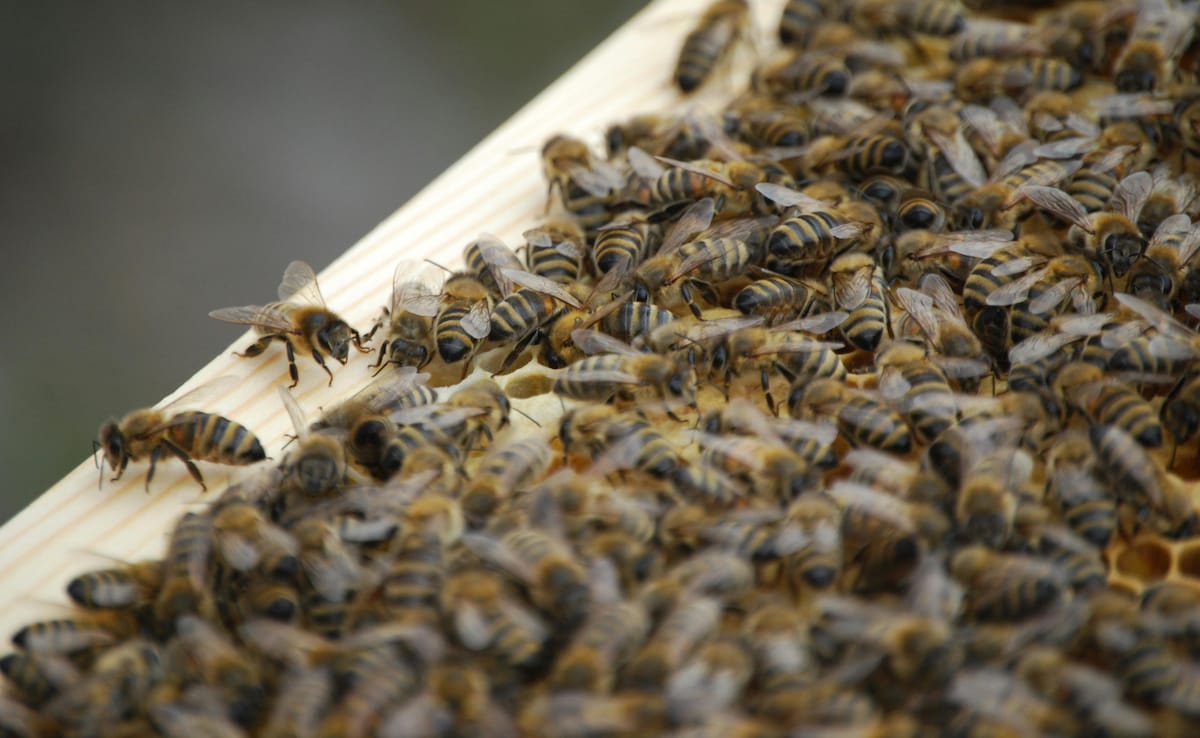
A single honeybee is a marvel of engineering, but a swarm is a singular, vibrating entity. When a hive is agitated, the bees release an alarm pheromone—an invisible chemical "scent" that smells faintly of bananas. To a bee, that smell is a war cry. It tells every sister in the radius that the colony is under threat.
As the crates hit the ground and the lids were pried back, the air turned thick. This wasn't a metaphor for anger. It was a literal cloud of defense. Deputies, caught without the armor Woods wore, found themselves at the mercy of a force that doesn't recognize the authority of a badge or a gavel.
The scene descended into a chaotic ballet of flailing limbs and retreating officers. Several deputies were stung; one was rushed to the hospital. Through the mesh of her veil, Woods allegedly cheered the chaos, framed by the very creatures she had spent years nurturing.
The Invisible Stakes of the Eviction Crisis
To understand why a woman would risk her freedom—and the lives of her bees—to stop an eviction, you have to look past the stinging insects and into the hollowed-out heart of the American housing market.
Eviction isn't just a legal process. It is a violent disruption of the self. It is the moment the walls that hold your memories and your safety are redefined as someone else’s equity. In the eyes of the law, the eviction in Longmeadow was a settled matter of paperwork and missed deadlines. To the activists on the ground, it was a slow-motion tragedy.
Woods belonged to a subset of protesters who see the current housing "landscape" as a battlefield where the weapons are usually lopsided. Usually, the state has the power, and the resident has a cardboard box. By bringing the bees, Woods attempted to level that field with a chaotic, uncontrollable variable.
She was eventually wrestled into handcuffs, her white suit stained with the dust of the scuffle. She faced multiple counts of assault and battery with a dangerous weapon. The irony was thick: the "weapon" was a species currently struggling for its own survival against pesticides and climate shifts.
The Chemistry of Conflict
Consider the physical reality of a bee sting. It is a suicidal act for the bee. Their barbed stinger catches in human skin, tearing away from the bee’s body and pumping venom even after the insect has died.
[Image of a honeybee stinger anatomy]
The venom, melittin, triggers pain receptors and causes local inflammation. For most, it’s a sharp, burning nuisance. For those with allergies, it’s a closing of the throat, a race against time. The deputies weren't just dealing with a "crazy bee lady." They were dealing with a woman who had calculated that the pain of her stings was a necessary price to highlight the pain of the displaced.
Was it effective? The eviction was delayed, yes. But the machinery of the law is far more persistent than a swarm of insects. Bees eventually tire. They eventually die. The court, however, has no biology. It has no nervous system to shock. It simply resets, waits for the air to clear, and tries again the next morning.
The Cost of the Veil
There is a specific kind of loneliness in being the person who breaks the peace. Woods sat in her white suit as the zip-ties were pulled tight, a stark contrast to the dark uniforms of the law. She had crossed a line from protest to felony, a transition that many people find baffling until they feel the same desperation.
We often talk about "the system" as if it’s a weather pattern—something that just happens to us. But the system is made of people. It’s made of the deputy who has to go home to his family with a swollen face and a hospital bill. It’s made of the homeowner who is losing their sanctuary. And it’s made of the neighbor who is so radicalized by the sight of it all that they are willing to turn their passion for nature into a tactical assault.
The Longmeadow incident remains a bizarre footnote in the annals of civil disobedience, but it echoes a deeper, more resonant truth about our current era. When people feel they have no voice, they look for a sting. When they feel they have no power, they look for a swarm.
The bees didn't win. They were gathered back up, or they perished in the grass, their small lives spent in a battle they didn't choose. Woods faced the cold reality of a courtroom, where the humming of the hive is replaced by the silent, crushing weight of a legal transcript.
In the end, the house was still emptied. The crates were hauled away. And the quiet returned to Longmeadow, though it was a different kind of quiet than before—a silence that felt less like peace and more like a breath held in anticipation of the next time the swarm decides to rise.
The sting is temporary. The loss of a home is permanent. We are living in a time where those two pains are increasingly being traded for one another, and the air is getting louder every day.