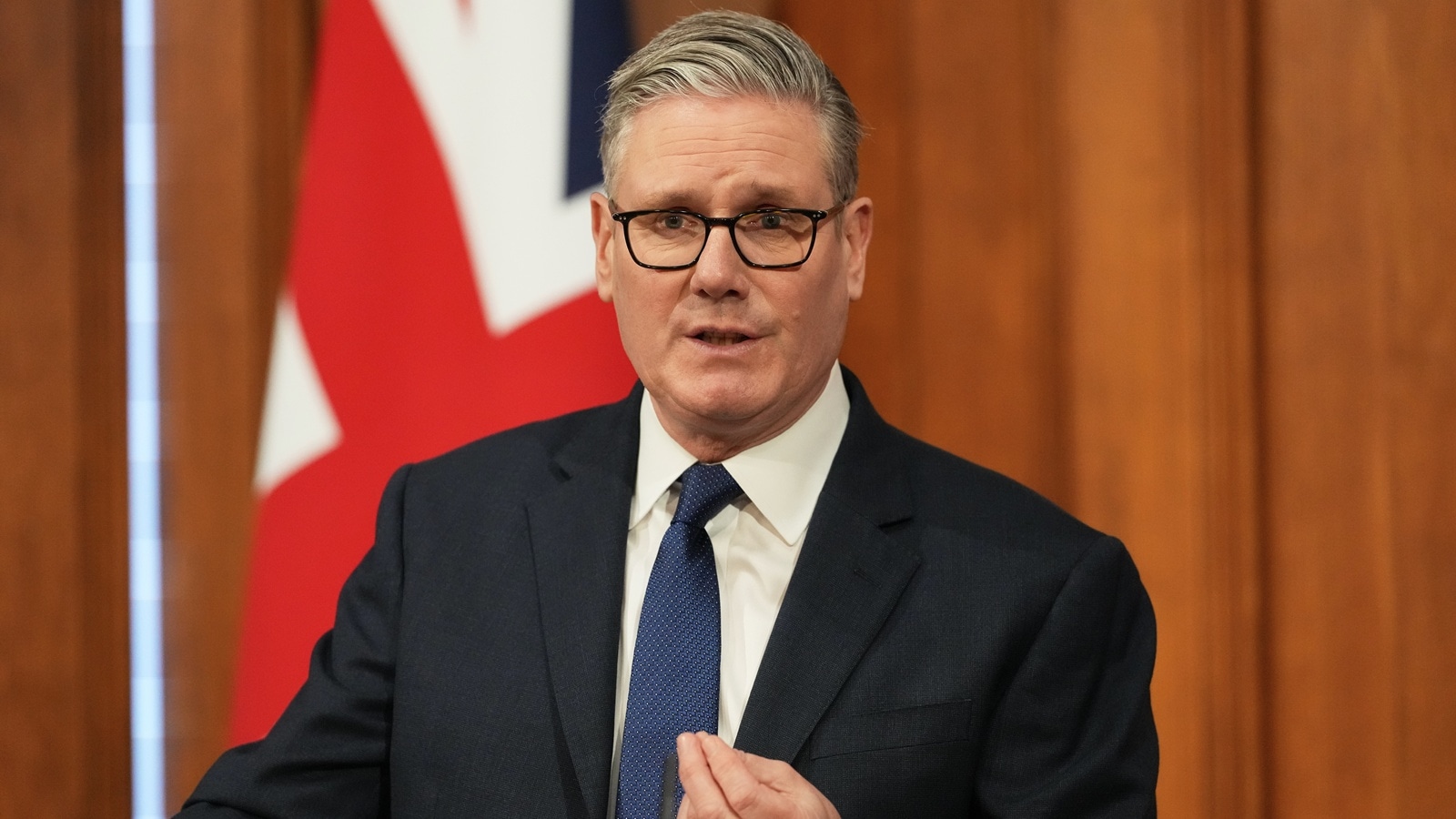
The world shifted this morning. While the British public was waking up to news of $100-a-barrel oil, Keir Starmer was already recalibrating the United Kingdom’s entire security posture. Iran’s decision to shutter the Strait of Hormuz hasn't just spiked global energy prices; it's forced a geopolitical reckoning in London. Britain is caught between a chaotic American administration that views NATO as a "paper tiger" and a European continent that's suddenly terrified of being left alone.
Starmer's message is blunt. This isn't our war. But that doesn't mean we can hide from it.
The closure of the world’s most vital maritime chokepoint by Iranian forces has turned a regional powderkeg into a global economic heart attack. About 20% of the world’s petroleum passes through that narrow strip of water. Now, with tankers stalled and insurance premiums hitting the stratosphere, the UK economy is staring down a massive inflationary shock. Yet, the help usually expected from Washington hasn't arrived. Instead, Donald Trump’s latest rhetoric suggests the U.S. is done playing world police, leaving the UK to find its own way in the dark.
The Paper Tiger Rhetoric and the End of the Special Relationship
For decades, the "Special Relationship" was the bedrock of British defense. That era is over. Trump’s recent dismissal of NATO as a "paper tiger" isn't just another post on social media. It’s a policy shift that renders the old security guarantees worthless. If the U.S. won't commit to collective defense, the UK is effectively an island with a very expensive military and no backup.
Starmer knows this. He’s seen the polls and he’s read the room in D.C. The UK can't rely on a partner that views alliances as protection rackets. This is why we’re seeing a frantic, albeit calculated, pivot toward Brussels and Paris. The Prime Minister is betting that Britain’s future lies in a "European security pact" rather than waiting for a phone call from the White House that might never come—or might come with a price tag we can't afford.
It's a risky move. The British right will call it a betrayal of Brexit. The left will worry about being dragged into a continental war. But Starmer is playing a numbers game. Without the U.S. umbrella, Europe’s combined military spending is the only thing that can check Russian or Iranian aggression. He's choosing the neighbors he has over the friend who keeps ghosting him.
Why the Strait of Hormuz Matters to Your Wallet
You might think a conflict in the Middle East is a world away. It isn't. When the Strait of Hormuz closes, the supply chain for everything from gasoline to plastic breaks. We’re talking about a waterway that handles more than 20 million barrels of oil a day. Iran knows this is their "nuclear option" for economic warfare.
Here’s what happens next.
- Shipping companies reroute around Africa, adding 10 to 15 days to transit times.
- Fuel costs at UK pumps jump by 30% within a week.
- The cost of shipping containers doubles, hitting retailers just as they try to manage post-inflation recovery.
Starmer isn't just talking about ships; he's talking about the survival of the British middle class. He’s pushing for a coordinated European naval response to escort commercial vessels. By bypassing a Trump-led "Operation Prosperity Guardian," the UK is trying to lead a purely European coalition. It’s a test of whether Europe can actually defend its own interests without Uncle Sam holding the leash.
Rebuilding the Bridge to Europe Without the Baggage
The pivot to Europe is more than just military. It's about energy security. While the U.S. focuses on domestic fracking and isolationism, Europe is scrambling to build a unified energy grid. Starmer wants in. If the UK can integrate more deeply into European renewable projects and nuclear cooperation, the shock of a Middle Eastern war becomes slightly more manageable.
People often forget that the UK remains a Tier 1 military power. We have the intelligence networks. We have the Special Forces. We have the nuclear deterrent. Europe needs us as much as we need them. Starmer is using this leverage to rewrite the post-Brexit relationship on his terms. He isn't asking to rejoin the EU; he’s asking for a strategic partnership that recognizes the world is too dangerous for small players to stand alone.
The Iranian Gambit and the Risk of Escalation
Iran isn't closing the Strait just for fun. It’s a response to tightening sanctions and a perceived weakness in Western unity. They’ve watched the bickering between London and Washington. They’ve seen the cracks in NATO. By forcing Starmer’s hand, Tehran is testing whether the UK has the stomach for a prolonged maritime conflict without guaranteed American air cover.
Honestly, the situation is grim. If the UK joins a European naval task force and an Iranian missile hits a British destroyer, what then? In the past, we’d look to the U.S. Sixth Fleet. Now, we might be looking to the French or the Germans. That’s a massive psychological shift for the Ministry of Defence. It requires a level of trust that hasn't existed since before the 2016 referendum.
Practical Steps for a Shifting World
This isn't just a high-level political drama. It has real-world implications for how businesses and individuals should prepare for a decade of instability. The "Peace Dividend" is officially dead and buried.
If you’re running a business or managing finances, you need to stop assuming global trade is a given.
- Diversify your supply chains away from routes that rely on Middle Eastern stability.
- Hedge against energy volatility. $120 oil is a distinct possibility if the Strait remains blocked for more than a month.
- Watch the sterling-euro exchange rate closely. As Starmer aligns more with Europe, the pound will likely track the euro more than the dollar.
The UK is finally moving past the fantasy of being a lone global power. Starmer is pragmatically choosing a European future because the American alternative has become too volatile to trust. It's a cold, hard calculation based on geography and necessity. The "Special Relationship" is on life support, and the "European Security Pact" is the new reality.
Get used to it. The maps are being redrawn, and for the first time in a generation, London is looking East toward the Channel rather than West toward the Atlantic. It's a survival tactic, and honestly, it’s about time.
Monitor the upcoming NATO summit in June. That’s where the real "paper tiger" test happens. If Starmer walks away with a separate European defense agreement, the divorce from U.S. foreign policy will be official.



