The operational debut of the Precision Strike Missile (PrSM) in Iran during late February 2026 marks a structural shift in how the United States projects land-based power. While public discourse often focuses on the immediate destruction of Iranian nuclear facilities, the deeper strategic logic lies in the validation of a "long-range, low-cost" munitions architecture. This framework is designed not merely for the Middle East, but as a direct proof of concept for the Indo-Pacific theater.
The Triad of Modern Attrition: PrSM, Tomahawk, and LUCAS
The strikes carried out under Operation Epic Fury utilized three distinct classes of delivery systems, each serving a specific role in the suppression of Iranian integrated air defense systems (IADS).
- The PrSM (Precision Strike Missile): This is the replacement for the aging ATACMS. In its Increment 1 configuration, it offers a range exceeding 500 kilometers. Its combat debut against Iranian missile sites in Isfahan and Karaj demonstrated a critical capability: the ability to strike from mobile, land-based HIMARS platforms with a flight profile that is significantly harder to intercept than traditional subsonic cruise missiles.
- The Tomahawk Land Attack Missile (TLAM): The Block V Tomahawk remains the workhorse of maritime-to-shore strikes. During the February 28 operation, these were launched from both Virginia-class submarines and Arleigh Burke-class destroyers. Their primary function was the "decapitation" of radar nodes, allowing stealth assets like the F-35 and B-2 to enter Iranian airspace with reduced risk of detection.
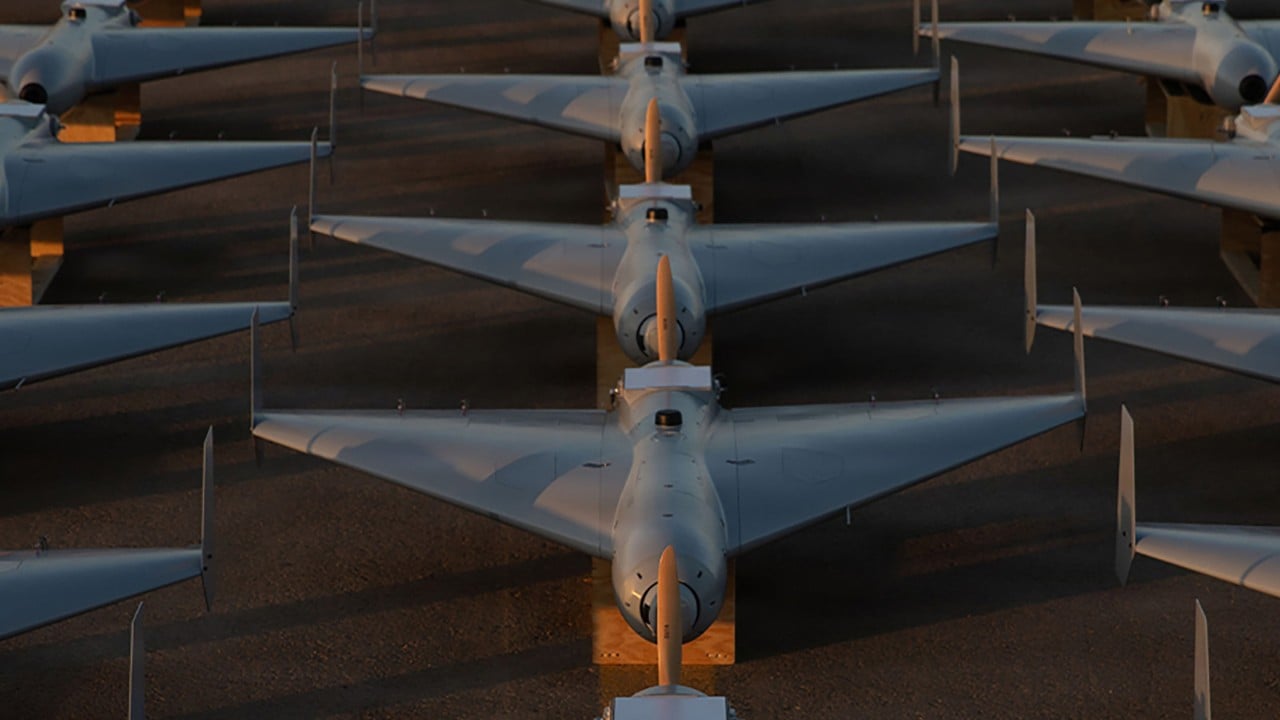
- LUCAS (Low-Cost Unmanned Combat Attack System): In a tactical pivot, the U.S. deployed one-way "kamikaze" drones, costing approximately $35,000 per unit. These systems, which mirror the design philosophy of the Iranian Shahed series, were used as saturation vectors. By flooding Iranian radar screens with high-volume, low-cost targets, the U.S. forced the depletion of expensive Iranian surface-to-air missile (SAM) interceptors, clearing the path for high-value munitions.
The Cost Function of Missile Defense
The economic asymmetry of this conflict is its most defining characteristic. In the June 2025 "Twelve-Day War," the United States and Israel depleted nearly 25% of the total global stock of THAAD (Terminal High Altitude Area Defense) interceptors. At a price point of roughly $12 million per interceptor, the cost of defense is orders of magnitude higher than the cost of the offensive threat.
Iran’s response—launching salvos of Fateh-110 and Shahab-3 missiles—aims to exploit this "interceptor gap." By forcing the U.S. to use its most advanced SM-3 and SM-6 missiles to defend regional bases in Bahrain and Qatar, Iran creates a strategic bottleneck. Every interceptor fired in the Persian Gulf is one fewer available for a potential high-intensity conflict in the South China Sea.
Structural Divergence: Middle East vs. Indo-Pacific Deployment
While the weapons systems used in Iran are identical to those being deployed near China, the geographical and logistical constraints create two entirely different operational realities.
- The Land-Sea Gradient: In the Middle East, the U.S. relies on a network of terrestrial bases and "carrier-proximate" operations. In the Indo-Pacific, the "tyranny of distance" dictates a reliance on the PrSM’s extended range (targeting 1,000 km in future increments) to strike from the First Island Chain.
- Target Density: Iranian infrastructure is centralized around several key hubs (Tehran, Isfahan, Qom). Conversely, Chinese assets are distributed and hardened, requiring a much higher volume of "affordable mass"—the very principle tested with the LUCAS drones during Operation Epic Fury.
The Bottleneck of Production and Logistics
The most significant risk to the current U.S. strategy is not a lack of technology, but a deficit in production capacity. The Pentagon has recently moved to increase Tomahawk production to 1,000 units annually, yet a sustained conflict could consume this entire yearly output in weeks.
Furthermore, the reliance on high-end interceptors like the SM-6 creates a critical vulnerability. These missiles are the only defense against hypersonic threats like the Iranian Fattah II or Chinese DF-17. If these stocks are depleted against "dumb" Iranian ballistic missiles, the fleet is left exposed to high-velocity strikes that no other system can reliably stop.
Strategic Requirement: The Transition to Distributed Lethality
The success of the PrSM and LUCAS drones suggests that the U.S. is moving away from a strategy of "exquisite" singular platforms toward "distributed lethality." To maintain dominance, the military must accelerate the deployment of Increment 2 PrSMs, which include anti-ship seekers. This would allow land-based units in the Pacific to hold hostile naval forces at risk from 500+ kilometers away, replicating the tactical success seen in the recent strikes against Iranian naval assets.
The definitive move is no longer about the size of the "armada," but the depth of the magazine. The US must prioritize the rapid scaling of the "affordable mass" drone programs to preserve high-end interceptors for high-end threats. Any further escalation in the Middle East that does not address this inventory depletion is a net loss for Indo-Pacific readiness.
Would you like me to analyze the specific supply chain constraints for SM-6 interceptor production between 2025 and 2027?