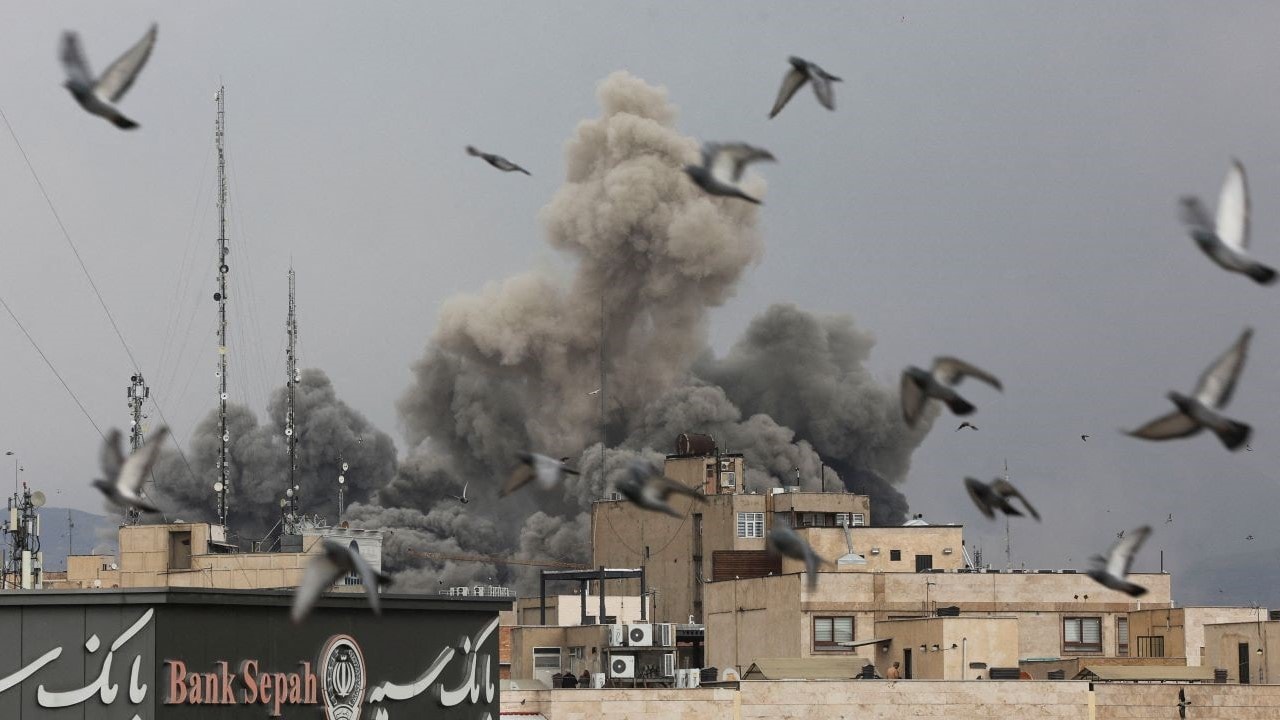
Strategic objectives in the Iranian theater are governed by the law of kinetic friction: the more complex the target environment, the higher the resistance to rapid resolution. While political rhetoric often demands immediate "solutions" to regional instability, military reality dictates that the degradation of a sophisticated, non-linear adversary like the Islamic Republic of Iran (IRI) requires a timeline far exceeding a single deployment cycle. The gap between intention and outcome is not a failure of will, but a function of the structural complexities inherent in modern proxy warfare and subterranean infrastructure.
The Triad of Iranian Defense Depth
To understand why objectives take time, one must deconstruct the three layers of Iranian defense. Unlike a conventional state that relies on border integrity, Iran utilizes a layered system that creates a massive "buffer zone" of time and space. Also making news in related news: Finland Is Not Keeping Calm And The West Is Misreading The Silence.
- The Proxy Perimeter: Iran’s primary defense is not its own army, but a network of non-state actors (Hezbollah, Houthis, PMFs). This creates a "deniability tax" on any military intervention. Neutralizing these groups requires granular intelligence and local partnerships that take years to cultivate.
- Subterranean Fortification: The IRI has invested decades into the "missile city" concept—hardened, deeply buried facilities for both R&D and launch capabilities. Conventional air superiority is mitigated when the high-value assets are under 100 meters of reinforced concrete and granite.
- Asymmetric Naval Doctrine: In the Persian Gulf, Iran does not attempt to match the U.S. Navy ship-for-ship. Instead, it utilizes swarm tactics and mobile coastal batteries. Disruption of this network is not a "one and done" strike mission but a persistent, resource-heavy maritime policing operation.
The Attrition Logic of Sanctions and Sabotage
A common fallacy in strategic analysis is the belief that economic pressure yields immediate behavioral change. In reality, the "Sanctions Latency" is a measurable phenomenon where a regime’s internal reserves and black-market workarounds provide a multi-year cushion against external shocks.
Strategic objectives regarding Iran’s nuclear program or regional influence rely on a "Cost-Benefit Inversion." The goal is to make the cost of maintaining the current path higher than the cost of concession. However, the IRI’s threshold for domestic pain is significantly higher than that of a Western democracy. This mismatch in pain tolerance means that "success" is only visible through the slow erosion of the regime's technical and financial capacity. More insights on this are explored by USA Today.
The Technical Bottleneck in Nuclear Degradation
Cyber operations and physical sabotage (e.g., Stuxnet or targeted strikes on centrifuge components) provide temporary setbacks, not permanent erasures. The Iranian scientific community possesses the "latent knowledge" required to rebuild. Therefore, the military objective is not "elimination" but "management of the breakout clock."
- Centrifuge Recovery Time: Following a physical strike, the lead time for sourcing high-strength aluminum or carbon fiber and re-manufacturing IR-6 centrifuges ranges from 12 to 24 months.
- Knowledge Redundancy: You cannot bomb a formula or a physics calculation. The human capital involved in the nuclear program is distributed, meaning the objective of "denying a nuclear weapon" is a perpetual cycle of disruption rather than a final event.
The Paradox of Precision Strikes
Precision strikes are often marketed as a way to shorten a conflict. In the Iranian context, they frequently have the opposite effect by triggering the "Escalation Ladder." Every tactical success (e.g., the elimination of a high-ranking commander) creates a secondary requirement for defensive posture against the inevitable asymmetric retaliation.
The military must then divert resources from offensive objectives to force protection and missile defense (Aegis, PATRIOT, THAAD). This "defensive tax" slows the momentum of the primary mission. It is a feedback loop: the more effective the strike, the more the adversary shifts to "grey zone" tactics that are harder to track and slower to counter.
The Intelligence Asymmetry and Target Development
The most significant time-sink in achieving Iranian objectives is the "Target Development Life Cycle." In a conventional war, targets are visible and static. In Iran, the high-value targets—mobile transporter-erector-launchers (TELs) and command-and-control (C2) nodes—are designed for high mobility and concealment.
- Detection: Identifying a mobile launcher in the Zagros Mountains requires persistent ISR (Intelligence, Surveillance, and Reconnaissance) coverage.
- Validation: Differentiating a decoy from a real asset in a "denied environment" requires multi-source verification (SIGINT, IMINT, HUMINT).
- The Decision Window: Because these assets move, the window to strike is often measured in minutes. If the infrastructure for real-time data processing isn't perfectly synchronized, the opportunity is lost, and the cycle resets.
This technical friction explains why senior generals emphasize "time." It is a candid admission that the "Kill Web" is still being calibrated for a geography as challenging as the Iranian plateau.
Integrated Deterrence and the Multi-National Friction
The U.S. does not operate in a vacuum. Achieving objectives in Iran requires the synchronization of regional allies (Israel, Saudi Arabia, UAE) whose internal timelines and risk tolerances vary wildly.
- Risk Aversion in the GCC: Gulf states, while wary of Iran, are also vulnerable to Iranian drone and missile strikes on energy infrastructure. Their willingness to support aggressive U.S. objectives is tethered to their own perceived "vulnerability index."
- Israeli Red Lines: Jerusalem operates on a shorter fuse regarding nuclear enrichment, often forcing a recalibration of U.S. long-term strategies to accommodate short-term tactical exigencies.
The coordination of these conflicting interests is a diplomatic-military hybrid task that cannot be rushed. A unilateral move by any party can disrupt a decade of carefully constructed containment.
Operational Constraints of the "Pivot to Asia"
The final factor in the Iranian timeline is the global distribution of U.S. military assets. The "Pivot to Asia" means that the U.S. Central Command (CENTCOM) is no longer the sole priority for high-end assets like carrier strike groups and fifth-generation fighters.
The scarcity of these assets creates a "Resource Queue." If a carrier is needed in the South China Sea, the ability to maintain the "maximum pressure" posture on Iran is diminished. This strategic juggling act means that objectives are often pursued at a lower intensity than would be required for a rapid conclusion. We are essentially fighting a "war of positioning" where the primary goal is to prevent a catastrophic shift in the status quo while waiting for a window of geopolitical opportunity.
The Mechanism of Regional Equilibrium
Military pressure on Iran is not designed to produce a "Victory Day" style conclusion. Instead, it is a mechanism to maintain a specific regional equilibrium. The "success" of the mission is defined by the absence of certain events: the absence of a nuclear test, the absence of a closed Strait of Hormuz, and the absence of a full-scale regional war.
Because the objective is "prevention" rather than "conquest," the mission has no natural expiration date. It is a perpetual state of readiness.
Strategic Playbook for the Next Phase
The shift must move from "event-based" milestones to "process-based" degradation. This requires three distinct tactical pivots:
- Automated Target Acquisition: Increasing the deployment of AI-driven ISR to reduce the "sensor-to-shooter" timeline, specifically targeting mobile TELs in the eastern provinces.
- Cyber-Kinetic Coupling: Integrating cyberattacks with physical strikes to create "cascading failures" in command structures, forcing the regime to focus on internal stability rather than external expansion.
- Hardened Regional Interoperability: Establishing a permanent, integrated air and missile defense (IAMD) shield among regional partners to lower their "vulnerability index" and allow for more aggressive political posturing.
The objective is to transform Iranian containment from a series of reactive spikes into a sustained, automated, and low-visibility pressure campaign that survives changes in political administration. Success is not a treaty; it is the permanent reduction of the adversary's options.


