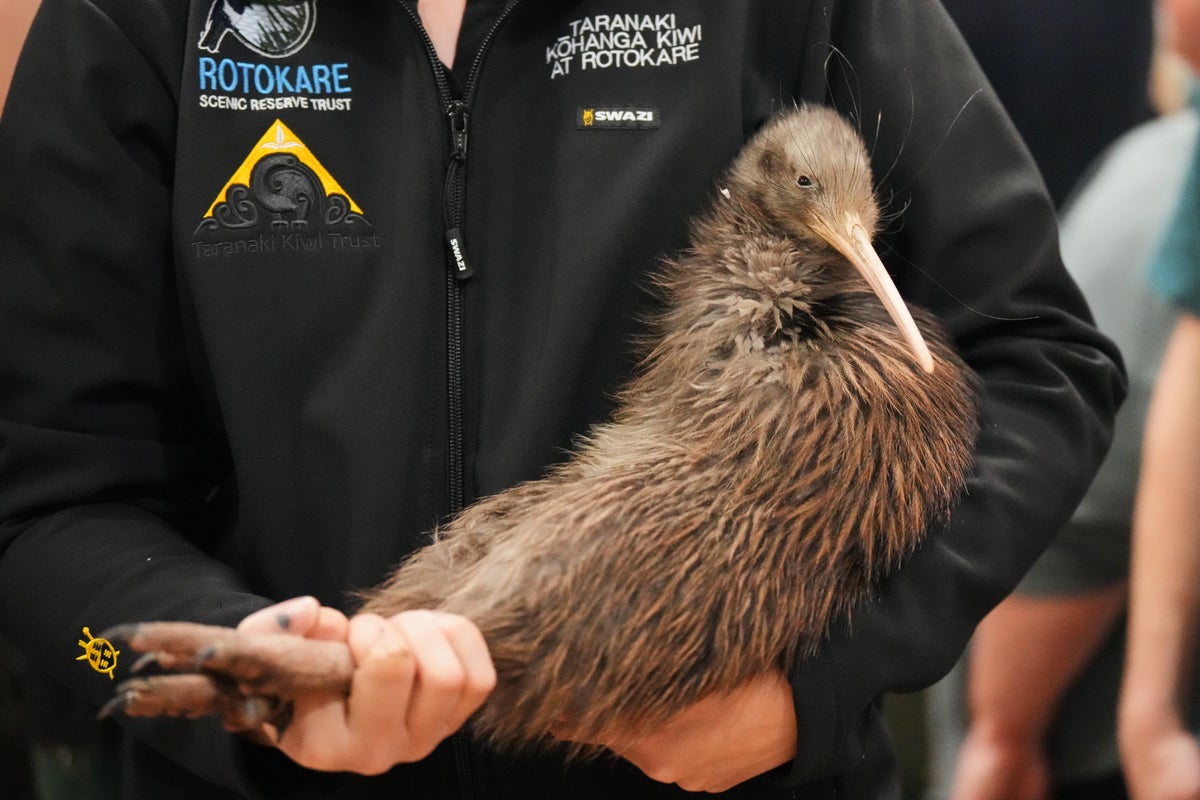
New Zealand has a fever, and the only prescription is more birds. Specifically, the kiwi.
The media is currently swooning over the "emotional homecoming" of the North Island brown kiwi to Wellington’s hills. They paint a picture of a 100-year exile ending in a triumphant return. It’s a Disney script. It’s heartwarming. It’s also a massive strategic blunder that exposes the fundamental flaws in how we approach conservation in the 21st century.
We are obsessed with "charismatic megafauna." We pour millions into high-profile translocations of a single bird species because it looks good on a stamp and tugs at the heartstrings of urban voters. But if you actually look at the data—and the cold, hard reality of predator ecology—you’ll see that we aren’t saving an ecosystem. We are building a high-maintenance outdoor zoo.
The Myth of the Urban Sanctuary
The "lazy consensus" suggests that if you remove enough stoats and build a big enough fence, you can hit "reset" on a century of ecological degradation. This is a fantasy.
Wellington isn't a forest anymore; it’s a suburban sprawl with green patches. By introducing kiwi into these fragmented urban fringes, we are creating a "sink population."
Here is the mechanics of the trap:
- The Edge Effect: Urban sanctuaries have massive perimeter-to-area ratios. This means constant, unending pressure from domestic cats, wandering dogs, and "spill-over" predators from non-trapped areas.
- Genetic Bottlenecks: Small, isolated populations in urban pockets lack the genetic flow required for long-term resilience. We aren't building a self-sustaining wild population; we are managing a fragile collection of individuals that require constant human intervention.
- The Resource Sink: Every dollar spent tracking a single kiwi in a Wellington backyard is a dollar not spent on large-scale, landscape-level pest control in the deep bush where the real battle for biodiversity is being lost.
I’ve seen NGOs burn through their entire annual budget just to move twenty birds for a photo op. It’s conservation as performance art.
Predator Free 2050 is a Mathematical Long Shot
The government’s "Predator Free 2050" goal is the North Star for these projects. It sounds bold. It sounds visionary. In reality, it’s currently a scientific impossibility based on our existing toolkit.
To actually achieve a predator-free status, we don't need more volunteers with peanut butter traps. We need a radical shift in tech. We are talking about gene drive technology or species-specific toxins that can scale. Yet, the same public that cheers for the kiwi return often recoils at the mention of the "hard science" required to make their habitat truly safe.
You can't have it both ways. You cannot support "natural" bird returns while blocking the "unnatural" technology needed to kill the things eating them.
The Opportunity Cost of Emotion
Why are we so obsessed with the kiwi? Because it’s easy to market.
Meanwhile, the "unsexy" species—the native fungi, the cryptic invertebrates, the non-charismatic lizards—are sliding toward extinction with zero fanfare. They are the literal foundation of the food web. Without them, the kiwi has nothing to eat and nowhere to live.
By focusing on the "emotional homecoming" of a flightless bird, we are practicing "trickle-down conservation." The theory is that if we save the top-tier species, the rest of the ecosystem will follow. It’s a failed economic theory, and it’s a failing ecological one.
What People Also Ask (and the Brutal Answers)
- "Is it safe for kiwi to live near cities?"
Hardly. A single off-leash dog on a morning stroll can undo five years of conservation work in thirty seconds. Urban kiwi live in a state of perpetual "managed risk" that borders on animal cruelty. - "Doesn't this raise awareness for conservation?"
Awareness is the participation trophy of the environmental world. Awareness doesn't kill rats. Awareness doesn't fix the nitrogen runoff in our streams. If "awareness" worked, we would have solved the climate crisis in 1992. - "What should we be doing instead?"
Stop the fragmentation. Instead of boutique urban releases, we should be focused on "The Big Connect"—buying back land to create massive, contiguous wilderness corridors that allow birds to migrate naturally, without needing a helicopter ride and a VIP welcoming committee.
The Logistics of a Failed Strategy
Let’s talk about the math of the "recovery."
To maintain a stable population in an urban-adjacent area, you need a kill rate of predators that exceeds the birth rate of those predators across the entire buffer zone. In a city like Wellington, that buffer zone includes thousands of private gardens.
Imagine a scenario where 95% of residents are perfect conservationists. That sounds like a win, right? Wrong. The 5% who keep "outdoor" cats or forget to set their traps create enough of a predator reservoir to wipe out the fledgling kiwi population during a single breeding season.
We are fighting a war of attrition with a spoon.
The High Cost of the "Feel Good" Factor
The cost-per-bird for these urban releases is astronomical. If we calculated the "Return on Biodiversity Investment" (ROBI), these projects would be laughed out of any serious boardroom.
- Transport and Logistics: $15,000 - $30,000 per release event.
- Radio Tracking and Monitoring: $5,000 per bird, per year.
- Predator Control Maintenance: Hundreds of thousands in labor and materials.
Compare this to aerial 1080 drops in remote forest blocks. For the same price as moving a dozen kiwi to Wellington, we could protect thousands of hectares of existing primary forest, saving tens of thousands of birds, bats, and insects. But aerial drops aren't "emotional." They don't make for a good 6:00 PM news segment. They involve hard choices and public controversy.
Stop Treating Nature Like a Museum
The competitor article wants you to feel a sense of closure—that the "absence" is over. This is a dangerous lie. The absence isn't over; it’s being artificially suppressed.
True conservation isn't about "returning" species to places they can no longer survive on their own. It’s about building environments so resilient that the species return themselves. When we ferry kiwi into the capital, we aren't celebrating a victory for nature; we are admitting that we’ve turned the wild into a curated exhibit.
If you want to save the kiwi, stop donating to the high-profile urban releases. Stop clucking your tongue at the "emotional" stories. Demand that the funding goes to the boring stuff: soil health, large-scale reforestation, and the aggressive development of genetic predator control.
Anything else is just gardening with extra steps.
The kiwi doesn't need your emotions. It needs a habitat that doesn't require a human with a telemetry receiver to keep it alive. We’ve turned a national icon into a welfare recipient, and we’re calling it a triumph.
It’s time to stop the PR stunts and start doing the actual work.
Protect the bush. Kill the predators. Leave the birds alone.


