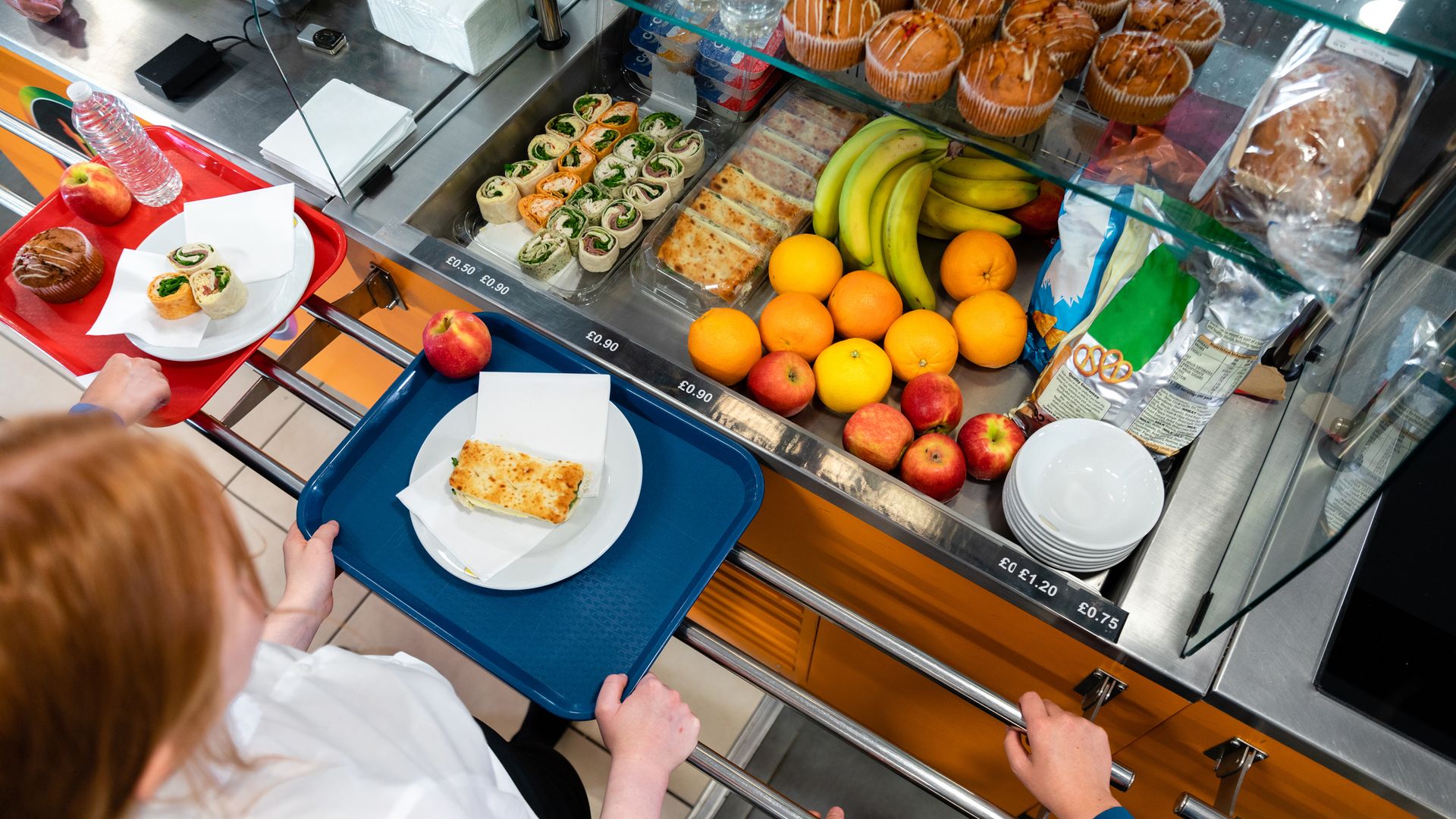
The bell rings at 12:15 PM, a sound that has signaled the same ritual for three generations. In the basement of a brick-and-mortar middle school, the air usually carries a heavy, unmistakable scent: the ghost of a thousand deep-fryers. It is the smell of salt, of yellow-dyed oil, and of the bubbling vats that turn frozen beige shapes into the golden-brown fuel of American adolescence.
Leo is twelve. He doesn’t care about cardiovascular longitudinal studies or the rising cost of public health initiatives. He cares about the crunch. To Leo, the school cafeteria isn’t a nutrition center; it’s a sanctuary. He stands in a line that snakes past posters of dancing broccoli, clutching a five-dollar bill. But today, the ritual is broken. The vats are cold. The heat lamps are dark.
The government has officially pulled the plug on the deep-fryer.
The policy shift sounds like a dry legislative memo: a ban on deep-fried foods from all federally funded school menus. No more breaded chicken patties glistening with oil. No more crinkle-cut fries. No more flash-fried corn dogs. On paper, it is a triumph of public health. In the reality of the lunchroom, it is a cultural earthquake.
The Geography of the Tray
For decades, the school lunch program operated on a logic of efficiency and palatability. If you fry it, they will eat it. It was a simple equation that kept waste low and caloric intake high. But the cost was deferred. We weren't paying at the register; we were paying in the pediatric clinics ten years down the line.
Consider the chemistry of a single french fry. When a potato hits 350 degrees in a bath of vegetable oil, a process called the Maillard reaction creates that addictive, savory crust. It also creates a caloric density that the human brain is evolutionarily unprepared to handle. We are wired to seek out fats and salts because, for most of human history, those things were rare. In a modern cafeteria, they are ubiquitous.
When the government decides to intervene in what a child eats, it isn't just about weight. It is about the fundamental architecture of taste. By removing the deep-fryer, schools are attempting to reset the "bliss point"—that specific ratio of salt, sugar, and fat that food scientists use to make products hyper-palatable.
If a child’s palate is calibrated to the intensity of deep-fried nuggets every day at noon, a sliced apple or a roasted carrot doesn't just taste healthy. It tastes like nothing. It tastes like disappointment.
The Invisible Stakes
The pushback is predictable. Critics argue about "nanny state" overreach and the loss of student agency. They worry that if we don't give kids what they want, they simply won't eat. And for some students, the school lunch is the only hot meal they get in a twenty-four-hour cycle.
But there is a darker reality hidden in the statistics. We are currently witnessing a generation of children who may have a shorter life expectancy than their parents, driven largely by diet-related chronic diseases. Type 2 diabetes, once called "adult-onset," is now a common diagnosis in middle school hallways. This isn't a failure of willpower in children; it is a failure of the environment we have built for them.
Imagine two versions of Leo ten years from now.
In the first version, he continues his daily ritual of fried starch and processed fats. His energy levels spike and crash before third period. His arteries begin the slow, silent process of thickening before he even learns to drive. By thirty, he is managing a chronic condition that dictates his career choices, his insurance premiums, and his physical freedom.
In the second version, the version the new ban hopes to cultivate, Leo’s school serves him a chicken wrap grilled with spices and a side of roasted sweet potatoes. It’s a harder sell. He might grumble. He might even skip lunch for the first two days. But slowly, his taste buds adapt. The "bliss point" shifts. He learns that food can be fuel without being a drug.
This isn't just about calories. It’s about the democratization of health. Wealthy families can afford to curate their children’s diets with organic, whole foods. For children in lower-income districts, the school cafeteria is the primary source of nutritional education. If the state provides fried food, it is effectively endorsing it as the standard for a "normal" meal.
The Logistics of the Transition
Removing a fryer isn't as simple as unplugging a machine. It requires a complete overhaul of the school kitchen infrastructure. Most school kitchens were designed as "heat and serve" stations. They don't have the prep space for fresh produce or the industrial ovens required to bake for six hundred students simultaneously.
The ban necessitates a reinvestment in the labor of cooking. It means hiring staff who know how to season a salad rather than just timing a basket in oil. It means sourcing local ingredients that don't come in a frozen plastic bag.
But the real challenge is the "Vending Machine Effect."
When you remove a highly desired, addictive substance from a controlled environment, people seek out the "black market." In schools, this looks like the corner store across the street or the vending machine in the hallway filled with chips and soda. The ban on deep-fried food only works if it is part of a broader shift in the school's food culture. If the cafeteria serves kale but the fundraiser sells chocolate bars, the message is lost.
The transition is messy. In the first few months of these bans, waste often spikes. Trays of roasted vegetables are found in the trash cans, untouched. It is a painful, expensive adjustment period. But health is a long game. You don't judge the success of a nutritional policy by the trash cans on Tuesday; you judge it by the health markers of the community a decade later.
The Quiet Revolution
Back in the basement, Leo looks at his tray. Instead of the usual golden pile, there are wedges of seasoned, baked potatoes. They aren't as crunchy. They don't have that heavy, oily sheen that lingers on his fingers.
He takes a bite. It’s different. It’s not the hit of dopamine he’s used to, but it’s food. He eats it because he’s hungry, and then he goes to soccer practice. He doesn't feel the usual "food coma" that makes his legs feel like lead during the second half of the game. He doesn't realize that his blood sugar is holding steady. He doesn't realize that the government just placed a bet on his long-term survival.
We often think of freedom as the ability to choose whatever we want in the moment. But true freedom is the ability to live a life unburdened by preventable illness. By taking the fryer out of the school, we are giving children a chance to grow up in a world where "normal" food doesn't kill them.
The hum of the cafeteria continues, but the frequency has changed. The vats are gone, replaced by the sound of knives hitting cutting boards and the whir of convection ovens. It is a quieter, less greasy revolution.
Leo finishes his lunch and drops his tray. He doesn't feel like a character in a public health study. He just feels full. He walks out into the sunlight, unaware that the invisible stakes of his lunch have just shifted, ever so slightly, in his favor.
The oil is gone. The future remains.


