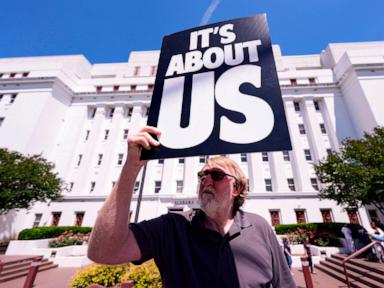
The map on the wall is more than just a grid of ink and paper. It is a promise. In Memphis, a city defined by the slow, rhythmic pulse of the Mississippi River and the echoes of Beale Street, that map tells you who you belong to and whose door you can knock on when the streetlights go out or the taxes go up. It tells you who represents your soul in the halls of power.
But maps are being rewritten.
In the quiet, climate-controlled rooms of Nashville, Tennessee Republicans are currently weighing a decision that could fundamentally alter the political identity of the 9th Congressional District. This isn’t a simple matter of shifting a line three blocks to the left to account for a new housing development. This is about the potential carving of the only majority-Black district in the state. It is about the "cracking" of a community.
Consider a man named Elijah. He is a hypothetical resident of South Memphis, but his story is the composite reality of thousands. Elijah has lived in the same brick bungalow for forty years. He knows the cracks in the sidewalk like the back of his hand. When he goes to the polls, he feels a sense of collective agency. He is part of a voting bloc that reflects his history, his struggles, and his aspirations.
Now, imagine the map changes.
Suddenly, Elijah’s neighborhood is sliced away from the city center. He is no longer grouped with his neighbors who share his concerns about urban infrastructure and civil rights history. Instead, he is bundled into a sprawling rural district that stretches deep into the West Tennessee countryside. His vote, once a roar in a concentrated choir, becomes a whisper in a vast, different wilderness.
The Geometry of Power
The technical term for this is redistricting, but that word is too sterile. It sounds like urban planning. In reality, it is the surgical application of political will. After the 2020 Census, the Tennessee General Assembly already flexed this muscle by splitting Nashville—traditionally a Democratic stronghold—into three separate pieces. The result was predictable. The city's unified voice was scattered, and a seat held by the opposition for decades flipped.
Now, the eyes of the legislature have turned toward Memphis.
The 9th District is currently represented by Steve Cohen, a veteran politician who has held the seat since 2007. The district is a fortress of Democratic support and a vital hub for Black political representation in a state that is otherwise overwhelmingly red. To "reconsider" these boundaries is to open a door that many in the community thought was locked by the Voting Rights Act.
History teaches us that lines are never just lines. They are barriers. They are sieves. When a minority community is "packed" into a single district, their influence is capped. When they are "cracked" across multiple districts, their influence is diluted until it vanishes. It is a game of political Tetris where the stakes are the very survival of local interests.
The Weight of the Past
To understand why this feels like a betrayal to many Memphians, you have to look at the soil. This is the city where Dr. King spent his final hours fighting for the dignity of sanitation workers. This is a place where the struggle for the right to be seen and heard isn't a chapter in a textbook; it is the atmosphere.
When the state government suggests that the 9th District needs a makeover, it isn't just talking about population counts. It is touching a nerve that has been raw for generations. There is an inherent tension between the urban heart of Memphis and the suburban and rural interests that dominate the state capital. Nashville is booming, a neon-soaked metropolis of cranes and bachelorette parties. Memphis is different. It is grit. It is soul. It is a city that has often had to fight the state for every scrap of investment and every ounce of autonomy.
Critics of the proposed changes argue that the move is a blatant attempt to secure a 9-0 Republican sweep of Tennessee’s congressional delegation. Proponents, however, often frame these discussions in the language of "compactness" or "balancing populations." They point to the need for districts to be roughly equal in size to ensure "one person, one vote."
But that mathematical defense often ignores the human variable. If you achieve numerical equality by destroying a community of interest, have you actually served the voter? Or have you just served the party?
The Invisible Stakes
When a district is dismantled, the loss isn't just felt on Election Day. It ripples through the four years that follow.
Think about the phone calls to a Congressional office. A veteran in Memphis needs help with the VA. A small business owner on Poplar Avenue is looking for a federal grant. A neighborhood association is protesting a new highway expansion. When a representative's district is a cohesive community, they understand these local nuances. They know the geography of the problems.
If Memphis is split, a representative living two hours away in a rural county might have the best intentions, but they don't know the rhythm of the city. They don't understand why a specific bus route or a specific community center is a lifeline. The "human element" becomes an abstraction in a spreadsheet.
The fear in Memphis is that they will become a footnote in their own representation.
A Fragile Balance
The law is supposed to be the shield. The Voting Rights Act was designed specifically to prevent the dilution of minority voting power. However, recent Supreme Court rulings have weakened the "pre-clearance" requirements that once forced states with a history of discrimination to get federal approval before changing their maps.
Now, the burden of proof has shifted. The community has to wait for the damage to be done, then spend years and millions of dollars in court to prove that their rights were violated. Justice, in this case, moves at the speed of a glacier, while elections happen with the regularity of the seasons.
There is a profound sense of exhaustion in this cycle. It is the exhaustion of having to prove, over and over again, that your community deserves to exist as a political entity. It is the weariness of watching the goalposts move every ten years.
State Representative Justin J. Pearson and others have been vocal, calling these potential moves a "targeted attack." They aren't just talking about a seat in Washington. They are talking about the right of a Black-majority city to choose a leader who understands their specific, lived experience.
The Silence of the Map
If the redistricting goes through, the map will look clean. The lines will be sharp. The numbers will add up perfectly to the required totals. On a computer screen in a legislative office, it will look like a job well done.
But on the ground, in the neighborhoods where the history is thick and the porch lights stay on, the map will feel like a cage.
Elijah will go to his mailbox and see a flyer for a candidate he doesn't recognize, talking about issues that feel worlds away from the potholes on his street. He will look at the new map and realize that while his house hasn't moved, he has been transported to a different political universe.
The most dangerous thing about a line is how easily it can be drawn, and how hard it is to erase. Once a community is fragmented, the pieces don't just snap back together. The trust breaks. The engagement withers. People stop believing that the system is designed for them, and start believing it is designed against them.
As the deliberations continue in Nashville, the people of Memphis are watching. They are waiting to see if their city will remain a whole, vibrant voice, or if it will be treated as a collection of parts to be traded and sold for the sake of a supermajority.
The ink is still wet. The pens are still in hand. But for those living within the lines, the heart of the matter is already clear: a map that doesn't respect the people is just a piece of paper. And a democracy that fears the voices of its cities is a democracy in retreat.
The Mississippi continues to flow past the bluffs of Memphis, indifferent to the lines drawn by men in suits. It carries the weight of the past toward the sea, a reminder that some things are too deep, too powerful, and too central to be carved up without a fight.