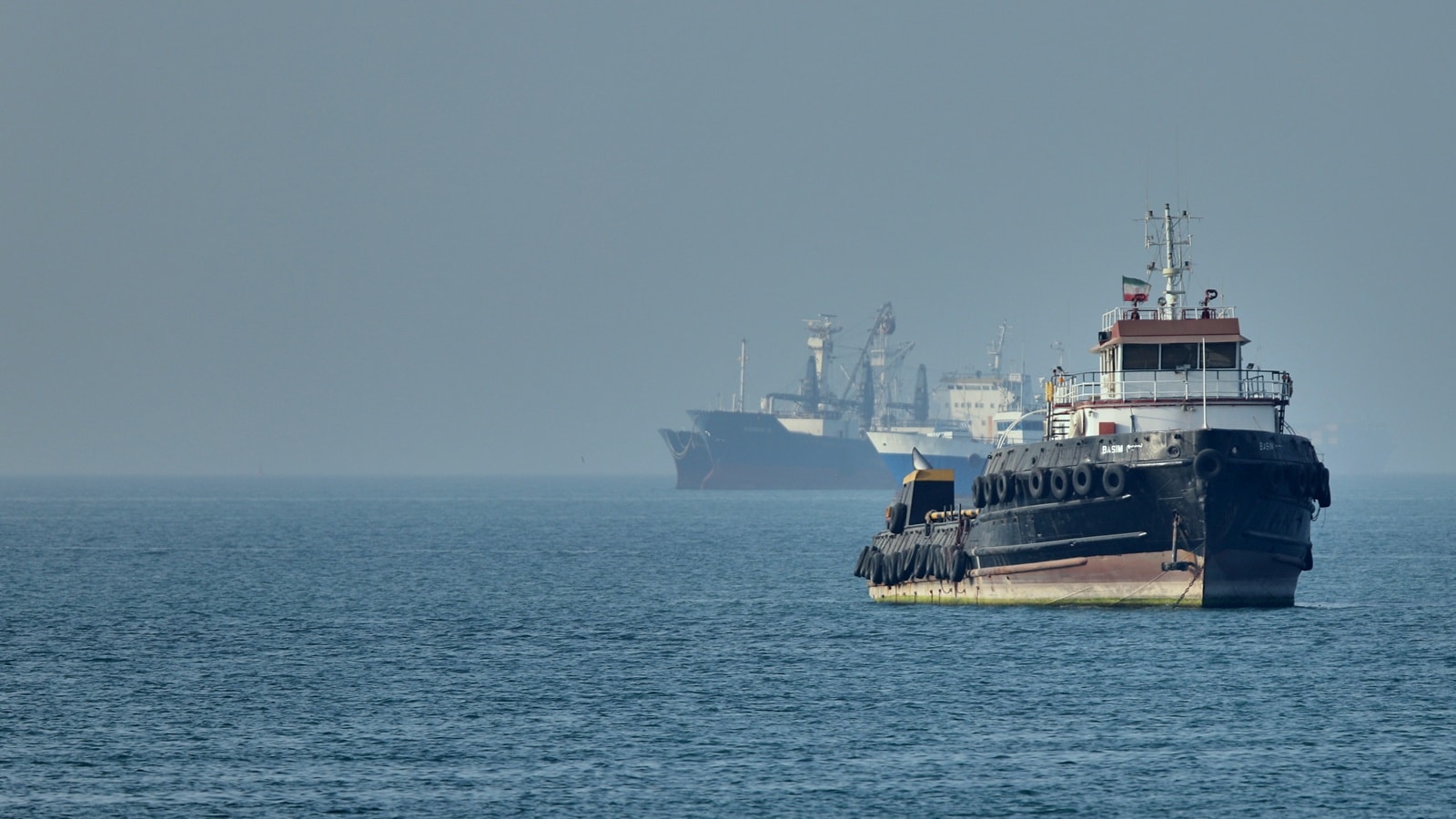
The Strait of Hormuz is currently the most expensive parking lot on earth. While headlines fixate on the sheer number of vessels—roughly 1,600 ships of varying tonnages—sitting idle in and around these deep waters, the surface-level reporting misses the mechanical and financial rot setting in below the waterline. This is not just a traffic jam. It is a systemic seizure of the global supply chain that threatens to bankrupt mid-sized shipping firms and spike energy costs for every continent.
Freeing these vessels requires more than a diplomatic handshake or a cleared channel. It demands a massive, coordinated salvage and refueling operation that the region is currently unequipped to handle. The math is simple and brutal. Every day a Capesize tanker sits idle, it bleeds tens of thousands of dollars in charter rates, insurance premiums, and crew wages. Multiply that by 1,600, and you are looking at an economic hemorrhage that totals billions per week.
The Physical Reality of Deep Water Stagnation
The Strait of Hormuz is a narrow chokepoint, but its "deep water" designation is what makes this crisis particularly difficult to resolve. Ships cannot simply pull over. When a vessel of that size is stationary for extended periods in high-salinity, high-temperature environments, biology becomes an enemy.
Fouling occurs at an accelerated rate in these waters. Barnacles and tubeworms attach to the hulls, increasing drag and destroying fuel efficiency. For the 1,600 ships currently waiting, many will require dry-docking or professional hull cleaning before they can safely resume long-haul voyages. You cannot simply turn the key and go. The engines on these massive carriers are designed for constant operation. Letting them sit cold in the humid Persian Gulf air leads to seal degradation and internal corrosion that can seize a multi-million dollar power plant in weeks.
Beyond the mechanical issues, there is the problem of "dead ship" syndrome. If a vessel loses power or exhausts its fuel while waiting, it becomes a literal floating mountain of steel. Moving a single dead ship requires specialized tugs that are currently in short supply. Moving hundreds would require a global mobilization of salvage assets that does not yet exist in a unified command structure.
The Insurance Deadlock and the High Cost of Risk
Lloyd’s of London and other major underwriters have already adjusted the "War Risk" premiums for the region. This is the hidden hand that keeps the ships stuck. Even if the physical path is clear, many of these captains are under orders from their owners not to weigh anchor because the insurance coverage for the transit has expired or become prohibitively expensive.
We are seeing a standoff between ship owners, charterers, and insurers. The owners want the charterers to foot the increased insurance bill. The charterers argue that the delay is a "force majeure" event, absolving them of the cost. While these legal teams trade emails in London and Dubai, the 1,600 ships remain stationary. The legal gridlock is every bit as impenetrable as the physical one.
The Crew Crisis Under the Surface
Human endurance is the most overlooked factor in this maritime stalemate. A typical merchant crew is contracted for months at a time, but those contracts are based on movement. When a ship is "stranded," the psychological toll on the crew grows. Supplies of fresh water and food must be barged in at exorbitant rates.
If a crew's contract expires while the ship is stuck in a high-risk zone, repatriating those workers becomes a bureaucratic nightmare. We are looking at a potential humanitarian crisis where thousands of seafarers are effectively imprisoned on high-tech islands of steel, waiting for a geopolitical resolution that feels increasingly distant.
The Infrastructure Gap in Salvage Operations
To clear a backlog of this magnitude, the region needs a massive influx of bunkering (refueling) capacity. Most of these ships were prepared for a specific transit duration. As they sit, they burn fuel to keep life-support systems, refrigeration, and basic electronics running.
When the signal finally comes to move, a significant percentage of the 1,600 ships will be running on "fumes." The demand for low-sulfur fuel oil will skyrocket instantly. The local refueling hubs in Fujairah are efficient, but they are not designed to jump-start an entire fleet simultaneously. The surge in demand will likely lead to price gouging and further delays as ships wait in a secondary line just to get enough fuel to reach the next port.
The Triage Problem
Authorities will have to implement a triage system. Which ships move first?
- LNG Carriers: High-priority for global energy markets, but incredibly dangerous to move if there is any lingering security risk.
- Livestock Carriers: These are ticking time bombs. If these vessels are among the 1,600, the moral and sanitary urgency to move them surpasses almost everything else.
- Container Ships: Carrying time-sensitive electronics and seasonal goods that lose value every hour they sit.
- Oil Tankers: The bulk of the weight, but often the slowest to maneuver.
This hierarchy will create friction. A national government will demand their oil tanker move first, while a multi-national corporation will lobby for their container ship to take precedence. Without a neutral, international regulatory body to manage the "outflow," the departure could be as chaotic as the stoppage.
Environmental Risks of a Mass Departure
The sudden movement of 1,600 heavy vessels through a narrow strait creates a unique environmental hazard. The wake turbulence alone, if not managed with staggered departures, can cause significant coastal erosion and disturb delicate marine ecosystems in the Gulf.
More concerning is the risk of collision. The Strait of Hormuz uses a Traffic Separation Scheme (TSS). It consists of two-mile-wide lanes for inbound and outbound traffic, separated by a two-mile-wide buffer zone. When you try to funnel a backlog of 1,600 ships through these narrow lanes, the margin for error vanishes. One mechanical failure or one steering mistake from a fatigued crew could lead to a grounding or a collision that blocks the strait all over again, doubling the duration of the crisis.
The Digital Vulnerability of the Fleet
Modern shipping relies heavily on GPS and AIS (Automatic Identification System) for navigation. In a high-tension environment like Hormuz, electronic interference is a constant threat. "Spoofing"—where a ship's GPS coordinates are faked by an external signal—has been documented in these waters before.
For a fleet of 1,600 ships to move safely, the digital environment must be as clear as the physical one. If the ships cannot trust their sensors, they must rely on manual navigation, which is significantly slower and riskier for the massive VLCCs (Very Large Crude Carriers) that require miles to come to a full stop.
Why the Current Solutions are Insufficient
The talk of "naval escorts" is a popular talking point in political circles, but it lacks practical scalability. No navy on earth has enough destroyers or frigates to provide a close-quarters escort for 1,600 individual merchant vessels. At best, they can provide "area security," which does little to help a ship that has suffered a mechanical breakdown or is being denied entry to its destination port due to updated customs regulations.
The real solution lies in a boring, expensive, and technical mobilization. It requires:
- Massive Tug Deployment: Relocating heavy-lift tugs from Singapore and the North Sea to the Gulf.
- Emergency Bunkering Fleets: Converting smaller tankers into mobile refueling stations to service ships at anchor.
- Temporary Legal Waivers: An international agreement to freeze insurance litigation until the ships are in safe harbor, allowing them to move under a temporary "blanket" policy.
The Economic Aftershock
Even if every ship was magically moved tomorrow, the global economy would feel the "bullwhip effect" for the next year. These 1,600 ships represent a massive chunk of global carrying capacity. While they are stuck, they aren't just failing to deliver current cargo; they are failing to pick up the next load.
Port congestion in Europe and Asia will spike as this "tidal wave" of delayed cargo eventually arrives all at once. Warehouses will overflow, and trucking networks will buckle under the sudden volume. This is the reality of modern logistics: a delay in one corner of the world is not a local event. It is a global pulse of instability.
The ships in the Strait of Hormuz are a monument to the fragility of our interconnected world. We have built a system that prizes efficiency above all else, leaving no room for the friction of reality. Now, that friction has accumulated into 1,600 steel problems that no one is truly prepared to solve. The cost of "business as usual" is being rewritten in the deep waters of the Gulf, and the bill is going to be staggering.
Companies must stop treating their supply chains as abstract lines on a map and start recognizing them as physical assets vulnerable to the laws of physics and the whims of geography. If the 1,600 ships are to be freed, it will be through engineering and money, not just rhetoric.
The maritime industry needs to establish a permanent, well-funded regional salvage authority capable of handling "fleet-scale" emergencies. Without a dedicated infrastructure to manage mass-stagnation events, we are simply waiting for the next chokepoint to seize. The Strait of Hormuz is the current crisis, but with global trade routes tightening, it certainly won't be the last.
Every hour the sun beats down on those idle decks, the cost of the eventual solution goes up. We are no longer in the realm of "if" these ships will be freed, but rather how much of the global economy will be sacrificed to make it happen. The logistical math is unforgiving. It is time to stop analyzing the problem and start moving the tugs.