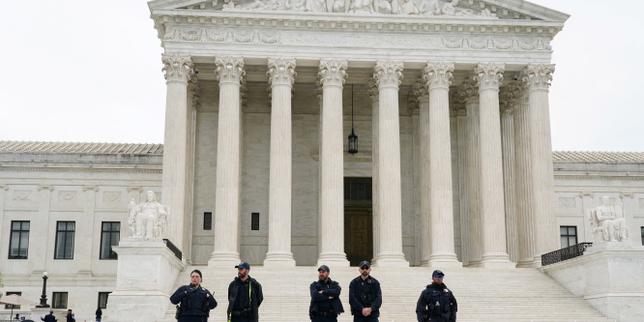
Louisiana’s political boundaries are a disaster. You might think drawing lines on a map is a simple administrative task, but in the Deep South, it’s a high-stakes chess match where the board keeps getting flipped over. The U.S. Supreme Court recently hit the brakes on a new congressional map that would've created a second majority-Black district in the state. This isn't just about ink on paper. It’s about who gets a seat at the table in Washington and how the Voting Rights Act actually functions in 2026.
If you’ve been following the news, you know this has been a back-and-forth legal nightmare. For years, Louisiana operated with six congressional districts, only one of which was majority-Black. Given that about a third of the state’s population is Black, civil rights groups argued—rightfully—that the math didn't add up. They felt the map "packed" Black voters into one district and "cracked" others across the rest of the state to dilute their influence. If you enjoyed this piece, you might want to look at: this related article.
The Problem With Race Based Redistricting
The core of the issue lies in a massive contradiction within American law. On one hand, the Voting Rights Act (VRA) says you can't dilute the power of minority voters. On the other, the Equal Protection Clause of the 14th Amendment says the government generally can't use race as the primary factor when drawing those same lines. It's a "damned if you do, damned if you don't" scenario for state legislatures.
When the Louisiana legislature finally drew a second majority-Black district (District 6) earlier this year, they did it under intense pressure from a lower court. They basically had a gun to their head. They created a jagged, narrow district that snakes from Shreveport all the way down to Baton Rouge. It looks like a Rorschach test gone wrong. For another perspective on this event, check out the recent update from Associated Press.
A group of "non-African American" voters sued, claiming the state engaged in unconstitutional racial gerrymandering. They argued the map was so focused on race that it ignored traditional redistricting principles like keeping communities together or making districts compact. A three-judge panel in Louisiana agreed with them, tossing the map out. Now, the Supreme Court has stepped in to stay that decision, meaning the 2024 elections will likely proceed with the new map—at least for now—but the long-term legal standing is shaky at best.
Why the Supreme Court is Playing Defense
The Supreme Court didn't necessarily say the map is perfect. They just said it’s too close to the election to change it again. This is known as the Purcell Principle. It’s the idea that courts shouldn't mess with election rules right before people head to the polls because it creates mass confusion for voters and candidates alike.
Honestly, it’s a mess.
We saw a similar drama play out in Alabama. The Supreme Court shocked everyone last year by siding with Black voters there, forcing the state to create a second majority-minority district. You'd think that would settle it. But every state is different, and the specific way Louisiana’s District 6 was drawn makes it a much easier target for legal challenges.
Critics of the map say it's "segregation by another name." Supporters say it's the only way to ensure the 33% of Louisianans who are Black have more than 16% of the representation. Both sides have a point, and that’s why this keeps landing on the desks of nine people in robes in D.C.
What This Means For You and Your Vote
If you live in Louisiana, you're probably tired of checking the news to see which district you’re in. This legal ping-pong affects everything from who represents you in Congress to which local issues get federal funding.
When districts are gerrymandered—regardless of which party or group is doing it—it often leads to "safe" seats. In safe seats, the real election happens in the primary. The general election becomes a formality. That shifts the focus to the fringes of both parties rather than the middle where most of us actually live.
The Breakdown of District 6
- The Geography: It spans nearly the entire length of the state, cutting through diverse economic zones that have very little in common other than the race of the majority of the residents.
- The Politics: It turns a safe Republican seat into a likely Democratic one. That’s why this is such a dogfight. It’s not just about civil rights; it’s about the narrow margin of power in the House of Representatives.
- The Legal Precedent: This case will likely determine how much "race-conscious" redistricting is allowed before it becomes "racial gerrymandering."
The Impact on National Power
Don't think for a second this is just a Louisiana problem. The battle over these lines could decide which party controls the U.S. House. With a razor-thin majority, every single seat matters. If Louisiana adds a Democratic-leaning district, and Alabama adds another, and New York or California shifts theirs, the entire balance of power in Washington flips.
That's why national groups are pouring millions into these local lawsuits. They aren't just fighting for the "soul of democracy." They're fighting for the speakership.
The Supreme Court’s decision to let the map stand for the upcoming election is a temporary win for representation advocates, but the underlying legal question isn't gone. It’s just sleeping. The Court will eventually have to decide if the Voting Rights Act requires these types of "snake-like" districts or if they're a bridge too far.
How to Stay Informed and Involved
You don't need a law degree to see the impact of these decisions. Keep an eye on the following:
- Check your registration: Because lines have moved, your polling place or representative might have changed. Don't wait until November to find out.
- Follow the merits case: The Supreme Court only issued a "stay." They haven't ruled on the final legality of the map yet. That trial will happen later, and it will be the real decider for the 2026 and 2028 cycles.
- Look at the candidates: New districts attract new blood. Look for candidates who actually understand the weird geography of these new districts and aren't just there to be a warm body for their party.
The reality is that as long as we have humans drawing lines, we’ll have people trying to rig the game. The Supreme Court's intervention provides a brief moment of stability, but the fight over how we define "fair" representation in the South is far from over. Pay attention to the lower court proceedings in the coming months. That's where the real groundwork for the next decade of American politics is being laid.
Check the Louisiana Secretary of State website to see the final confirmed map for your area before you head to the primary. Don't assume your ballot will look the same as it did two years ago.