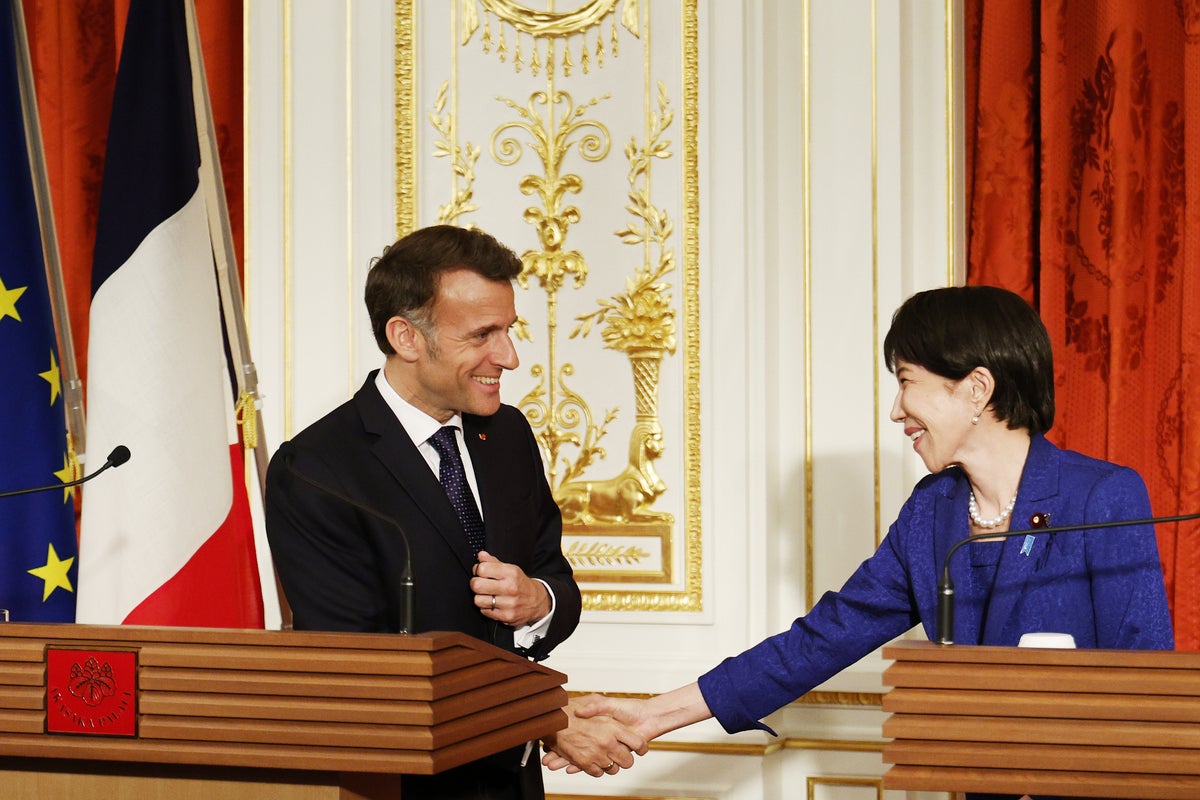
If you’re watching the news, you’ve probably seen the headlines about French President Emmanuel Macron and Japanese Prime Minister Sanae Takaichi standing together at the Akasaka Palace. They’re calling for an immediate ceasefire in the Middle East. On the surface, it looks like standard diplomatic theater. Two world leaders from opposite sides of the globe meet, shake hands, and say they want peace.
But there’s a lot more moving under the surface here. This isn’t just a "thoughts and prayers" moment for the international community. It’s a desperate attempt to fix a global supply chain that is currently being strangled by the de facto closure of the Strait of Hormuz. Meanwhile, you can find similar developments here: The DHS Shutdown Finally Ended and It Was a Mess.
The Real Reason for the Urgent Call
Most people assume these ceasefire calls are purely humanitarian. While the loss of life is undeniably the driving force behind the public rhetoric, Japan and France are staring down an economic barrel.
Japan relies on the Middle East for roughly 95% of its oil. Since the conflict escalated and Iranian forces effectively choked off the Strait of Hormuz, Tokyo has had to start tapping into its strategic petroleum reserves. You can’t run an industrial superpower on reserves forever. Fuel prices are spiking, and Takaichi knows that her political standing depends on keeping the lights on and the factories humming. To understand the bigger picture, we recommend the excellent report by NBC News.
Macron is in a similar spot. Europe is already weary from years of energy instability. He’s facing massive pressure at home because of soaring petroleum costs. When Macron stands in Tokyo and advocates for "free passage through the Strait of Hormuz," he isn't just talking about ships. He’s talking about the survival of the French and Japanese economies.
A Direct Challenge to the New Washington
The timing of this visit is incredibly pointed. It happened just as U.S. President Donald Trump made it clear that the U.S. isn’t interested in being the world's policeman for free anymore. Trump basically told the world that if France and other nations want the Strait of Hormuz open, they should be the ones to open it. He even called France "very unhelpful."
Macron’s response in Tokyo was a masterclass in diplomatic shade. He didn't mention Trump by name, but he spoke at length about "predictability" and "international law."
- The Message: If the U.S. is going to step back, middle powers like France and Japan have to step up.
- The Reality: Neither France nor Japan currently has the solo military muscle to force the Strait open against a determined Iranian offensive.
They’re trying to build a coalition of "the willing and the worried." By syncing up, they’re hoping to create enough diplomatic and economic pressure to force a de-escalation that the U.S. seems happy to watch from the sidelines.
More Than Just a Peace Mission
While the Mideast ceasefire was the headline, the two leaders spent a lot of time behind closed doors talking about things that have nothing to do with the desert.
The Critical Minerals Defense
France and Japan signed a massive deal on rare earth minerals. Right now, China controls the lion's share of the global production of these materials. If you want to build an electric vehicle, a fighter jet, or a smartphone, you need these minerals.
Takaichi and Macron are effectively trying to "de-risk" their economies from Beijing. They’re moving toward a joint rare earths project that would allow them to bypass Chinese supply chains. It’s a move toward "strategic autonomy," a phrase Macron loves to use.
Nuclear Energy and Space
They also doubled down on nuclear fuel recycling and fast reactor technology. Japan’s nuclear program has been struggling for years, and France—the king of European nuclear power—is looking to export its expertise.
Then there’s the space junk. Tomorrow, they’re visiting a company that specializes in removing space debris. It sounds like sci-fi, but with the massive increase in satellite launches, orbital clutter is becoming a real threat to national security and global communications.
Why You Should Care
If you think this is just "over there" news, look at your gas bill or the price of groceries. The conflict in the Middle East has already sent global shipping into a tailspin.
If Macron and Takaichi can’t drum up enough international support for a ceasefire, we’re looking at a prolonged period of high energy costs. The "road map" signed by Japanese Defense Minister Shinjiro Koizumi and French Minister Catherine Vautrin suggests that we’ll see more French warships in the Indo-Pacific and more joint exercises.
This is the birth of a new kind of alliance. It’s not centered on Washington. It’s a "middle power" axis trying to keep the world stable while the superpowers bicker or withdraw.
What to Watch Next
Macron is heading to South Korea next to meet with President Lee Jae Myung. Expect the same script: energy security, advanced tech, and more calls for a ceasefire.
Don't just watch the speeches. Watch the oil markets. If the markets don't believe this ceasefire talk has teeth, prices will keep climbing. The real test is whether these two can convince other G7 nations to put actual skin in the game to secure the Strait of Hormuz.
Keep an eye on the Japanese strategic reserve levels. If they keep dropping, Takaichi will have to move from diplomacy to something much more drastic. For now, the world waits to see if a French president and a Japanese prime minister can talk the world back from the brink of an energy catastrophe.
If you’re looking to protect your own interests, start paying closer attention to energy-independent tech and supply chain diversification. The era of cheap, easy-to-move oil is hitting a massive roadblock, and the Akasaka Palace meeting is the clearest sign yet that the old rules don't apply anymore.