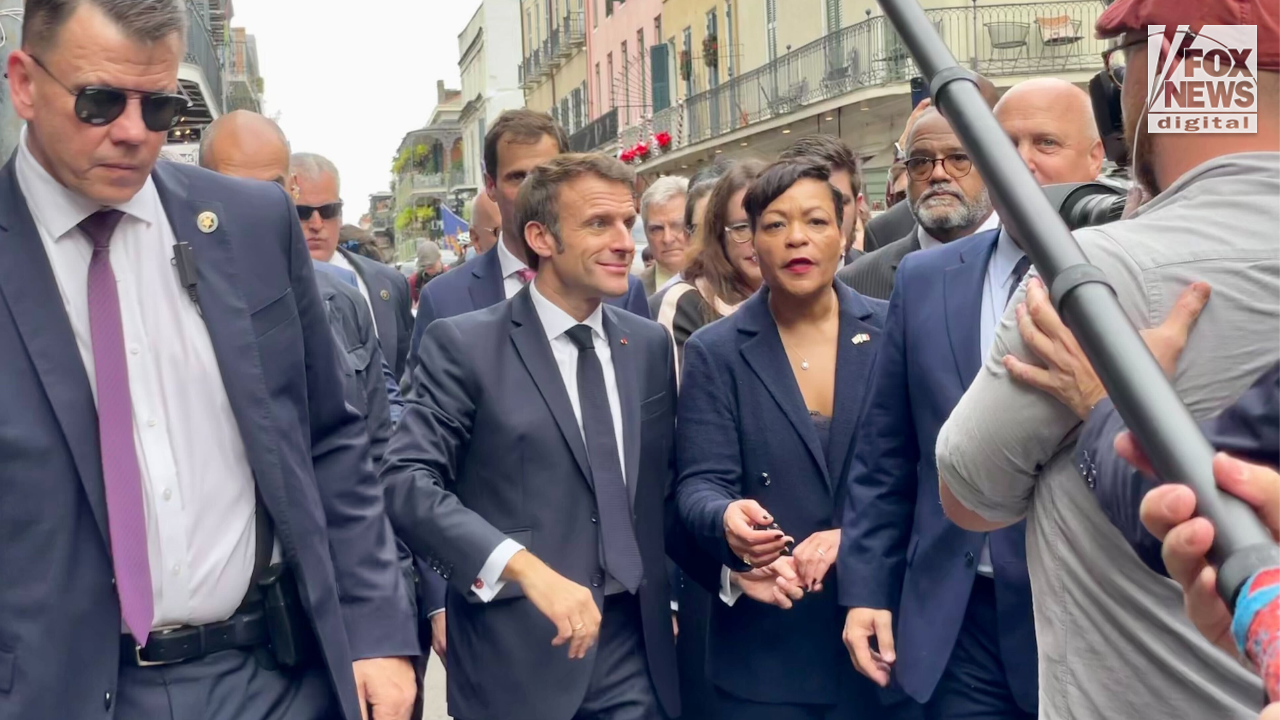
Geopolitics is often a theater of the absurd, but the latest push by Emmanuel Macron for a "coordinated reopening" of the Strait of Hormuz takes the prize for the most detached-from-reality script of 2026. While "Project Freedom" tensions escalate and the world watches oil tickers with bated breath, the diplomatic elite are busy polishing a narrative that is fundamentally broken.
The consensus view—the "lazy consensus" if you will—is that the Strait of Hormuz is a faucet that can be turned on or off by diplomatic goodwill. Macron’s plea suggests that if we just get the US and Iran in a room, we can "stabilize" the energy markets and return to a comfortable status quo. Learn more on a similar topic: this related article.
This is a lie.
The Strait of Hormuz isn't a diplomatic switch. It’s a structural choke point that has become the ultimate leverage tool in a post-globalization world. Trying to "reopen" it through coordinated diplomacy is like trying to fix a shattered dam with Scotch tape. More analysis by Al Jazeera delves into related views on the subject.
The Myth of the "Reopening"
First, let’s address the terminology. To talk about "reopening" the Strait implies it is currently closed in a physical or legal sense that diplomats can simply reverse. It isn't. The Strait is technically open, but it is functionally paralyzed by risk premiums.
When Macron speaks of coordination, he’s ignoring the cold, hard math of maritime insurance. Lloyd’s of London doesn't care about a joint communiqué from Paris or Tehran. They care about Kinetic Risk.
As long as "Project Freedom" remains a live military framework, the Strait is a shooting gallery. No amount of "coordinated reopening" reduces the cost of shipping a barrel of crude when the probability of a drone strike is non-zero. The diplomacy being peddled right now is theater designed to calm domestic voters who are seeing gas prices spike at the pump. It has zero impact on the actual logistics of global energy transit.
Why "Project Freedom" is the Scapegoat, Not the Cause
The media loves a villain. Currently, "Project Freedom" is being framed as the disruptor of an otherwise peaceful maritime corridor. This ignores thirty years of escalating asymmetric warfare capabilities.
I have spent two decades analyzing trade flows and security in the Persian Gulf. I have seen billions of dollars in "security infrastructure" rendered obsolete by $2,000 off-the-shelf drones. The vulnerability of the Strait isn't a result of recent tensions; it’s a permanent feature of modern warfare that we have finally been forced to acknowledge.
The Strait of Hormuz handles roughly 20-30% of the world's total oil consumption.
$$V = \frac{Q \times P}{T}$$
Where $V$ is the strategic value, $Q$ is the quantity of oil, $P$ is the global price sensitivity, and $T$ is the transit difficulty. As $T$ approaches a certain threshold of risk, $V$ becomes a weapon that Iran can use without ever firing a shot. They don't need to close the Strait; they just need to make it too expensive to use.
The US-Iran Deadlock: A Feature, Not a Bug
The idea that the US and Iran can "coordinate" on this is a pipe dream. Their interests are diametrically opposed in a way that no "Project Freedom" negotiation can solve.
- For the US: Maintaining the flow is about global price stability and protecting the petrodollar’s relevance.
- For Iran: Restricting the flow—or the threat of it—is the only meaningful leverage they have against crippling economic sanctions.
Why would Iran give up its only high-card just because Macron thinks it would be a nice gesture for global stability? They won't. They shouldn't, from a purely Machiavellian perspective. The "lazy consensus" assumes that everyone wants a return to 2015-style stability. They don't. We are in an era of intentional instability.
The Actionable Truth: Diversify or Die
If you are a business leader or a policy maker waiting for Macron’s "coordinated reopening" to fix your supply chain, you are already failing.
Stop asking when the Strait will return to normal. It won't. "Normal" was an anomaly provided by a unipolar world that no longer exists.
Instead of betting on diplomacy, look at the literal ground under your feet. The future of energy security isn't in a "coordinated" Persian Gulf; it’s in the bypass.
- The East-West Pipeline (Saudi Arabia): This is the only real hedge, yet it’s chronically underutilized due to political friction. If you want to solve the Hormuz crisis, you fund the expansion of Pipelink capacity to Yanbu on the Red Sea.
- The Abu Dhabi Crude Oil Pipeline: Capacity needs to triple.
- The Hydrogen Pivot: Real energy independence means removing the "Hormuz Variable" entirely from your balance sheet.
I’ve watched companies bleed out because they stayed "loyal" to established shipping routes while the geopolitical floor was dropping out. They waited for the "experts" to signal all-clear. The all-clear never came.
The Flaw in the "Freedom" Logic
"Project Freedom" is being sold as a way to secure transit. In reality, any increased military presence in a 21-mile wide waterway only increases the "Surface Area of Friction."
Imagine a scenario where two heavily armed neighbors, who despise each other, decide to "coordinate" on how to share a driveway. Every time one moves a lawnmower, the other sees it as a provocation. That is the Strait of Hormuz today. More ships, more sensors, and more "coordination" just means more opportunities for a low-level commander to make a high-level mistake.
Stop Asking the Wrong Questions
The press asks: "When will the US and Iran agree on the Strait?"
The better question: "How quickly can we make the Strait irrelevant?"
The fixation on this 21-mile stretch of water is a symptom of 20th-century thinking. We are obsessed with the "choke point" because we are addicted to the commodity that flows through it.
Macron’s intervention isn't leadership; it’s nostalgia. He’s pining for a world where European powers could mediate between giants and keep the lights on in Paris without breaking a sweat. That world is dead.
The reality is brutal: The Strait of Hormuz is no longer a trade route. It is a hostage. And you don't negotiate with a hostage-taker by asking them to "coordinate" the release while you're still pointing a gun at their head.
If you want to protect your interests, stop looking for a diplomatic breakthrough. Start building the infrastructure that makes the breakthrough unnecessary.
Buy the bypass. Fund the alternative. Accept that the "coordinated reopening" is a ghost story told by diplomats to keep the markets from screaming.
The Strait is broken. Build a bridge over it or a pipe around it, but stop waiting for it to heal.