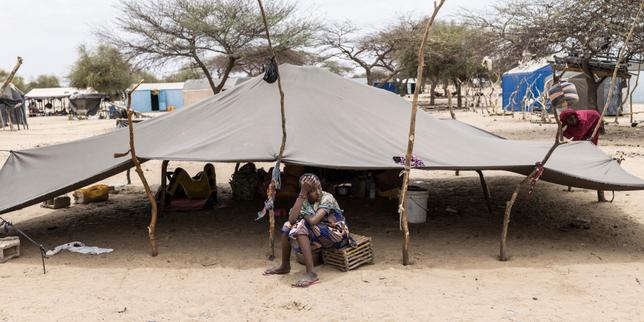
The security situation in Mali has moved beyond a simple crisis into a systemic breakdown that threatens the very definition of statehood in the Sahel. For over a decade, Bamako has struggled to contain a multi-front insurgency, but the current strategy marks a radical departure from previous years. By severing ties with traditional Western partners and the United Nations, the ruling military administration has staked everything on a bet that private military contractors and local mobilization can achieve what international coalitions could not. This gamble is currently failing. The human cost is rising, the territory is shrinking, and the economic foundations of the country are cracking under the weight of perpetual war.
Understanding why Mali is sliding further into chaos requires looking past the headlines of rebel attacks. It is a story of a state losing its monopoly on violence while simultaneously losing its ability to provide basic services. When the state retreats, others fill the void. If you enjoyed this piece, you should look at: this related article.
The Collapse of the Northern Buffer
The departure of the MINUSMA peacekeeping mission created a vacuum that no one was truly prepared to fill. For years, the UN presence acted as a flawed but functional buffer between the central government and a complex web of Tuareg separatists and jihadist groups. When those blue helmets left, the race for their vacated bases ignited a conventional war in the north that had been largely dormant since the 2015 peace deal.
This isn’t just a skirmish. It is a fundamental realignment of the map. The capture of Kidal by the Malian Armed Forces (FAMa) and their Russian partners in late 2023 was hailed as a historic victory for national sovereignty. However, holding a city is not the same as controlling a region. The victory proved pyrrhic. By forcing separatist groups back into the arms of more radical elements, the government effectively ended the possibility of a political solution. Now, the northern half of the country is a free-fire zone where the distinction between "rebel" and "terrorist" has been erased by the state, driving more communities into the hands of extremists for protection. For another look on this story, see the latest update from NPR.
Russian Steel and the Limits of Mercenary Warfare
The arrival of the Wagner Group—now reorganized under the "Africa Corps" banner—was marketed as the decisive solution to Mali’s insecurity. The pitch was simple. Unlike the French or the UN, these fighters would operate without the "handcuffs" of human rights oversight or complex rules of engagement. They would provide the kinetic force necessary to crush the insurgency once and for all.
The reality on the ground tells a different story. While these forces have provided the junta with a sense of personal security and a formidable propaganda tool, they have not been able to hold territory. Their presence has coincided with a sharp increase in civilian casualties. Every time a drone strike or a ground sweep results in the death of non-combatants, the recruitment offices of the JNIM (Jama'at Nusrat al-Islam wal-Muslimin) see a surge in volunteers. You cannot kill your way out of an insurgency when your methods create more insurgents than they eliminate.
Furthermore, these services are not free. Mali is paying for this security through a combination of direct cash payments and mining concessions. In a country where the treasury is already depleted, diverting gold revenue to pay foreign contractors means there is less money for schools, hospitals, and the infrastructure needed to win hearts and minds in the restless periphery.
The Siege of the Center
While the world watches the desert north, the true heart of the crisis is in Central Mali. Here, the conflict is no longer just about ideology; it is about survival. The Mopti and Segou regions are the breadbaskets of the country, yet they are increasingly under blockade.
Extremist groups have shifted their tactics from large-scale assaults to "asymmetric strangulation." They surround villages, cut off trade routes, and forbid farmers from tending their fields unless they pay a religious tax. This is a deliberate attempt to starve the state of its legitimacy. If a government cannot guarantee that a farmer can harvest his rice, that government ceases to exist in the eyes of the farmer.
The Rise of Ethnic Militias
The state’s inability to protect the center led to the proliferation of the Dan Na Ambassagou and other "self-defense" groups. These are largely ethnic Dogon or Bambara militias tasked with fighting off Fulani-associated extremist groups. This has turned a political struggle into a communal bloodletting.
- Cycles of Revenge: A raid on one village triggers a massacre in another.
- The Breakdown of Law: The central government often turns a blind eye to militia violence because these groups are the only thing standing between the state and total defeat in the rural interior.
- Long-term Instability: Even if the jihadists were defeated tomorrow, these heavily armed militias would remain, likely turning their sights on each other or the state.
An Economy on the Brink
The geopolitical pivot away from the West has come with a heavy price tag beyond the battlefield. Mali’s economy is currently isolated. After the coups in 2020 and 2021, sanctions from ECOWAS (Economic Community of West African States) battered the financial sector. Although some of those were lifted, the decision by the Alliance of Sahel States (AES)—comprising Mali, Burkina Faso, and Niger—to withdraw from the bloc entirely has created massive uncertainty.
The withdrawal threatens the free movement of goods and people, which is vital for a landlocked nation like Mali. Relying on the port of Conakry or distant Russian supplies is a poor substitute for the integrated trade networks of West Africa. Inflation is rampant, and the cost of basic necessities like cooking oil and grain has skyrocketed. When people can no longer afford to eat, the political stability of the capital becomes fragile, regardless of how many soldiers are on the streets.
The Information War and the Narrowing of Public Space
In Bamako, the atmosphere is one of forced consensus. The transition government has been highly effective at framing any criticism of the military or its foreign partners as an act of treason. Journalists have been detained, foreign media outlets like RFI and France 24 have been banned, and local activists live in fear of the "nighttime visit."
This lack of a feedback loop is dangerous for any administration. When you silence dissent, you also silence the early warning signs of policy failure. The government is currently operating in an echo chamber of its own making, bolstered by a sophisticated social media apparatus that blames every setback on "foreign interference" or "hidden hands." While this strategy works for maintaining internal discipline in the short term, it does nothing to solve the underlying issues of governance and security.
The Regional Domino Effect
Mali does not exist in a vacuum. Its instability is actively bleeding into its neighbors. To the south, coastal states like Ghana, Togo, and Benin are watching their northern borders with increasing alarm. The "Sahelization" of West Africa is no longer a theoretical threat; it is an active process.
The formation of the AES was intended to show a united front against both terrorists and Western influence. However, the three member nations are all facing the same structural weaknesses. They are all resource-rich but cash-poor, military-led, and struggling with internal insurgencies. By pulling away from the regional security architecture, they have created a fragmented response to a threat that recognizes no borders. The jihadists move between Mali, Burkina Faso, and Niger with greater ease than the armies trying to catch them.
The Logistics of a Failed Strategy
To see why the current approach is stalling, look at the equipment. The Malian Air Force has received several shipments of Russian aircraft, including Su-25 jets and Mi-35 helicopters. On paper, this is a massive upgrade. In practice, maintaining these machines in the harsh Saharan environment requires a technical footprint that Mali lacks.
Without constant support from foreign technicians and a steady stream of expensive parts, these assets become "hangar queens." Furthermore, airpower is of limited use in an insurgency where the enemy blends into the local population. You can bomb a convoy, but you cannot bomb an idea, and you certainly cannot bomb a village into loyalty.
The Only Path Forward
The current trajectory suggests that Mali is heading toward a "Somali-style" fragmentation, where the central government controls the capital and a few key corridors while the rest of the country is carved up into fiefdoms. To avoid this, a fundamental shift is required.
The government must move beyond the "security-first" obsession. Guns can clear a road, but only governance can keep it open. This means re-opening channels for political dialogue with northern groups, even those currently labeled as enemies. It means curbing the excesses of foreign contractors and holding militias accountable for communal violence. Most importantly, it means realizing that sovereignty is a hollow concept if it results in the impoverishment and displacement of the very people it is supposed to protect.
Mali is not a lost cause, but it is a country running out of time. The descent can be halted, but not through the same methods that accelerated it. The focus must shift from the glory of the battlefield to the grueling, unglamorous work of rebuilding the social contract. If the state continues to prioritize its own survival over the welfare of its citizens, it will eventually find itself with no citizens left to govern. The tragedy of the Sahel is that the tools being used to save the nation are the very ones tearing it apart. This is the brutal reality of the Malian crisis. Hard power has hit its limit, and the bill is coming due.