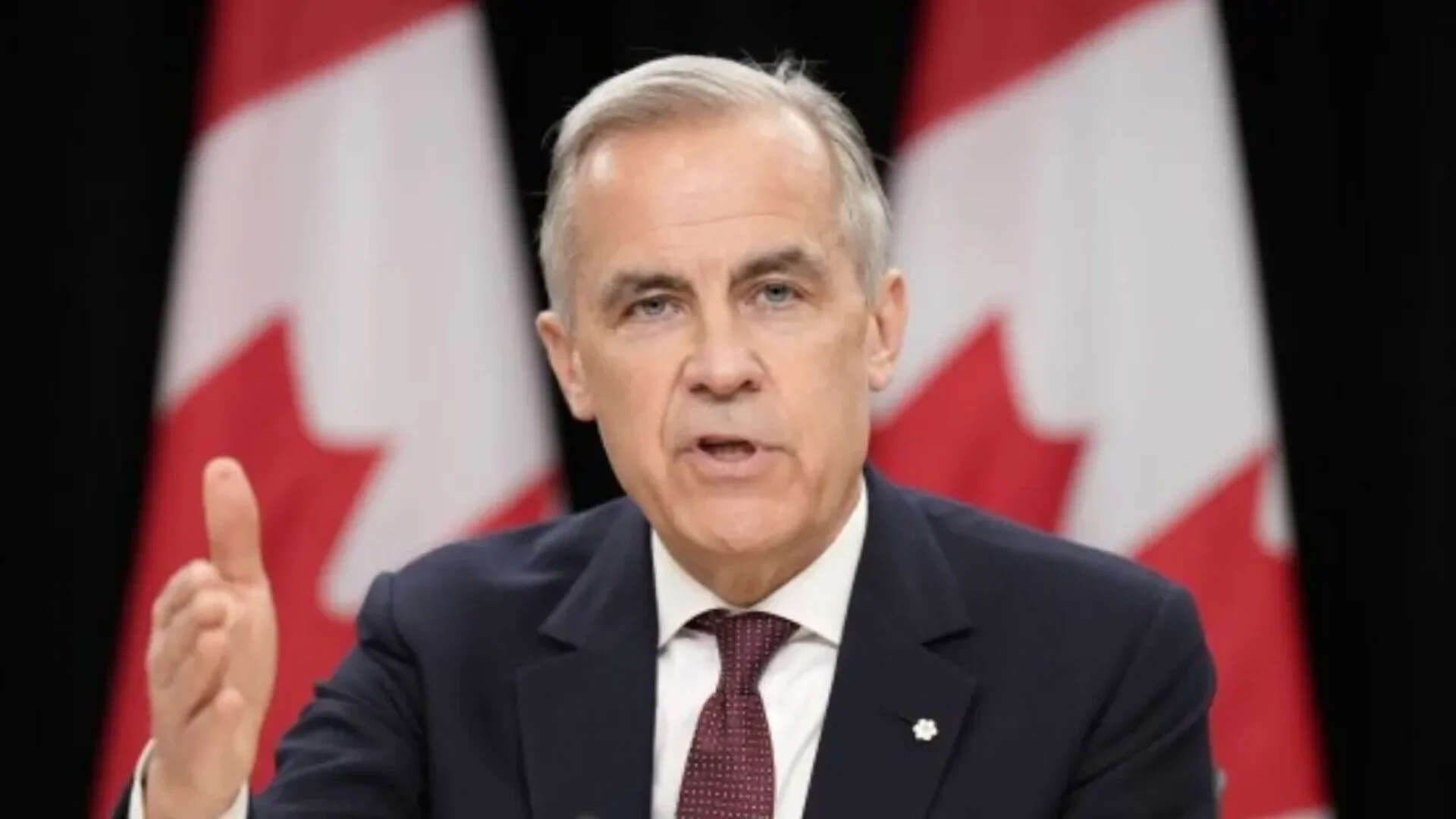
The Canadian political establishment is currently suffering from a collective hallucination. They look at the polls, they see the orange-tinted shadow of Donald Trump looming over the border, and they have decided that a technocratic central banker is the only man capable of holding the line. The narrative is simple: Trump represents chaos, and Mark Carney represents "stability."
It is a beautiful story. It is also completely wrong.
By positioning Carney as the "anti-Trump," the Liberal party and their media allies aren't securing a mandate; they are admitting intellectual bankruptcy. They are betting that Canadians want a return to the cool, detached Davos-style governance that created the very resentment fueling the populist surge in the first place. You don't fight a fire by pouring liquid nitrogen on the victims; you fight it by addressing the fuel.
The Myth of the Technocratic Shield
The prevailing wisdom suggests that because Carney managed the Bank of England and the Bank of Canada, he possesses some unique wizardry to insulate the Canadian economy from protectionist shocks. This ignores the reality of how global trade actually functions in 2026.
Trump’s rhetoric isn't just noise; it’s a fundamental shift in the American psyche regarding the USMCA and cross-border supply chains. Thinking a former Goldman Sachs executive can "out-negotiate" a populist movement through sheer pedigree is the height of Ottawa's arrogance. I have sat in boardrooms where "the smartest guy in the room" explained why a certain market shift was impossible, only to watch the entire spreadsheet vanish in a weekend because they ignored the human element. Carney is that guy.
He represents the "Expert Class" that failed to see the 2008 crash coming until it hit, and then spent a decade patting themselves on the back for managing the fallout with cheap credit. That cheap credit fueled the Canadian housing bubble—a crisis that is currently hollowing out the middle class. To present the architect of low-interest-rate addiction as the cure for economic anxiety is a gaslighting masterclass.
Canada Does Not Need a Manager It Needs a Mechanic
The "decisive mandate" the media is whispering about isn't based on Carney’s policy platforms. It’s based on a vibe. It’s the vibe of a gated community looking at a protest outside and deciding to hire a more eloquent spokesperson.
Let’s look at the actual data the "Carney as Savior" crowd ignores. Canada’s productivity is currently in a freefall compared to the rest of the G7. Since 2015, our GDP per capita has stagnated while the cost of living has skyrocketed.
The standard response from the Carney camp is more "strategic investment" and "green transition" frameworks. These are empty buzzwords. In the real world, these frameworks often translate to government-subsidized cronyism that does nothing to lower the price of a three-bedroom house in Oshawa or a bag of groceries in Calgary.
The "Trump threat" is being used as a convenient boogeyman to distract from internal rot. If the U.S. imposes a 10% universal baseline tariff, Carney’s "decisive mandate" won't save the auto sector. No amount of elegant speeches at the IMF will change the fact that Canada has become a difficult place to build anything, extract anything, or move anything.
The Populism Paradox
Here is the nuance the mainstream analysis misses: Carney doesn't neutralize the populist threat; he validates it.
Every time a politician talks about Carney’s "global stature," a voter in the BC interior or rural Ontario hears "outsider who cares more about his reputation in London and Paris than my commute." Trump’s strength is that he speaks a crude, often ugly, but recognizable language of grievance. Carney speaks the language of a white paper.
If you want to beat a populist, you have to offer a better version of populism—one that actually delivers on prosperity and sovereignty. You don't beat him by offering a more refined version of the status quo.
Imagine a scenario where Carney takes the lead. He stabilizes the bond markets. He earns a polite nod from the New York Times editorial board. Meanwhile, the actual cost of energy remains high because of ideological rigidity, and the manufacturing base continues to migrate to the U.S. South because our regulatory environment is a labyrinth designed by people who have never run a drill press. In that scenario, the "Carney Mandate" is just a four-year waiting room for a much more radical, much more angry Canadian version of Trumpism.
The ESG Trap
Carney’s most significant contribution to the global stage has been his push for environmental, social, and governance (ESG) standards in finance. He views this as his legacy. For a country like Canada—whose economy is still fundamentally tied to the ground—this is a suicide pact.
While the U.S. is signaling a massive retreat from "woke capital" and a return to energy pragmatism, Carney’s Canada would be doubling down on carbon math. This isn't about denying climate change; it’s about math. You cannot compete with a neighbor that is slashing energy costs while you are intentionally inflating your own to meet a metric designed in a Swiss boardroom.
The E-E-A-T (Experience, Expertise, Authoritativeness, Trustworthiness) of the Canadian political class is currently at an all-time low. They are trying to borrow Carney's "Expertise" to mask their lack of "Experience" in the real economy.
The False Choice
The media wants you to believe the choice is between Carney’s "Adult in the Room" energy and the "Chaos" of the right. This is a false binary.
The real choice is between a managed decline led by a very capable administrator and a messy, difficult restructuring of the Canadian state. Carney is the king of the managed decline. He is the master of the "soft landing" that still leaves everyone on the ground poorer than when they started.
Stop asking if Mark Carney is "qualified" to lead. Of course he is. He’s the most qualified person in the world to manage a system that is no longer working for the people it serves. The question you should be asking is: why are we trying to save a system that views the average citizen's concerns as a "rhetorical hurdle" to be managed?
If Carney is the answer, you are asking the wrong question.
Don't look for a savior in a bespoke suit. Look for a policy that actually allows someone to start a business without a decade of permitting. Look for a leader who understands that Canada is a resource powerhouse, not a boutique social experiment.
The "mandate" Carney is chasing isn't a victory for Canada. It’s a desperate attempt by a failing elite to buy four more years of relevance. If they succeed, the eventual correction will be far more painful than anything Trump could ever tweet.
Get ready for the fallout. The technocrats are coming, and they have no idea how to fix the machines they’ve broken.