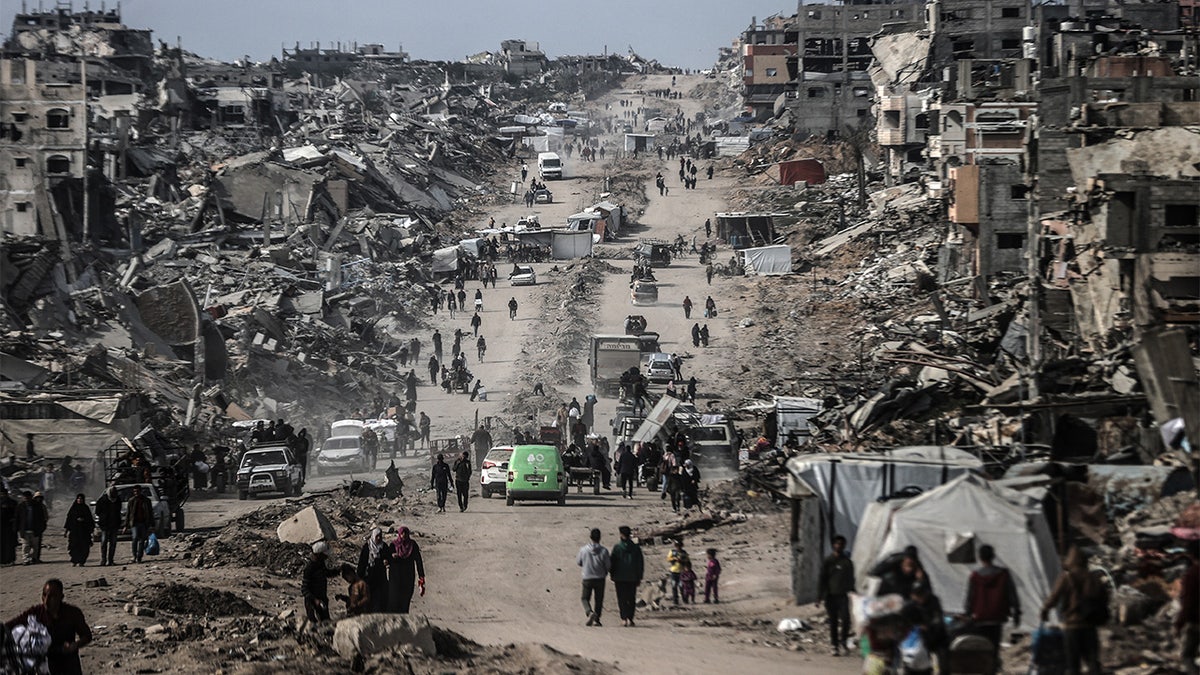
The dust in Mutumji does not settle; it hovers. It is a fine, ochre powder that coats the lungs and turns the water in the plastic basins a muddy grey. On a typical Wednesday, this dust is kicked up by the feet of thousands. Traders from across Zamfara State arrive with goats, bags of dried peppers, and second-hand clothes, creating a rhythmic chaos that serves as the heartbeat of northern Nigeria.
In this part of the world, a market is more than a place of commerce. It is a sanctuary of survival. In a region choked by poverty and terrorized by roving bands of gunmen, the weekly market is the only time the math of life actually adds up. You sell a cow; you buy medicine. You sell grain; you pay school fees.
Then the jets came.
There was no whistle of descent. Just a sudden, violent displacement of the air that shattered the afternoon heat. One moment, a woman named Amina (a pseudonym to protect her from the very forces that failed her) was haggling over the price of salt. The next, she was staring at her own hands, wondering why they were covered in someone else’s blood. The roar of the Nigerian Air Force planes drowned out the screams, leaving a ringing silence that would haunt the survivors for years.
The government called it an "operational success." They claimed they were targeting bandits—the brutal kidnapping syndicates that have turned the northwest into a wasteland of fear. But as the smoke cleared over the stalls of Mutumji, the only things left behind were the mangled remains of civilians, the charred carcasses of livestock, and a question that no official statement could answer.
Why?
The Anatomy of a Mistake
To understand how a busy marketplace becomes a target, you have to understand the terrifying fog of Nigeria’s internal security war. For over a decade, the military has been stretched thin, fighting a multi-front battle against Boko Haram in the northeast and increasingly sophisticated "bandits" in the northwest. These bandits aren't just petty thieves. They are heavily armed militias, sometimes numbering in the hundreds, who occupy the vast, ungoverned forests.
Intelligence in these areas is often a game of broken telephone. A tip comes in about a gathering. A drone sees a group of men on motorcycles. In the high-stakes pressure of a command center in Abuja or Kaduna, these grainy images are interpreted through the lens of necessity. The military feels the burning need to show results, to prove they are taking the fight to the enemy.
But the enemy in Zamfara does not wear a uniform. The bandits dress like the farmers. They ride the same Chinese-made motorcycles. They eat at the same stalls. When the military decides to "neutralize" a target, the margin for error is razor-thin. In Mutumji, that margin evaporated.
Consider the physics of an airstrike in a crowded space. A standard bomb dropped from a jet doesn't just hit a point; it creates a kill zone. The shockwave liquefies internal organs. The shrapnel—thousands of jagged metal teeth—tears through the corrugated metal roofs of market stalls as if they were paper. When the target is a "hideout" in the middle of a civilian hub, there is no such thing as a surgical strike.
There is only carnage.
The Invisible Stakes of "Collateral Damage"
We use terms like "collateral damage" because they are cold. They allow us to file away the horror in a cabinet labeled Necessary Evils. But for the father who had to pick up his son’s sandals—and only the sandals—from the red earth of the market, the term is an insult.
The invisible stake here isn't just the loss of life, though that is the primary tragedy. It is the death of trust.
In the villages of the north, the state is often an abstract concept. The government is something that exists on the radio or in the distant, air-conditioned offices of the capital. The only time many of these citizens see the power of the state is when it arrives in the form of a gun barrel or a bomb. When that power kills your neighbor instead of your oppressor, the narrative of the "protector" vanishes.
This creates a vacuum. And in a war zone, a vacuum is always filled by the worst actors.
When a grieving village buries its dead after a botched airstrike, the bandits don't stay silent. They go to those villages. They offer "protection." They point to the sky and tell the survivors, "The government hates you. We are the only ones who can keep you safe." Every errant bomb is a recruitment poster for the very groups the military is trying to destroy.
It is a self-inflicted wound that never stops bleeding.
The Silence of the Sky
The aftermath of the Mutumji bombing followed a predictable, depressing pattern. First, there was the denial. Then, the "investigation" was announced. Finally, the silence.
Nigeria’s military has a history of these "accidental" bombings. In 2017, a jet struck a refugee camp in Rann, killing over 100 people. In 2021, another strike hit a wedding party. Each time, the promises of "better coordination" and "refined intelligence" are made. And each time, the dust eventually settles over new graves.
The human element is often lost in the debate over military budgets and counter-insurgency tactics. We talk about the "need for air superiority" as if it’s a video game. We forget the sensory reality of the ground.
Imagine the smell of burning grain mixed with copper-scented blood. Imagine the sound of a thousand people suddenly realizing that the sky is no longer a source of rain, but a source of fire.
For the survivors, the trauma is a physical weight. Amina no longer goes to the market. She cannot stand the sound of a motorbike engine revving too loudly. She lives in a state of permanent flinch. Her livelihood is gone, replaced by a paralyzing fear of the open air.
"They say they were looking for the bad men," she said, her voice a dry whisper. "But the bad men ran away when they heard the planes. Only we, who had nowhere to run, stayed to die."
The Arithmetic of Grief
Let’s look at the logic we are asked to accept. If killing ten bandits requires killing twenty civilians, is the country safer?
The military would argue that the long-term goal of stability justifies the short-term "accidents." But stability is not built on corpses. You cannot bomb a population into feeling secure. Security is the presence of justice, not just the absence of the enemy.
When the Nigerian Air Force calculates the success of a mission, they count the "neutrals." They count the destroyed camps. They rarely count the shattered families or the children who will grow up seeing the Nigerian flag not as a symbol of pride, but as a warning of impending violence.
The true cost of the Mutumji bombing isn't found in a ledger of spent ordnance. It’s found in the eyes of the survivors who now look at their own government with the same terror they reserve for the bandits.
The tragedy of the Nigerian northwest is that the people are caught between two fires. On the ground, the bandits' AK-47s. From above, the government’s missiles. There is no middle ground. There is only the dust.
As the sun sets over the remnants of the Mutumji market, the shadows grow long across the empty stalls. The traders are gone. The goats are dead or stolen. The only thing that remains is the crushing realization that in the effort to save the village, the protectors forgot about the people living in it.
The sky is clear today, blue and vast and utterly terrifying.