The first flights touching down in Delhi from Dubai and Abu Dhabi this week are not signs of a returning tourism boom. They are the metallic coughs of a stalled engine trying to restart in a desert of debt and logistical nightmares. While headlines focus on the "resumption of services," the reality on the tarmac is far more grim. These limited routes are the result of intense diplomatic arm-twisting and a desperate need to flush stranded labor and capital through a system that has been frozen for too long.
For months, the aviation corridor between the United Arab Emirates and India—one of the busiest and most profitable in the world—sat silent. The recent arrival of an Air India Express flight from Abu Dhabi into Delhi’s Indira Gandhi International Airport marks a symbolic end to the total blackout, but the mechanics of this restart are fragile. Passengers aren't booking weekend getaways. They are navigating a gauntlet of shifting health protocols, exorbitant ticket pricing, and the very real fear that the doors might slam shut again without notice.
The Economic Bloodline is Hemorrhaging
To understand why these few flights matter, you have to look at the ledger. The UAE-India route is the financial spine of several major carriers, including Emirates, Etihad, and Indigo. When this corridor closes, the cash flow doesn't just slow; it evaporates.
The "limited" nature of these flights is a direct byproduct of a standoff between public health caution and private sector survival. Government officials in both nations have been trading data on infection rates like high-stakes poker players. The UAE wants to protect its status as a global transit hub, while India is struggling to manage a domestic infrastructure that is frequently overwhelmed.
The result is a compromise that satisfies no one.
Airlines are currently operating under strict capacity caps. This isn't about safety distancing alone; it is about the inability of ground crews and testing facilities to handle a pre-pandemic volume of humans. For the traveler, this means the era of the $300 round-trip is dead. We are seeing "repatriation pricing" where a one-way ticket costs more than a business-class seat used to, driven by the simple fact that airlines cannot make the math work on half-empty planes without gouging the few who have no choice but to fly.
The Labor Trap in the Gulf
Behind the glossy exterior of Dubai International Airport lies the true human cost of these grounded fleets. Hundreds of thousands of Indian workers in the Gulf found themselves in a legal and financial limbo when the flights stopped. Many lost their jobs but could not leave. Others were in India on leave and could not return to their livelihoods in the UAE.
These limited flights are a pressure valve for a massive human crisis.
The "Vande Bharat" mission and its subsequent iterations have been touted as a success, but talk to anyone in the labor camps of Sharjah or the suburbs of Kerala, and the story changes. The bureaucracy involved in getting a seat on one of these "limited" flights is a labyrinth of digital portals, embassy registrations, and local police clearances. It is a system designed to discourage movement rather than facilitate it.
The Testing Industrial Complex
Another factor rarely discussed in the mainstream press is the explosion of the testing industry as a gatekeeper for aviation. To board a flight from Abu Dhabi to Delhi, a passenger doesn't just need a ticket; they need a specific type of QR-coded verification that must be timed with surgical precision.
- Pre-departure testing: Required within a narrow window, often 48 to 72 hours.
- Rapid testing at the gate: A final, expensive hurdle that has seen private laboratories raking in millions in fees.
- Post-arrival quarantine: A shifting set of rules that varies by Indian state, making a "national" policy almost impossible to track.
This creates a high-friction environment where only the most desperate or the most wealthy can travel. It is a filtered version of globalization where movement is a luxury, not a right.
Why the Hub Model is Breaking
For decades, the business model of Middle Eastern carriers was built on the "hub and spoke" system. You take people from everywhere and move them through a central point—Dubai, Doha, or Abu Dhabi. This model relies on high volume and low friction.
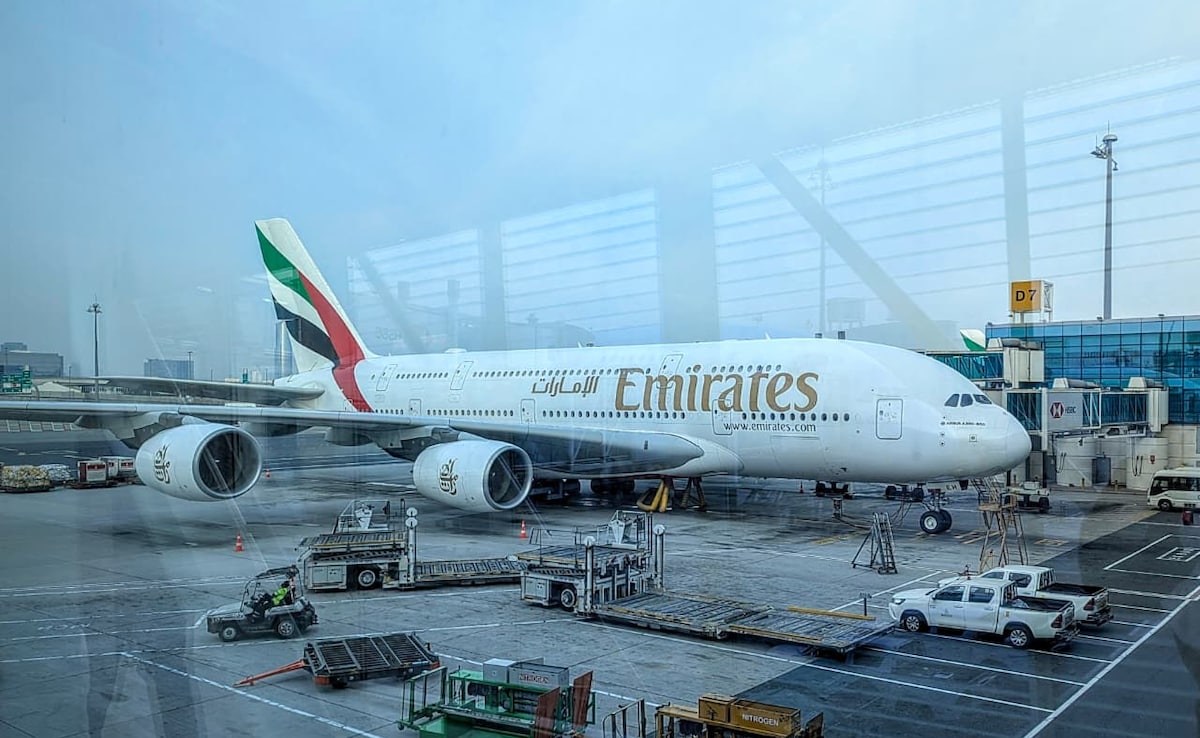
The current crisis has exposed the fatal flaw in that logic. When a single node in the network—like India—imposes strict entry bans, the entire hub begins to starve. Emirates and Etihad have had to pivot toward cargo to keep the lights on, but you can only fly so many crates of electronics and perishables to replace the revenue of 500 passengers on an A380.
The planes landing in Delhi now are often "ghost flights" or cargo-heavy missions where the few passengers are almost an afterthought. The industry is currently pretending that this is a recovery. It isn't. It is an organized retreat to a smaller, more expensive, and far more restrictive way of operating.
The Mirage of a Full Recovery
There is a prevailing myth in the travel industry that once the "limited" phase ends, we go back to 2019. That is a dangerous delusion. The aviation sector has taken on billions in debt to survive the last two years. That debt will be serviced by the passengers of the future.
The infrastructure of international travel has been fundamentally altered. Security checkpoints are now health checkpoints. Immigration desks are now biometric surveillance hubs. The "limited" status of these flights allows governments to test new methods of tracking and controlling population movement under the guise of safety.
We are seeing the birth of a "Two-Tier" travel system. On one side, you have the elite travelers with recognized digital certificates and the funds to navigate private testing. On the other, the migrant labor force that is subject to the whims of bilateral "bubbles" and sudden cancellations.
Logistical Bottlenecks and Empty Promises
When that plane from Abu Dhabi touched down in Delhi, it carried more than just people; it carried the weight of a broken supply chain. The baggage claim areas are scenes of confusion as staff shortages continue to plague airports. Ground handling agencies have laid off thousands, and they aren't coming back for the low wages being offered in a high-inflation environment.
This leads to a paradox: while there are fewer flights, the experience of flying is more stressful and slower than it was when airports were at peak capacity.
The "limited flights" narrative is a PR shield. It allows airlines to justify high prices by citing "scarcity" while allowing governments to claim they are "opening up" without actually taking the risk of a full reopening. It is a middle ground that serves the interests of the powerful while leaving the average passenger in a state of constant anxiety.
The Reality of Bilateral Bubbles
The "Air Bubble" agreements between India and the UAE are not open skies. They are restrictive, protectionist treaties. They dictate exactly how many seats each side can sell, effectively killing competition. In a normal market, if an airline charges too much, a competitor undercuts them. In the bubble era, the prices are effectively fixed by the limited supply mandated by the state.
This is a regression to the 1970s style of aviation management, where the state decides who flies and when. For a region that prides itself on being the future of global commerce, this is a massive leap backward.
The technical requirements for these flights are also a moving target. One week, a certain type of vaccine is accepted; the next, it requires a booster or a different brand entirely. This inconsistency is the enemy of the aviation business. It prevents long-term planning and forces airlines to live hand-to-mouth, flight-by-flight.
The Silent Death of the Budget Carrier
While the major players like Emirates can lean on sovereign wealth to survive, the low-cost carriers (LCCs) that once democratized travel between the UAE and India are in a fight for their lives. Their model depends on high aircraft utilization—keeping the planes in the air for 12 to 14 hours a day.
With limited flight permissions and long turnaround times for sanitization and health checks, that utilization has plummeted. We are witnessing the slow strangulation of the budget travel sector. If the LCCs fail, the bridge between the Gulf and the Indian subcontinent will become a private walkway for the wealthy, reversing decades of social and economic progress for the South Asian diaspora.
The Data Gap
Another overlooked factor is the reliability of the data used to justify these flight restrictions. Governments are making decisions based on testing numbers that are often weeks out of date or based on flawed sampling. This leads to "knee-jerk" closures that leave thousands stranded at the gate.
The flight from Abu Dhabi that landed in Delhi is a single data point in a chaotic graph. It does not represent a trend; it represents a moment of political alignment. To view it as anything else is to ignore the volatility of the current global health landscape.
A System on Life Support
The aviation corridor is on a respirator. The few flights we see are the oxygen being pumped in to keep the vital organs of the economy from failing entirely. But this is not a sustainable way to run an industry or a global society.
The friction is the point. By making travel difficult, expensive, and legally complex, governments are exerting a form of soft control over their borders that they haven't had in forty years. The "limited flights" are a window into a future where the freedom of movement is no longer an assumption, but a privilege granted on a case-by-case basis.
Stop looking at the flight schedules and start looking at the conditions attached to them. The requirements for entry are becoming more intrusive, involving the sharing of personal health data that will likely never be deleted from government servers. We are trading our privacy and our mobility for the "permission" to sit in a pressurized tube for four hours.
The real story isn't that a plane landed in Delhi. The real story is how hard it was for that plane to get there, and how much harder it will be for the next one. The aviation industry is being rebuilt in a way that prioritizes state control and high-margin passengers over the needs of the millions who built the modern Middle East.
Demand to see the long-term plan, because right now, there isn't one. There is only the desperate, day-to-day management of a crisis that has no clear end in sight.
Check your carrier’s refund policy before you even think about booking a ticket.