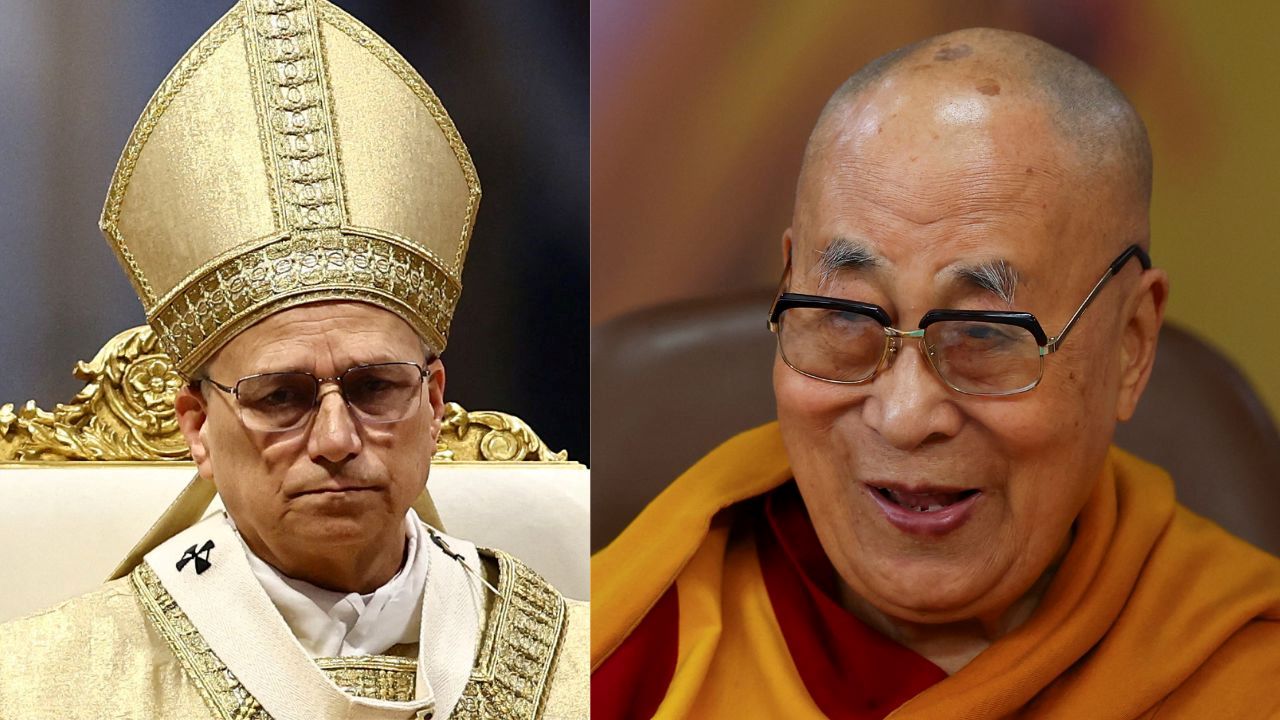
The recent push by the Vatican and the Dalai Lama for immediate de-escalation in the Middle East highlights a widening chasm between global moral authorities and the cold mechanics of modern warfare. As tensions between the United States, Israel, and Iran reach a boiling point, religious leaders are attempting to leverage spiritual soft power to halt a slide toward a regional conflagration. However, their pleas face a grim reality. The strategic objectives of the nations involved are no longer governed by the traditional diplomatic norms that these spiritual figures are appealing to.
In the hallways of the Pentagon and the war rooms in Tel Aviv, the calculus is driven by missile ranges and enrichment percentages, not encyclicals. Pope Francis and the Dalai Lama are not merely asking for peace; they are attempting to reintroduce a humanitarian framework into a conflict that has become increasingly transactional and existential. This friction between the pulpit and the bunker defines the current crisis.
The Weight of Spiritual Diplomacy in a Secular Conflict
When the Pope issues a plea for peace, it is rarely just about the words. It is about mobilizing a global network of diplomatic missions and influencing the domestic politics of Western nations. In this instance, the Vatican is positioning itself as the final neutral arbiter in a world where the United Nations has largely been sidelined. By joining forces with the Dalai Lama, the movement gains a cross-cultural resonance that is difficult for democratic leaders to ignore entirely.
Yet, there is a fundamental disconnect. The Iranian leadership views the conflict through the lens of "Resistance," while the Israeli cabinet views it through the lens of "Survival." Neither of these frameworks leaves much room for the kind of compromise envisioned by religious figures. The Vatican’s focus on the "human cost" assumes that the primary actors are sensitive to public opinion or humanitarian optics. In reality, both sides have already priced those costs into their strategies.
The Limits of Soft Power
Soft power works best when the parties involved care about their standing in the international community. If a nation is convinced that its neighbor is an existential threat, the disapproval of a religious leader becomes a secondary concern. Israel’s security apparatus is currently focused on the "Octopus Doctrine"—targeting the head of the Iranian regime rather than just its proxies. In such a high-stakes environment, moral appeals can feel like echoes from a different century.
The Dalai Lama’s endorsement adds a layer of Eastern philosophical weight to the call, but it also highlights the limitations of non-violence in the face of state-sponsored drone programs and cyber warfare. You cannot hunger strike against a hypersonic missile. The physical distance between the spiritual centers of Rome and Dharamshala and the actual front lines in the Levant creates a perceived gap in "skin in the game" that hardline policymakers are quick to exploit.
The Invisible Red Lines
The current standoff isn't just about rhetoric. It is about the "breakout time"—the duration it would take for Iran to produce enough weapons-grade uranium for a nuclear device. This is the ticking clock that the Pope’s peace mission cannot stop. For the United States, the goal is to prevent a regional war that would shatter global energy markets and force a massive reallocation of military assets away from the Pacific.
Economic Consequences of Moral Failure
A full-scale conflict would send oil prices into a vertical climb. We are talking about $150 per barrel, a figure that would trigger recessions across the globe. This is where the religious leaders actually find common ground with the secular ones. The "common good" that the Pope speaks of has a very real dollar value. If the Strait of Hormuz is closed, the resulting economic collapse would hit the world’s poorest populations the hardest—the very people these spiritual leaders are dedicated to protecting.
The irony is that while the religious leaders speak of the soul, the analysts are looking at the supply chain. If the shipping lanes in the Red Sea and the Persian Gulf are permanently disrupted, the humanitarian crisis won't just be confined to the combat zones. It will be felt in every grocery store in the Midwest and every factory in Southeast Asia.
The Shadow of Historical Precedent
We have seen this play out before, though the stakes have never been quite this high. During the Cold War, the Vatican played a significant role in back-channel communications. Today, however, the channels are cluttered. There are too many actors—Hezbollah in Lebanon, the Houthis in Yemen, various militias in Iraq—all with their own agendas that do not necessarily align with the central command in Tehran.
The Problem of Decentralized Warfare
How do you negotiate a de-escalation when the combatants are not all at the table? The Pope can talk to heads of state, but he cannot talk to a decentralized cell of insurgents motivated by decades of sectarian grievances. This is the "agency problem" of modern Middle Eastern conflict. The primary states might want to avoid total war, but their proxies might trigger it anyway, either by accident or through a calculated provocation designed to force their patrons' hands.
The Dalai Lama’s involvement brings a focus to the psychological roots of the conflict—the cycle of fear and retaliation. From a Buddhist perspective, the "How" is as important as the "What." But in the world of realpolitik, the "How" is usually a surgical strike or a sophisticated malware injection like Stuxnet. The two worlds are speaking different languages. One speaks the language of the heart; the other speaks the language of the kill chain.
The Strategic Silence of Other Powers
While the religious leaders are vocal, other major players remain tactically quiet. Russia and China have a vested interest in seeing the U.S. bogged down in another Middle Eastern quagmire, yet they also fear the economic instability a war would bring. The Vatican’s move forces these secular powers to at least acknowledge the humanitarian dimension, even if they have no intention of changing their voting patterns at the Security Council.
The Role of Domestic Pressure
In the United States, the "Peace Vote" is a real factor in an election year. By framing the conflict as a moral failure, the Pope and the Dalai Lama are providing political cover for lawmakers who want to push for diplomacy but fear being labeled "weak" on national security. It changes the narrative from "appeasement" to "moral courage." This subtle shift in branding is perhaps the most effective tool the spiritual leaders have at their disposal. It doesn't change the military reality, but it changes the political environment in which military decisions are made.
The Hard Logic of Deterrence
Ultimately, peace in the region has historically been maintained not by mutual affection, but by mutual fear. Deterrence is a brutal, ugly, and effective tool. The religious plea for de-escalation asks for a move away from fear and toward trust. In the current climate, that is a massive ask. Trust is non-existent.
Israel views any pause as an opportunity for Iran to further its nuclear ambitions. Iran views any diplomatic overture as a trap designed to weaken its regional influence. Breaking this cycle requires more than just a call for peace; it requires a structural change in the security architecture of the Middle East. Whether it's a new regional treaty or a grand bargain involving major global powers, the solution will need to be written in the language of guarantees and verification, not just hopes and prayers.
The Vatican's intervention serves as a necessary, if perhaps futile, reminder of the stakes. When the shooting starts, the nuances of enrichment levels and "proportionate responses" vanish, replaced by the raw reality of casualties and displaced millions. The spiritual leaders are not naive; they are simply focused on a timeline that extends beyond the next fiscal quarter or election cycle. They are looking at the long-term survival of the human family, while the generals are looking at the next twenty-four hours.
The gap between these two perspectives is where the danger lies. If the moral authorities cannot find a way to make their message relevant to the strategic realities of 21st-century warfare, their voices will become increasingly sidelined, leaving the world to be governed solely by the logic of the sword. The real test isn't whether the Pope can convince the leaders to stop; it's whether he can convince the world that stopping is in their own best interest.
Moving forward, the focus must shift from general calls for peace to specific, actionable steps that address the security concerns of all parties. This means looking at the Iranian nuclear program with clear eyes while simultaneously addressing the legitimate security needs of Israel and its neighbors. It means acknowledging that "de-escalation" is not a single event, but a grueling, incremental process of building small, verifiable layers of transparency. Without that granular work, the high-minded rhetoric of the world's most prominent spiritual figures will remain a noble but ineffective footnote in the history of a preventable catastrophe.