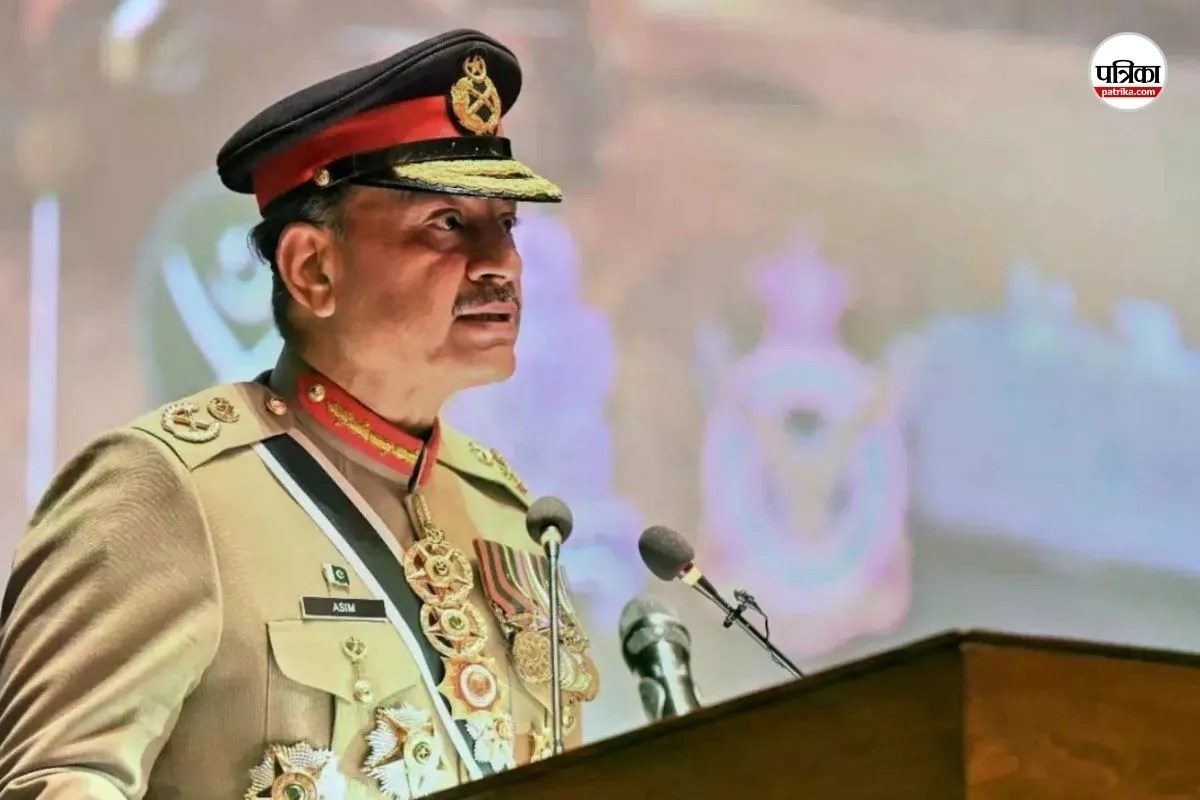
General Asim Munir’s tenure as Pakistan’s Chief of Army Staff (COAS) represents a fundamental shift from the traditional "hybrid regime" model toward a centralized command structure that prioritizes institutional survival over democratic signaling. The current Pakistani state apparatus operates under a triad of pressures: internal political fragmentation, a debt-driven economic crisis, and a volatile shift in regional alliances involving the United States, Iran, and India. Understanding Munir’s "Supreme Boss" status requires analyzing the specific levers of power he has pulled to consolidate the military’s role as the sole arbiter of Pakistani domestic and foreign policy.
The Structural Consolidation of the SIFC
The primary mechanism of Munir’s domestic control is the Special Investment Facilitation Council (SIFC). While previous army chiefs influenced the economy through informal channels, Munir has formalized this role. The SIFC creates a "single window" for foreign investment, effectively bypassing traditional civilian bureaucratic hurdles. This is not merely an administrative change; it is a structural realignment that places the military at the center of the country’s economic recovery strategy. If you found value in this post, you might want to read: this related article.
- Extraction of Sovereign Capital: By positioning the military as the guarantor of foreign investment—particularly from Gulf nations like Saudi Arabia and the UAE—Munir has made the institution indispensable to the state’s solvency.
- The Debt-Security Nexus: The military now manages the trade-offs between defense spending and IMF-mandated austerity. This ensures that even as the civilian population faces record inflation, the military’s core interests remain insulated from the harshest budget cuts.
- Bureaucratic Displacement: The SIFC reduces the role of the Ministry of Finance and the Planning Commission, concentrating decision-making power in a body where the COAS is the most influential member.
Geopolitical Realignment and the Trump Variable
The return of Donald Trump to the American presidency introduces a high-variance variable into Munir’s strategic calculus. Unlike the Biden administration’s emphasis on institutional stability and human rights, a Trump-led White House is expected to favor transactional, personalized diplomacy.
Munir’s strategy involves presenting the Pakistan Army as a reliable counter-terrorism partner and a stabilizer in a region where the U.S. has limited boots on the ground. However, this is complicated by Pakistan’s deepening reliance on China and its complex relationship with Iran. The military leadership is betting that Trump’s preference for "strongman" leaders will allow Munir to negotiate directly with Washington, sidelining the civilian government’s diplomatic corps. For another angle on this story, see the recent coverage from The Guardian.
The risk is that Trump’s aggressive stance on Iran could force Pakistan into a zero-sum choice. While Pakistan and Iran recently engaged in cross-border strikes, the subsequent rapprochement highlights Munir’s desire to maintain a "cold peace" on the western border. Any U.S. pressure to escalate against Tehran would disrupt Pakistan’s internal security and energy ambitions, creating a friction point that the military is currently ill-equipped to manage.
The Indian Frontier and the Cost of Deterrence
Relations with India remain the most rigid constraint on Munir’s doctrine. The tactical silence on the Line of Control (LoC) since 2021 is not a sign of thawing relations but a calculated "strategic pause." Pakistan lacks the fiscal space to engage in a high-intensity arms race or a prolonged conventional conflict.
- Asymmetric Management: Munir has shifted focus toward maintaining internal stability and managing the blowback from the Afghan border, where the TTP (Tehrik-i-Taliban Pakistan) remains a persistent threat.
- The Kashmir Deadlock: There is zero evidence of a policy shift regarding Jammu and Kashmir. The military’s legitimacy is tied to its role as the protector of the "ideological and physical frontiers" of Pakistan. Any perceived softening toward New Delhi would undermine the very justification for the military’s dominance in domestic affairs.
- Nuclear Posture: In the absence of conventional parity, the Munir-led establishment has doubled down on Full Spectrum Deterrence. This ensures that while India grows economically and militarily, the cost of any kinetic intervention remains prohibitively high.
Domestic Suppression and the Digital Frontier
The most significant departure from Munir’s predecessors is the aggressive crackdown on digital dissent and the dismantling of the populist movement led by Imran Khan. The military has identified social media as a "fifth-generation warfare" battleground, leading to the implementation of sophisticated firewalls and the criminalization of online criticism.
This digital enclosure serves two purposes:
- Information Monopolization: By controlling the narrative around the 2024 elections and the subsequent government formation, the military aims to project an image of stability to international creditors.
- Deterring Internal Defection: The harsh sentencing of protesters and the targeting of mid-level political leadership serve as a warning to any elements within the military or the judiciary who might be tempted to side with populist forces.
The "Supreme Boss" narrative is essentially an exercise in risk mitigation. Munir is attempting to solve a multi-dimensional crisis—economic collapse, political polarization, and rising terrorism—by tightening the military’s grip on every lever of the state.
The Fragility of the Garrison Economy
The sustainability of the Munir Doctrine hinges on three volatile assumptions. First, it assumes that the IMF and Gulf allies will continue to provide liquidity based on the promise of "stability" rather than actual economic reform. Second, it assumes that the Pakistani public will remain passive in the face of dwindling purchasing power and political disenfranchisement. Third, it assumes that the TTP and other militant groups can be contained without a full-scale regional war that would bankrupt the state.
The second limitation of this model is the "competence gap." While the military is efficient at command-and-control tasks, it has historically struggled with the nuanced management of a modern, globalized economy. By crowding out civilian expertise, the SIFC risks creating a monolithic system that is brittle and prone to catastrophic failure if a single major investment fails to materialize.
This creates a bottleneck where the military is too large to fail but too heavy to move. The current equilibrium is maintained through fear and financial life support. If either of these pillars collapses—whether through a global recession, a shift in U.S. foreign policy, or a domestic uprising—the military’s role as the "Supreme Boss" will transition from a position of strength to a liability.
The strategic play for the Pakistani establishment is to utilize the next 24 months to secure a long-term IMF bailout and finalize the privatization of state-owned enterprises through the SIFC. This would create a "fait accompli" where the military’s economic interests are so deeply embedded in the private sector that no future civilian government could ever disentangle them. Success requires absolute silence on the Indian border and a delicate balancing act between Washington and Beijing. Failure to achieve these benchmarks will likely result in a sovereign default, forcing a radical contraction of the military's influence and a potential reshaping of the Pakistani state's fundamental identity.