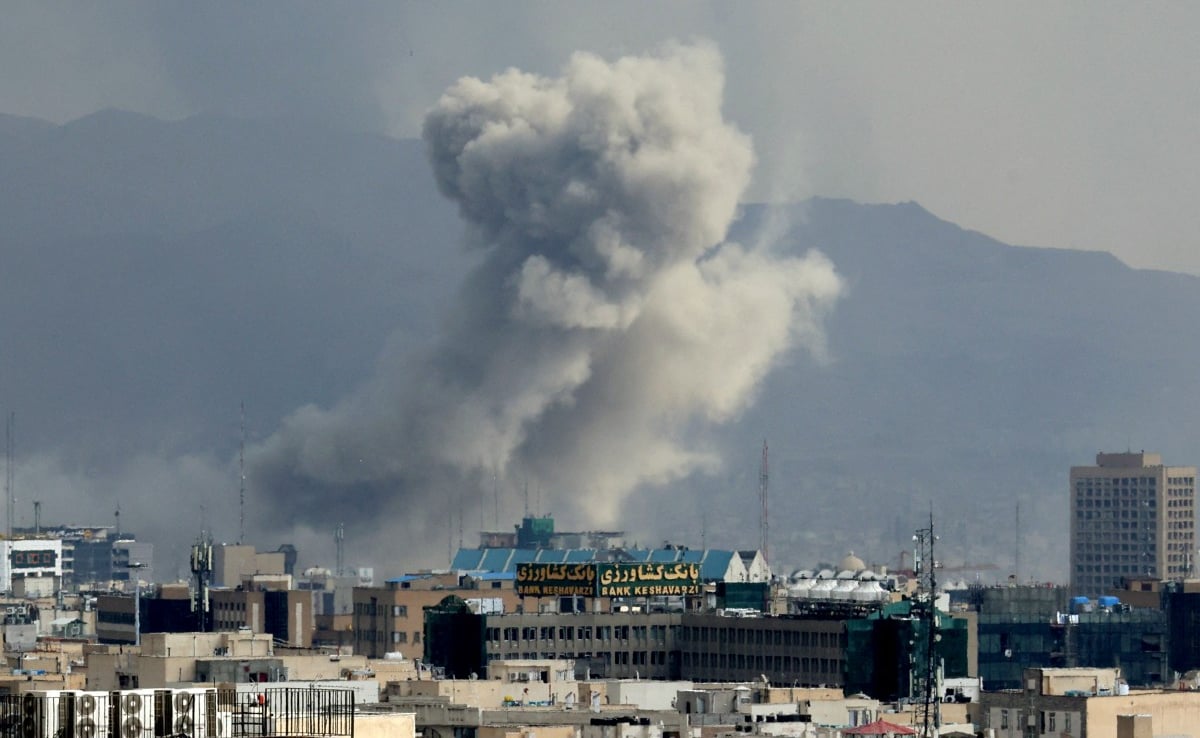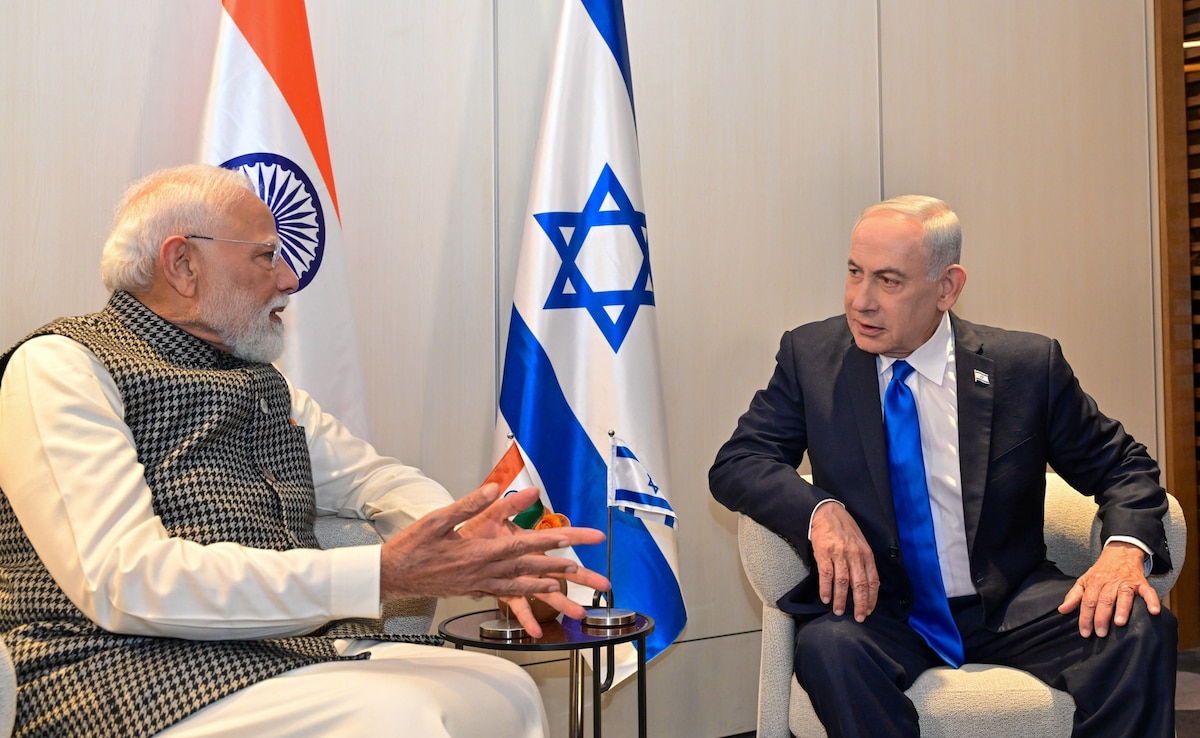
Geopolitics is not a dinner party. It is not a theater production where actors wait for the guest of honor to exit stage left before the pyrotechnics begin. Yet, the media is currently obsessed with a narrative so thin it barely qualifies as a theory: the idea that Israel waited for Indian Prime Minister Narendra Modi to depart the region before launching its retaliatory strikes on Iran.
Israeli Envoy Reuven Azar’s comments regarding an "operational opportunity" opening up after the PM’s departure are a masterclass in diplomatic politeness, but they are a strategic distraction. To believe that a nation-state facing what it perceives as an existential threat would sync its military clocks with a visiting dignitary's flight schedule is to fundamentally misunderstand how modern warfare and international relations actually function.
The "Operational Opportunity" is a convenient fiction. It makes for great headlines. It suggests a level of coordination and respect that warms the hearts of diplomats. But in the cold, hard reality of the Middle East, the timing of a missile strike is dictated by cloud cover, satellite windows, intelligence cycles, and readiness—not by who is currently staying at the King David Hotel.
The Logistics of Lethality Over Diplomatic Optics
Military operations of this scale—targeting integrated air defense systems across international borders—require a convergence of factors that have nothing to do with red carpets.
If you want to understand why the strike happened when it did, stop looking at the flight manifest of Air India One and start looking at the moon cycle and the thermal signatures of Iranian S-300 batteries. Precision strikes rely on specific lighting conditions and atmospheric visibility for BDA (Battle Damage Assessment).
I have seen analysts spend weeks trying to find "hidden messages" in the timing of state visits, only to be proven wrong by the simple fact that a hydraulic leak in a refueling tanker delayed a mission by 48 hours. Israel didn't wait for Modi to leave because they feared offending him; they struck when the targets were most vulnerable and their own assets were most secure.
The Intelligence Decay Problem
In high-stakes conflict, intelligence has a half-life. If the IDF (Israel Defense Forces) has a confirmed location for a high-value target or a mobile missile launcher, that window of certainty might only last for six hours.
Imagine a scenario where Mossad confirms a specific Iranian commander is at a sensitive facility, but PM Modi still has twelve hours left on his itinerary. Do you honestly believe a military commander would say, "Let the target escape so we don't disrupt the bilateral trade talks"?
Absolutely not.
The "opportunity" Azar spoke of wasn't the absence of Modi; it was the presence of a gap in Iranian radar coverage or a lapse in their readiness. Attributing this to a diplomatic courtesy is a way to stroke the ego of a strategic partner without revealing the actual, classified triggers of the operation.
Why India is the Shield, Not the Schedule
The real story isn't that Israel waited for Modi to leave. The real story is that India’s presence in the region acts as a massive de-escalation buffer that both sides are desperate to exploit.
India maintains a unique position as a "multi-aligned" power. It buys oil from Russia, drones from Israel, and maintains a strategic port in Iran (Chabahar). This doesn't make India a "mediator" in the traditional sense; it makes India a neutral ground where the noise of war is momentarily dampened.
- The Buffer Effect: When a global leader of Modi’s stature is on the ground, the cost of an "accident" skyrockets.
- The Intelligence Exchange: State visits are rarely just about trade. They are about high-level intelligence sharing. The timing likely coincided with the conclusion of specific data handovers, not the physical departure of a plane.
- The Deniability Factor: By striking immediately after a visit, Israel allows India to maintain its "non-aligned" stance. India can truthfully say they weren't informed of the specific minute of the attack, even if they knew the "if" and the "how."
The "Lazy Consensus" of Diplomatic Sensitivity
The competitor articles on this topic all lean into the same "lazy consensus": that Israel is careful not to embarrass its friends. This is a fundamental misreading of Israeli security doctrine. Since the 1948 Arab-Israeli War, Israel’s primary doctrine has been Beginism—the idea that Israel will act unilaterally to prevent any neighbor from acquiring weapons of mass destruction or posing an immediate existential threat.
This doctrine does not have a "except when a friend is visiting" clause.
The envoy’s statement was a PR win. It made India feel vital to the process. But the "operational opportunity" was likely a technical window. If the Iranian air defenses had blinked two days earlier while Modi was still in the air, the missiles would have flown.
Dismantling the "People Also Ask" Errors
Question: Did Israel inform India before the strike?
The Brutal Truth: They likely shared "intent" but not "timing." Sharing a specific time-on-target (TOT) with any foreign power—even a close ally—is a massive security risk. If that information leaks and an Israeli pilot is shot down, the diplomatic fallout would be irreparable.
Question: Was the strike delayed for the PM?
The Logic Check: If the strike was ready three days ago, delaying it "out of respect" would give Iran three days to move their assets, harden their bunkers, and prepare their own counter-strike. In the world of supersonic warfare, three days is an eternity. No general trades tactical surprise for a polite handshake.
The Cost of the "Respect" Narrative
When we pretend that diplomacy dictates the tempo of war, we miscalculate the risks of the next conflict. If we believe Israel waits for visitors, we might mistakenly think that sending a high-level envoy to a conflict zone provides a "human shield" effect.
It doesn't.
Ask the residents of various capitals who have seen strikes occur while UN delegations were in the next building. Military necessity is a cold, calculating machine.
The downside of my contrarian view? It’s less "romantic." It doesn't paint a picture of two great leaders whispering over a map and deciding the fate of the world. It paints a picture of sensors, fuel loads, and kill chains. But the latter is the world we actually live in.
The Strategic Reality of the "After-Exit" Strike
Striking after a leader leaves is actually a strategic burden, not a courtesy. It creates a predictable pattern. If every time a major leader leaves the Middle East, a bomb drops, then the "surprise" element of the attack is neutralized. The Iranian IRGC (Islamic Revolutionary Guard Corps) knows how to read a calendar. They were likely at their highest state of alert the moment the wheels of Modi’s plane left the tarmac.
If Israel wanted true tactical surprise, they would have struck while he was there, banking on the fact that Iran wouldn't expect them to be so "rude."
The fact that they waited—or that it happened to occur afterward—points toward technical readiness. The F-35s don't care about the guest list. The tankers don't care about the communiqué.
Stop looking for the "diplomatic window." Start looking for the "technical gap."
Stop treating the IDF like a PR firm. They are a military. And militaries don't wait for the party to end; they wait for the lights to go out.
Would you like me to analyze the specific flight paths and air-refueling zones used in the strike to show how they bypassed Iranian detection?