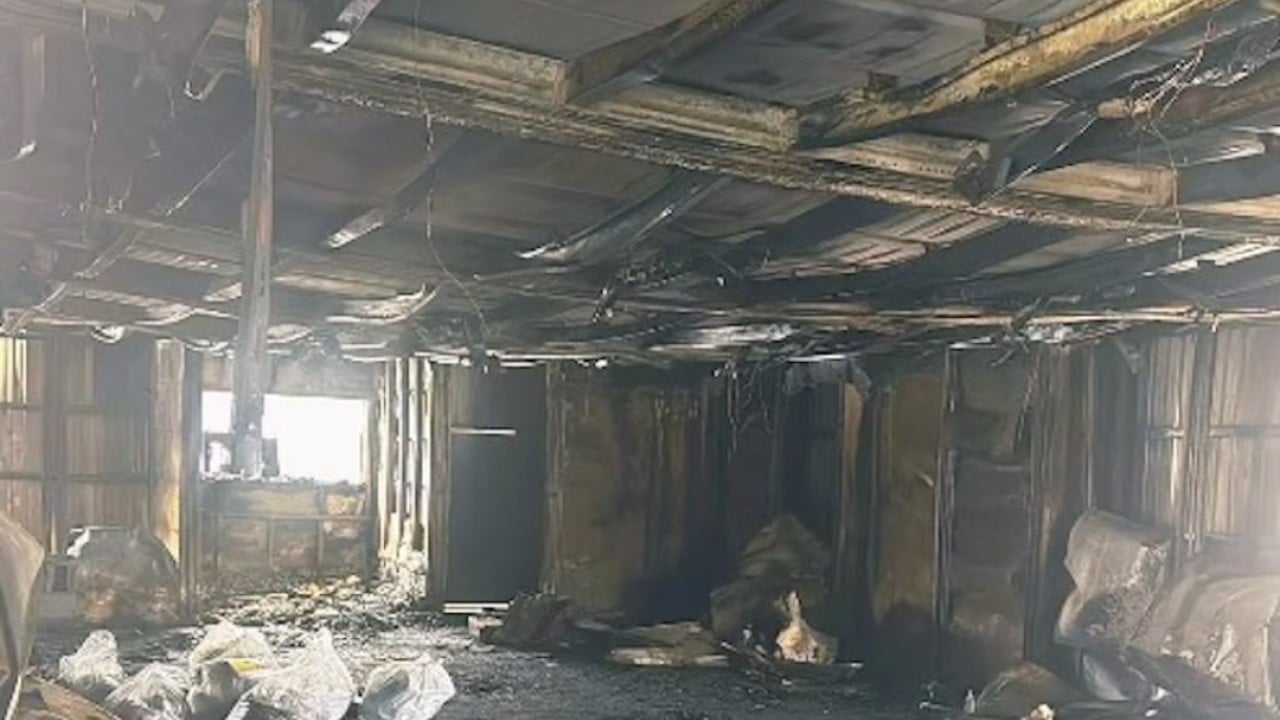
The media has a script for military tragedy, and it’s getting tired. When a U.S. soldier dies in a drone strike in Kuwait, the headlines pivot instantly to the "days away from home" narrative. They focus on the suitcase half-packed, the birthday party missed, and the hollow seats at the dinner table. It’s a tragedy, yes. But it’s also a distraction. By obsessing over the proximity to the return date, we ignore the cold, mechanical reality of 21st-century warfare: the "safe" zone no longer exists, and our logistics-heavy presence in the Middle East is a sitting duck for low-cost, high-impact technology.
The "days away" trope is a sentimental bandage on a systemic wound. It suggests that if the timing had been slightly different, the tragedy would be less significant. It wouldn’t. The reality is that the U.S. military footprint in Kuwait is an aging relic of an era where geographic distance provided security. Today, a $2,000 drone makes a multi-billion dollar base a liability. We are mourning the clock instead of questioning the map.
The Geography of Vulnerability
We have been sold the idea that Kuwait is a "rear-echelon" location. It’s viewed as a logistics hub, a transit point, a place where soldiers decompress before the final flight home. This perception is a lethal mistake. In the age of loitering munitions and asymmetric drone warfare, the distinction between the "front line" and the "rear" has evaporated.
If you are within 500 miles of a conflict zone, you are on the front line. Period.
The competitor articles focus on the emotional weight of the soldier’s absence. They should be focusing on the failure of Integrated Air Defense Systems (IADS) to protect non-combat zones. We are spending trillions on stealth fighters and carrier groups while our soldiers in transit are being picked off by plastic propellers and off-the-shelf GPS modules.
I have seen the Pentagon burn through decade-long procurement cycles for "Counter-UAS" (Unmanned Aircraft Systems) tech that still fails to distinguish between a bird and a suicide drone in high-clutter environments. We are bringing 20th-century bureaucracy to a 21st-century street fight. The tragedy isn’t that the soldier was almost home; it’s that we haven’t admitted that "home" is the only place left where the risk isn't exponential.
The Logistics Trap
The U.S. military is the greatest logistics organization in human history. We can move a mountain of gear across the globe in seventy-two hours. But that very strength has become a massive, glowing target. Kuwait serves as a massive funnel. Every rotation, thousands of troops pass through a handful of nodes.
From a strategic standpoint, these transit hubs are "target-rich environments." The more predictable the rotation, the easier the math for the adversary.
- Predictability kills. Fixed bases with known rotation schedules are magnets for harassment strikes.
- Asymmetry wins. It costs the U.S. $100,000 to $2,000,000 to fire an interceptor missile. It costs the adversary $5,000 to launch a drone swarm.
- The "Safe" Illusion. Branding a zone as "low risk" leads to complacency in kinetic defense and personal protection.
When we focus on the soldier’s family life, we are looking at the micro-level grief. We need to look at the macro-level negligence. Why are we still concentrating troop density in fixed, vulnerable locations when the technology to strike them is now hobbyist-level?
Dismantling the Moral Luck Argument
The "days away from returning home" angle is a form of moral luck. It implies that a soldier killed on day one of a deployment is somehow a "standard" loss, while a soldier killed on day 360 is a "cruel twist of fate." This is a logical fallacy that cheapens the service of every person in uniform.
Death doesn't care about your flight itinerary.
By leaning into the "almost home" narrative, the media avoids asking the hard questions about the mission's utility. Was the presence in that specific sector in Kuwait worth the risk? Does the strategic value of that base outweigh the inevitable loss of life from cheap, attrittable drone strikes? If the answer is "we need to be there for regional stability," then the timing of the death is irrelevant. The cost was known, and the price was paid.
If we want to honor the fallen, we should stop treating their deaths like a tragic movie script and start treating them like the failures of defense architecture they actually are.
The Cheap Drone Revolution
Let's talk about the math that nobody wants to acknowledge.
$$Cost_{interception} \gg Cost_{attack}$$
In any scenario where the cost to defend is orders of magnitude higher than the cost to attack, the defender eventually loses through exhaustion. This is the "Drone Pox" of modern warfare. It’s a swarm of small, irritant strikes that eventually bleed a superpower dry.
We are currently using the equivalent of a sledgehammer to swat flies. The flies are winning.
The competitor piece wants you to feel sad about the kids. And you should. But you should also feel angry that the military-industrial complex is so bloated it cannot pivot to protect its people from a technology that has been a known threat for over a decade. I’ve seen defense contractors pitch "solutions" that take five years to prototype. By the time the tech hits the field, the drone software has been updated three times by a teenager in a basement.
The Brutal Reality of "Rear" Deployment
Most people think of "war" as a trench or a city street. They think of Kuwait as a parking lot with a Chow Hall. That’s the lie.
In the current geopolitical climate, every square inch of the Middle East is a kinetic environment. There are no "non-combat" roles when the sky is filled with autonomous killers. We need to stop telling families that their loved ones are "safe" just because they aren't in a hot zone.
The advice for the military leadership is simple but painful:
- Disperse the hubs. Stop funneling thousands of troops through single points of failure.
- Automate the defense. If a human has to make a "fire" decision on a drone moving at 100 mph, we've already lost.
- Kill the sentimentality. Acknowledge that the "return home" phase is the highest risk window because of the density of people and the shift in mindset.
We don't need more heart-wrenching stories about what could have been. We need a cold-blooded assessment of why our defensive posture is failing. The "days away" narrative is a shield for the people who failed to provide adequate air cover. It turns a systemic failure into a personal tragedy, and in doing so, it ensures it will happen again.
The soldier isn't just a father or a mother who almost made it back. They are a data point in a failing defense strategy that prioritizes legacy platforms over modern threats. Until we stop crying about the timing and start screaming about the technology, we are just waiting for the next "days away" headline to hit the wire.
The suitcase is empty because the system is broken. Fix the system or get out of the way.