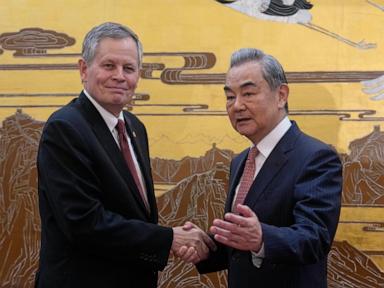
Diplomatic "stability" is a polite fiction maintained by people whose jobs depend on the status quo. When Beijing claims that ties with Washington remain stable despite "disruptions," they aren't describing a geopolitical reality. They are performing a ritual. To suggest that the relationship between the world's two largest economies is on solid ground ahead of a high-stakes presidential visit is more than just optimistic—it is a fundamental misreading of how power actually functions in the 21st century.
We need to stop pretending that "disruptions" are bugs in the system. They are the system. In similar updates, read about: The Invisible Bridge Between New Delhi and The Hague.
The prevailing narrative—the one you'll find in every dry, risk-averse mainstream outlet—is that trade wars, tech bans, and naval posturing are temporary hurdles. If we just have enough summits, they argue, we can return to the "normalcy" of the late 1990s. This is a fantasy. That era of engagement was an anomaly, not the baseline. We are moving toward a permanent state of high-friction coexistence, and calling it "stable" is like saying a burning building is stable because the foundation hasn't cracked yet.
The Stability Trap
The word "stability" has become a sedative. In diplomatic circles, it usually means "we haven't started shooting yet." But for a business leader or a policy strategist, this definition is useless. True stability requires a shared set of rules and a mutual vision for the future. Neither exists today. The New York Times has provided coverage on this fascinating topic in extensive detail.
Washington has moved from a policy of engagement to one of containment, regardless of who sits in the Oval Office. Beijing has shifted from "hide your strength and bide your time" to an assertive projection of national rejuvenation. These are not two ships passing in the night; they are two locomotives on the same track heading in opposite directions.
When officials speak of stability, they are actually talking about managed decline. They are trying to lower the speed of the inevitable collision so the airbags have time to deploy. If you are making ten-year investment decisions based on the "stable" rhetoric of a pre-visit press release, you are ignoring the tectonic shifts beneath your feet.
The "Disruption" Fallacy
The competitor's piece frames "disruptions" as external annoyances—like rain at a wedding. This is intellectually lazy. These disruptions are the deliberate tools of statecraft.
- Weaponized Interdependence: Both nations are currently ripping apart the supply chains that were built over thirty years. This isn't a "disruption"; it's a fundamental restructuring of global trade. If you're calling a semiconductor ban a "disruption," you're missing the fact that the goal is to permanently cripple a competitor's AI development.
- The Dollar Hegemony vs. The Yuan Ambition: For decades, the US dollar has been the world's undisputed reserve currency. China's push for "de-dollarization" isn't a temporary spat. It is an existential threat to the American way of life, which relies on the ability to print money that the rest of the world has to buy.
- Ideological Divergence: We have reached the end of the "End of History." The West's hope that economic liberalization would lead to political liberalization in China has failed. Accepting this is the first step toward actual clarity.
I have seen boards of directors waste months trying to "wait out" the current tension, assuming a change in leadership or a successful summit would reset the clock. It won't. The friction is baked into the math.
Why a Trump Visit Changes Nothing (And Everything)
The media loves to focus on the theater of a presidential visit. They talk about body language, the length of the handshake, and the joint statements that are drafted weeks in advance. But the theater is irrelevant to the structural reality.
A Trump visit, specifically, represents a shift from "strategic competition" back to "transactional volatility." The mainstream view is that Trump is a wildcard who disrupts a steady process. The contrarian truth? Trump’s approach is actually more honest than the "stable" facade. He views the relationship as a zero-sum trade war. In that framework, there is no "stability" to protect—only leverage to gain.
Whether it’s tariffs or security guarantees, the "disruptions" people fear are actually just the price of doing business in a world where the old rules have expired. The danger isn't the volatility; the danger is believing the volatility is temporary.
The Cost of the Consensus
The "People Also Ask" sections of the internet are filled with questions like, "Will US-China trade return to normal?" or "Is it safe to invest in Chinese tech?"
The honest, brutal answer to the first is: No. "Normal" was a period of American dominance and Chinese growth that relied on a specific set of geopolitical conditions that no longer exist.
As for the second, "safe" is the wrong metric. You don't look for safety in a hurricane; you look for structural integrity and an exit strategy. The consensus view that we can bridge the gap through diplomacy is actually dangerous because it encourages complacency. It prevents companies from diversifying supply chains and stops governments from making the hard choices required for national resilience.
Navigating the Friction
If you want to survive the next decade, you have to stop asking how to fix the relationship and start asking how to profit from the fracture. This isn't about being a pessimist; it's about being a realist.
- Localize or Leave: The middle ground is gone. If you are an American firm in China, you must become a Chinese firm in everything but name, or you must prepare to exit. The era of the "global" corporation that answers to no one is over.
- Expect the "Unprecedented": When you hear a diplomat use the word "unprecedented," realize that they simply weren't paying attention. The "unprecedented" events of the last few years—from global lockdowns to total export bans—were entirely predictable for anyone who stopped reading the "stability" headlines.
- Bet on Redundancy: Efficiency was the god of the 2000s. Resiliency is the god of the 2020s. Redundancy is expensive, but it's the only insurance policy that pays out when the "stable" ties finally snap.
The Lie of De-risking
Politicians have traded the word "decoupling" for "de-risking" because it sounds less aggressive. It’s a linguistic trick. You cannot "de-risk" a relationship with your primary global rival without fundamentally decoupling the most critical parts of your economy.
Imagine a scenario where a major tech hub is cut off overnight due to a "disruption" in the Taiwan Strait. In that moment, the "stable ties" mentioned in today's press releases will be worth less than the paper they are printed on. The real work isn't happening at the summit table; it’s happening in the quiet, frantic efforts of engineers and logistics experts trying to build a world where the other side no longer matters.
The competitor’s article wants you to feel comforted. It wants you to believe that the adults are in the room and the situation is under control. It isn't. The friction is increasing because both sides have realized that the only way to win is to ensure the other side loses.
Stop looking for stability. Start building for the break.
The visit will happen. There will be photos of smiles and signed agreements. The markets might even rally for a day or two. But don't be fooled. The "disruptions" aren't just noise; they are the signal. If you can't hear it over the sound of the diplomatic platitudes, you've already lost the game.
Get comfortable with the chaos. It’s the only thing that’s actually stable.