Twenty-one miles. That is the distance across the Strait of Hormuz at its skinniest point. It is a distance a marathon runner could cover in a few hours, yet it serves as the windpipe of the modern world. When the news cycles flare up with talk of blockades and naval videos, we tend to see them as data points on a digital map—abstract maneuvers in a geopolitical chess match. But for the men and women currently on the decks of tankers, the reality is far more visceral.
Imagine a bridge officer named Elias. He is thirty-eight years old, caffeinated, and staring at a radar screen that reveals a crowded graveyard of steel. Under his feet are two million barrels of crude oil. Elias doesn’t think in terms of grand strategy or electoral cycles. He thinks about the vibration of the hull and the way the air smells like salt and diesel. When a video surfaces of a superpower announcing a "discontinue transit" order, the vibration under Elias’s boots starts to feel like a countdown.
The Strait of Hormuz isn’t just a waterway. It is the physical manifestation of our collective reliance on a stable status quo. Roughly one-fifth of the world’s total oil consumption passes through this tiny throat. When the American presidency utilizes the visual language of the U.S. Navy to signal a blockade, the ripples don't just stay in the Persian Gulf. They travel through the fiber-optic cables of Wall Street, into the logistics hubs of Rotterdam, and eventually, they land at the gas station on the corner of your street.
The Weight of a Video
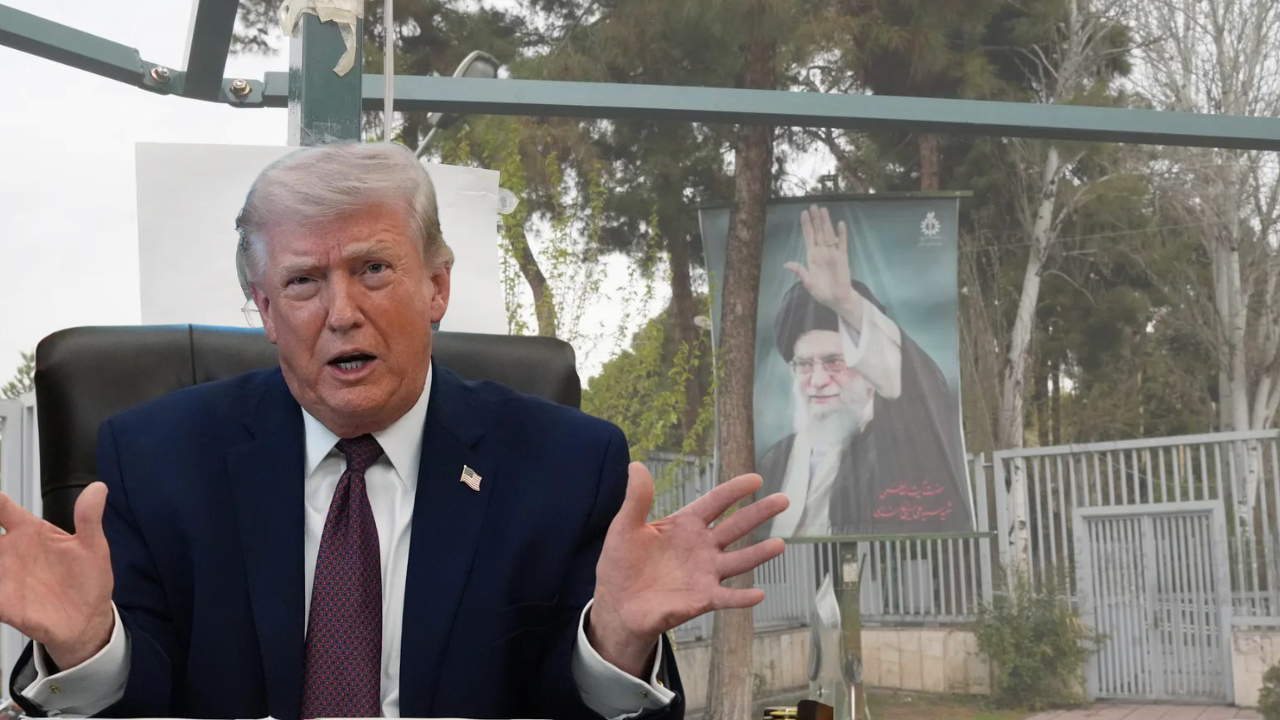
Communication in the digital age has moved past the era of the diplomatic cable. Today, a shared video is a weapon of intent. By broadcasting a U.S. Navy announcement regarding a blockade, the administration isn't just informing the public; it is attempting to freeze the momentum of an entire nation. The message to Tehran is blunt: the gate is closing.
Security experts often talk about "freedom of navigation," a phrase that sounds noble but masks a gritty, expensive reality. Maintaining that freedom requires a constant, multi-billion-dollar presence of grey-hulled ships and eyes in the sky. When that presence shifts from "protecting" to "blocking," the economic math of the planet changes overnight.
Insurance premiums for cargo ships don't just tick upward; they explode. Shipping companies begin to re-route, adding weeks to voyages and burning millions of additional gallons of fuel. This is the invisible tax of conflict. It is a cost borne by everyone from the billionaire venture capitalist to the person wondering why their grocery bill just jumped another five percent.
A History Written in Salt and Steel
To understand why this moment feels so heavy, we have to look back at the "Tanker War" of the 1980s. Back then, the logic was the same, though the technology was cruder. Iraq and Iran spent years trying to bleed each other dry by targeting the very vessels that allowed the other to survive. The result was a scarred landscape of charred metal and a global economy that felt like it was walking on broken glass.
The current escalation follows a familiar, haunting rhythm. We see the buildup, the warnings, and the symbolic gestures. But today, the stakes are sharpened by a world that is more interconnected than ever. In the 80s, a supply chain disruption was a headache. In 2026, it is a cardiac event for the global economy.
Consider the complexity of a modern smartphone or a medical ventilator. These items rely on a choreography of parts moving across oceans with surgical precision. When the U.S. Navy announces a blockade, it isn't just about oil. It is about the "Just-In-Time" delivery model that keeps our hospitals stocked and our factories humming. If the ships stop moving through Hormuz, the friction is felt in every port from Shanghai to Savannah.
The Human Cost of Geopolitics
We often lose sight of the people caught in the middle. We talk about "Iran" or "The U.S." as if they are monolithic blocks of stone. They aren't. They are collections of people.
In Tehran, a small business owner named Reza watches the news on a flickering screen. He sells car parts. His inventory is low, and his costs are rising because the parts have to take the long way around, smuggled through three different borders or held up in ports that are suddenly too risky to service. He doesn't care about the intricacies of naval blockades. He cares that his daughter’s tuition is due and the currency in his pocket is losing value by the hour.
On the other side of the water, on a U.S. destroyer, a twenty-year-old sailor named Sarah stands watch. She is thousands of miles from her home in Ohio. She spends her days looking at the horizon through binoculars, watching for fast-attack craft or drones. The "live updates" we consume as entertainment or mild concern are, for her, the boundary between a boring shift and a life-altering engagement.
This is the human element that dry news reports omit. Every policy shift, every shared video of a blockade, and every "discontinue transit" order translates into a physical weight carried by real people. The tension isn't just a line on a graph; it is the knot in Sarah’s stomach and the grey hair appearing on Reza’s head.
The Paradox of Power
The move to block transit to Iran is a play for ultimate leverage. It is an attempt to use the ocean as a cage. By cutting off the transit routes, the U.S. aims to starve the Iranian economy of its primary lifeblood. But power is a strange, liquid thing. When you squeeze it in one place, it tends to spurt out in another.
A blockade is an act of supreme confidence, but it is also an admission that diplomacy has reached a dead end. When the ships stop moving, the talking usually has, too. We find ourselves in a space where the next move isn't decided in a boardroom or a cabinet meeting, but by the split-second decision of a captain on a bridge or a pilot in a cockpit.
The danger of this specific moment is the lack of "off-ramps." When a superpower publicly commits to a blockade via a viral video, backing down becomes a matter of perceived weakness. When a regional power feels backed into a corner, its responses become unpredictable and desperate. We are no longer watching a calculated game; we are watching a pressure cooker with the valve welded shut.
The Fragility of the Invisible
Most of us live our lives with a profound, quiet faith in the invisible systems of the world. We believe that when we flip a switch, the lights will come on. We believe that when we go to the store, the shelves will be full. We believe that the vast, blue oceans are open highways for the things we need to survive.
A blockade at Hormuz is a direct assault on that faith. It reminds us that our comfort is contingent on a very specific, very fragile set of circumstances. It reveals that the "global village" is actually a series of narrow corridors guarded by men with guns.
If you look at the satellite imagery of the Strait, you see the wakes of the ships—long, white scars on the blue water. Each of those wakes represents a story. A crew from the Philippines, a captain from Norway, a cargo destined for a refinery in India, and a profit margin that keeps a pension fund in London solvent. These stories are all intertwined. They are all currently vibrating with the same frequency of anxiety.
The news updates tell us what is happening: the Navy is moving, the transit is stopping, the rhetoric is escalating. But they don't tell us what it means to live in a world where the gates are closing. They don't explain the quiet dread of the logistics manager in Chicago who realizes his entire quarter is about to be wiped out by a thirty-second video shared on social media.
Beyond the Horizon
The sun sets over the Persian Gulf, casting long, orange shadows across the hulls of the waiting tankers. For now, there is a stalemate. The ships are idling, their engines humming a low, mournful tune that carries across the water. They are waiting for a signal, a tweet, a broadcast—anything that tells them the path is clear.
We are entering a phase where the digital and the physical have completely merged. A video posted in Washington D.C. can physically stop a ship in the Middle East. A digital order can create a physical shortage in a town you’ve never heard of. This is the new reality of conflict. It is fast, it is visual, and it is devastatingly efficient.
The real story isn't the blockade itself. It is the realization that the world is much smaller than we thought. Twenty-one miles. That’s all it takes to change everything. We are all passengers on those tankers, whether we realize it or not, drifting in the narrowest part of the sea, waiting to see if the gate stays shut or if someone, somehow, finds the key.
Elias finishes his coffee and looks back at the radar. The blips are still there. The tension is still there. The world is waiting, held in suspense by a twenty-one-mile stretch of water and the iron will of those who claim to own it.
The lights of the coast of Iran twinkle in the distance, looking deceptively peaceful, while just over the horizon, the grey ships of the U.S. Navy wait in the dark.