The Hong Kong Museum of History has long served as the keeper of the city’s complex, often contradictory soul. Since its closure for a massive overhaul in late 2020, the "Hong Kong Story" permanent exhibition has been the subject of intense scrutiny, quiet debate, and significant bureaucratic pressure. What was once a sprawling, 7,000-square-meter journey through 6,000 years of history is being systematically rebuilt to align with a specific, undeniable objective: framing Hong Kong’s identity not as a peripheral colonial outpost or a unique cultural anomaly, but as an inextricable limb of the Chinese motherland.
This isn't just a fresh coat of paint or a few updated display cases. The renovation represents a fundamental shift in how the city views its past to secure its future. By centering the narrative on Chinese cultural roots and the continuity of the Han people, the museum is moving away from the "East meets West" middle-ground that defined the city’s brand for decades. The goal is clear. The government intends to use the museum as a primary tool for patriotic education, ensuring that every school group and tourist walks away with the understanding that Hong Kong’s history began, and will always remain, a chapter in the larger story of China.
Realigning the Timeline
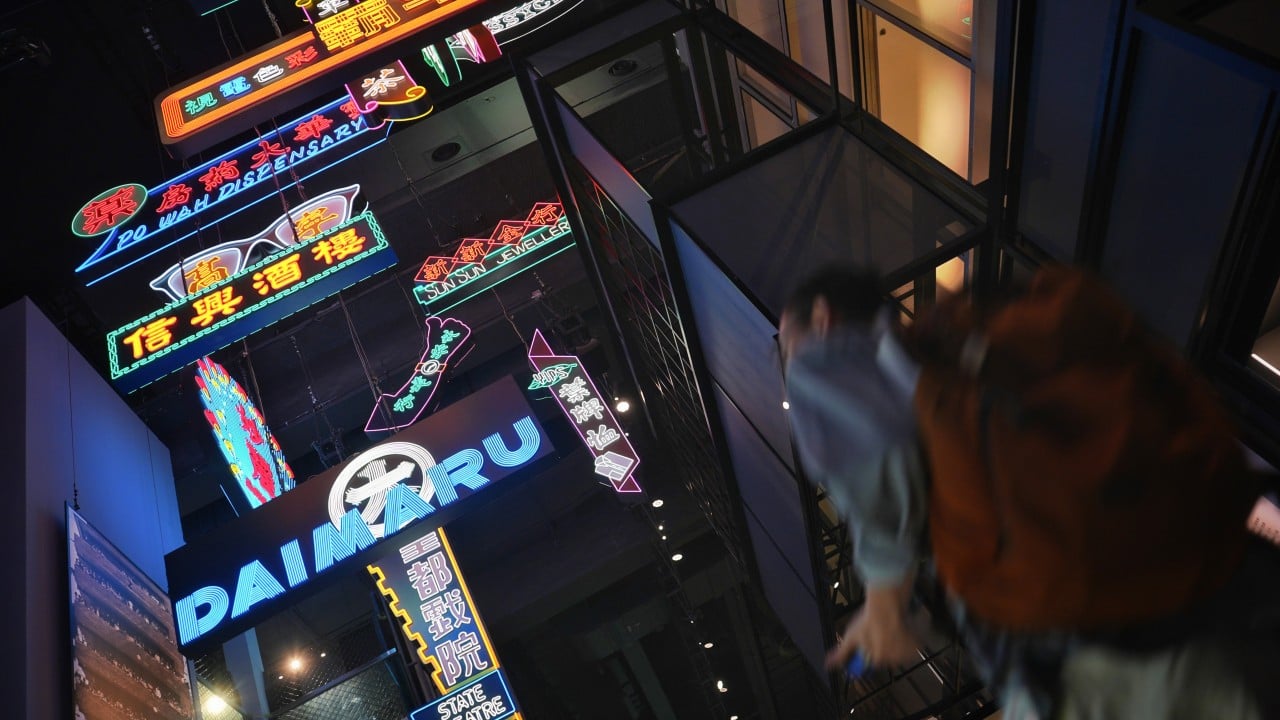
For twenty years, the "Hong Kong Story" exhibition focused heavily on the colonial era and the unique local folk culture that emerged during the British administration. It felt like a cabinet of curiosities—reconstructed grocery stores, old trams, and fishing boats that celebrated a distinct "Hong Konger" identity. That version of history is now being treated as a secondary byproduct of a larger national trajectory.
The new approach digs deeper into the Qin and Han dynasties to establish a precedent of administrative control from the mainland. This isn't an accidental choice by the curators. By emphasizing archaeological evidence of early Chinese settlement, the museum creates a historical bedrock that predates any European influence by millennia. It effectively reduces the 156 years of British rule to a brief, albeit disruptive, interloper in a much longer timeline.
The Death of the Colonial Lens
In the previous iteration of the museum, the Opium Wars were presented through a lens of global trade conflict and the resulting birth of a modern port. The updated narrative shifts the focus toward national humiliation and the eventual "return" of the territory. This change is vital for the current administration's push to integrate Hong Kong into the Greater Bay Area framework.
When you change the starting point of a story, you change the ending. By focusing on the "Roots in China," the museum shifts the definition of progress. Success is no longer measured by how well the city mimicked Western institutions, but by how effectively it maintained its Chinese essence despite external pressure. This repositioning turns the colonial era into a hurdle rather than a foundation.
The Logistics of Memory
The scale of this renovation is massive, involving the reorganization of over 400,000 items. However, the most significant changes aren't in the number of artifacts, but in the descriptions that accompany them. A vase is no longer just a piece of trade ceramic; it is a "testament to the enduring cultural bond between the Lingnan region and the central plains." This linguistic precision is where the real work of the "Hong Kong Story" happens.
Observers of the museum's planning process have noted a sharp increase in the involvement of mainland-based consultants and historians. This ensures that the terminology used in Tsim Sha Tsui matches the terminology used in Beijing. Consistency is the priority. If the history books in local classrooms and the displays in the museum tell the exact same story, the narrative becomes reality through sheer repetition.
The Shift in Folk Culture Displays
Even the sections on local traditions—like the Cheung Chau Bun Festival or the fire dragon dances—are being recontextualized. In the past, these were celebrated as quirky, local spectacles unique to the territory's villages. Now, they are being presented as regional variations of broader Chinese heritage.
This subtle rebranding serves to diminish the idea of a separate "Hong Kong culture." It suggests that anything unique about the city is simply a local flavor of a national dish. To a casual visitor, the difference might seem academic. To an analyst of soft power, it is a masterclass in cultural assimilation.
Managing the Modern Era
The most difficult challenge for the museum curators lies in the 20th century. How do you handle the 1967 riots, the 1989 protests, or the events of 2019? The previous exhibition had a tendency to gloss over modern political friction in favor of economic triumphs. The new version will likely be even more selective.
Reports from within the museum suggest that the post-war era will focus heavily on industrialization, the supply of water from the mainland, and the constant support provided by the central government during crises. It is a story of dependency and gratitude. The social movements that defined the city’s political consciousness are being replaced by a narrative of "stability and prosperity," a favorite phrase of the current administration.
Educational Mandates
The museum is no longer just a weekend destination for families; it has become a compulsory site for the city's new "Citizenship and Social Development" curriculum. This subject replaced the more critical Liberal Studies program. Schools are now required to bring students to the museum to learn about the National Security Law and the concept of "One Country, Two Systems" from a state-approved perspective.
The physical space is being redesigned to accommodate these large groups, with more interactive digital displays that can be easily updated to reflect the current political climate. This move toward digital assets over physical artifacts also allows for a more controlled narrative. It is much easier to edit a video file than it is to remove a permanent bronze plaque.
The Economic Necessity of a Shared Identity
There is a hard business logic behind this cultural shift. Hong Kong’s economic future is tied to its integration with the mainland. The "Hong Kong Story" must reflect this reality to prepare the workforce for a career within the Greater Bay Area. If the population views themselves as part of a national whole, the friction of integration disappears.
Competition with Shenzhen and Guangzhou
As neighboring cities like Shenzhen grow in prominence, Hong Kong needs to justify its role within the national framework. By highlighting its historical role as a gateway for Chinese culture to reach the world—rather than a gateway for Western influence to reach China—the museum helps the city find its place in the modern Chinese economy.
This isn't just about pride. It’s about alignment. A city that understands its history as a Chinese city is a city that is easier to manage, easier to market to mainland investors, and easier to fold into the national development plan. The museum provides the cultural evidence for a political and economic decision that has already been made.
Silence and Omission
In investigative journalism, what isn't said is often more important than what is. The "revamped" exhibition will likely feature a glaring absence of the grassroots movements that sought to define Hong Kong as something separate or autonomous. The voices of localist historians and activists are being scrubbed from the record in favor of a unified, top-down perspective.
The artifacts that remain—the old British post boxes, the colonial insignia—will likely be framed as relics of an era that has been "rightfully" superseded. They become trophies of a transition rather than symbols of a living heritage. This is the nature of state-sponsored history. It is a tool for legitimization, and the Hong Kong Museum of History is currently the most visible laboratory for this process.
The reconstruction of the Hong Kong Story is an admission that the previous narrative failed to produce the desired social cohesion. The new exhibition is a corrective measure. It is a high-stakes attempt to rewrite the collective memory of seven million people. As the doors eventually reopen, the public will not be walking into a museum of the past, but into a blueprint for a disciplined, integrated future.
The battle for the city's identity has moved from the streets into the quiet, climate-controlled halls of the museum. This is where the final version of Hong Kong’s history will be codified. Every caption, every video loop, and every lighting choice is a brick in a wall that separates the old, rebellious Hong Kong from the new, compliant SAR. The narrative is set. The only question is how much of the original city will be left when the transformation is complete.