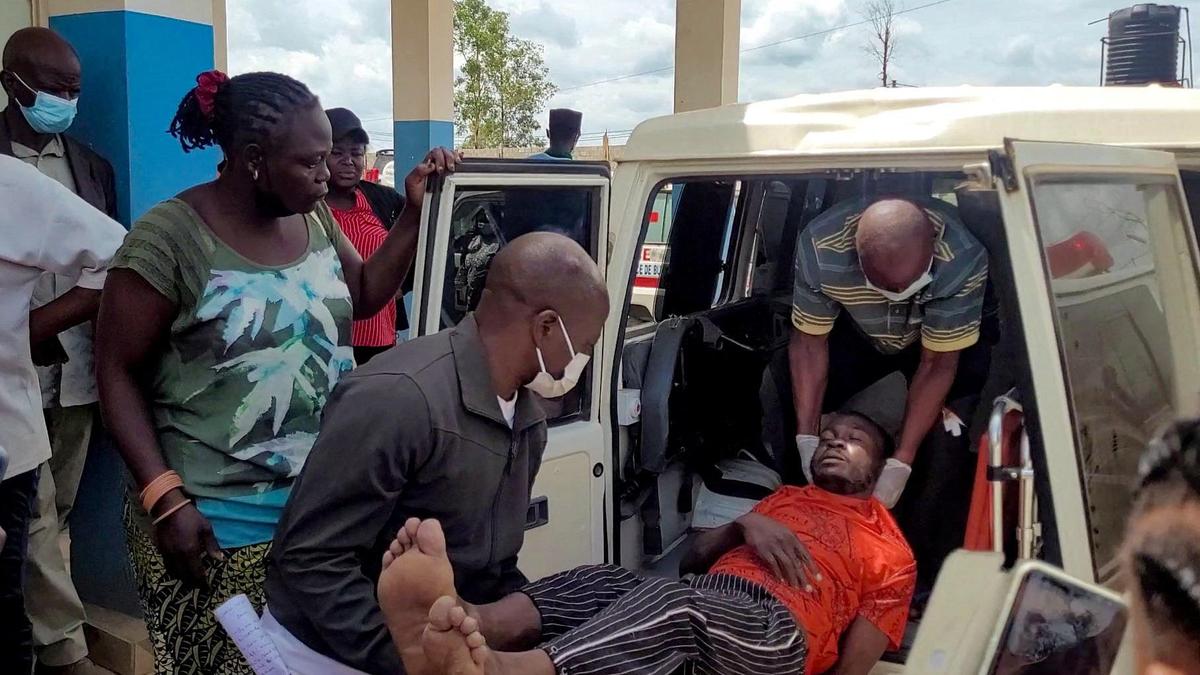
The World Health Organization just triggered its second-highest alarm, declaring the sudden Ebola outbreak in the Democratic Republic of Congo and Uganda a public health emergency of international concern. It sounds terrifying. Over 80 people are dead. But before the internet spirals into absolute panic, you need to understand exactly what is happening on the ground and why this specific crisis is different from the ones you watched on the news years ago.
This isn't the standard Ebola scenario we've trained for.
Health officials confirmed that the culprit behind the mounting death toll in DRC’s eastern Ituri province is the Bundibugyo virus strain. If you follow global health, that name should make you stop. Unlike the more common Zaire strain that ravaged West Africa a decade ago, the Bundibugyo strain has no approved vaccine. It has no specific antiviral treatment. We're essentially fighting a highly lethal hemorrhagic fever with our hands tied behind our backs, relying purely on supportive care and strict isolation.
The Reality of the Numbers in Ituri
Right now, the data changes by the hour. The Africa Centres for Disease Control and Prevention tracked at least 88 deaths and well over 300 suspected cases. The epicenter rests in three health zones within Ituri, including the bustling mining hub of Mongwalu and the provincial capital of Bunia.
But let's talk about why these official tallies don't tell the whole story.
Local civil society workers in Bunia report that families bury multiple people every single day. The formal system can't keep up. Out of the initial batch of blood samples sent to the National Institute of Biomedical Research in Kinshasa, only a fraction could even be fully analyzed because the sample volumes collected in the field were too low.
[Image of Ebola virus structure]
When the data collection itself is choked by logistical hurdles, you can bet the real number of infections is significantly higher than what's on the official dashboard. The index case, patient zero, was a nurse who died in a Bunia hospital back on April 24. For weeks, the virus had a head start in the community before formal laboratory confirmation hit the wires.
Why Containment is Failing on the Ground
We know how to stop Ebola in theory. You find the sick, isolate them, trace every single person they touched, and bury the deceased safely. It's a brutal but effective blueprint.
In Ituri, that blueprint is completely falling apart.
- Active Gold Mining Links: Mongwalu is a high-traffic mining area. Workers move constantly, drifting between remote extraction sites and major urban centers to trade. They carry the virus in their blood before symptoms even peak.
- Severe Security Crises: Ituri isn't peaceful. The region is actively terrorized by Islamic State-backed militants and rival local militias. You can't run an effective contact tracing team when entering a village risks an armed ambush. Health workers literally cannot reach the people who need tracking.
- Home Burials: Because local isolation centers are overwhelmed or entirely absent in remote pockets, people die at home. Family members handle the highly infectious bodies of their loved ones, accelerating the spread via bodily fluids like vomit and blood.
The geography makes things worse. Ituri is roughly 1,000 kilometers away from Kinshasa. You can't just drive supplies down the road. Everything from personal protective equipment to specialized lab gear must be flown into a conflict zone.
The Regional Leak into Uganda and Kinshasa
This isn't just a localized Congolese tragedy anymore. The virus has already traveled.
A Congolese national crossed into Uganda and subsequently died at the Kibuli Muslim Hospital in Kampala. A second unrelated case popped up in the city shortly after. Meanwhile, a traveler returning from Ituri landed back in the DRC's massive capital city of Kinshasa and tested positive.
The Africa CDC directly warned of active community transmission. When an infectious disease moves from remote forest villages into major capital cities via regional transport networks, the risk matrix shifts completely.
The WHO stopped short of calling this a pandemic emergency, a specific top-tier classification system introduced in 2024. That distinction matters to bureaucrats, but on the ground, the threat feels identical. The lethality rate of the Bundibugyo strain can hit 50 percent. When half the people who catch a disease die from it, the technical label assigned in Geneva doesn't change the panic felt by residents in Bunia or Kampala.
What Happens Next
The immediate global response is pivoting toward hard containment, led by groups like Doctors Without Borders rushing to scale up isolation tents. The WHO freed up $500,000 from its contingency fund, but that money is a drop in the bucket for an environment plagued by active warfare and zero vaccine infrastructure.
If you want to track how this situation evolves over the coming days, stop looking at the aggregate death toll and start watching these specific indicators:
- Transmission rates in Kampala and Kinshasa: If local, unlinked cases start appearing in these major metropolitan hubs, containment has failed, and the outbreak enters a far more dangerous urban phase.
- Security corridors for health workers: Watch whether the DRC government can secure safe passage for medical teams into the mining zones around Mongwalu. Without safety, there is no tracing.
- Symptom screening at regional borders: Kenya and South Sudan are already tightening entry point checks. The speed of regional health coordination will dictate whether the virus hits a wall or continues to seep across borders.
The tools that saved lives during the massive 2018 Zaire-strain outbreak in eastern Congo—mainly the Ervebo vaccine—are useless here. The strategy now relies entirely on old-school public health surveillance, community trust, and sheer speed.