The air in Beirut has a specific weight. On a normal night, it tastes of salt from the Mediterranean, roasting coffee, and the faint, persistent exhaust of a city that refuses to sleep. But last night, that weight shifted. The atmosphere didn’t just grow heavy; it curdled.
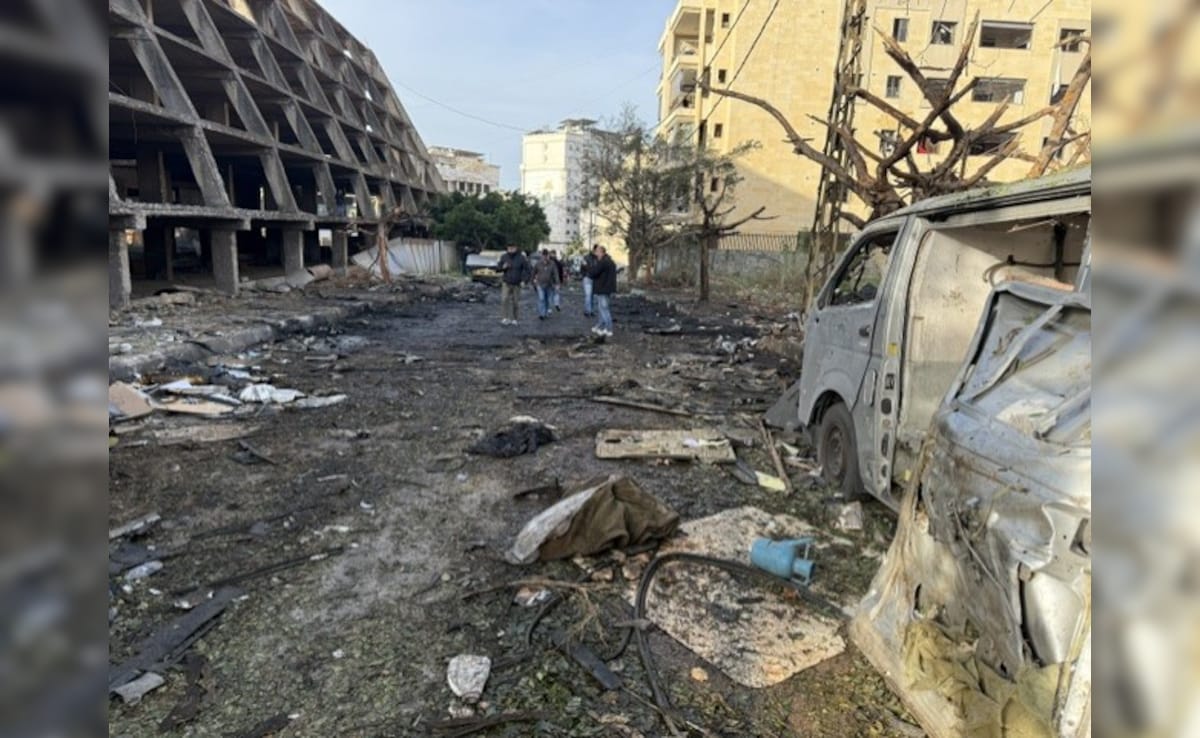
When the missiles arrived, they didn’t come with the cinematic whistle people expect. They came as a physical displacement of reality. A sudden, violent folding of the horizon. One moment, a residential block in the heart of the city was a collection of lives—laundry hanging on balconies, flickering television screens, the quiet clink of late-night tea glasses. The next, it was a mountain of pulverized concrete and twisted rebar.
Ten people are gone. That is the official tally, the dry digit that will flicker across news tickers and be swallowed by the relentless cycle of global updates. But ten is not a number. Ten is an extinction event for ten different universes.
The Geography of a Heartbeat
To understand what happened overnight, you have to look past the tactical maps and the sterile language of "targeted strikes." You have to look at the dust. It coats everything. It settles in the lungs of the survivors and turns the vibrant greens of the city’s few trees into a ghostly, ashen gray.
Consider a man we will call Elias. He isn't a combatant. He is a grandfather who spent forty years teaching mathematics. When the first blast shook the foundation of his apartment building, he didn't think about geopolitics. He thought about the structural integrity of the ceiling above his granddaughter’s bed. He threw his body over hers, a human shield against a rain of fire he couldn't see.
He survived. The building did not. Now, he stands in the street wearing mismatched shoes, watching civil defense workers pick through the remains of his life with their bare hands. He is one of the lucky ones, they say. But as he watches a rescue worker pull a single, dusty teddy bear from the wreckage, the word "lucky" feels like a profanity.
The strikes hit several locations across the capital, focusing on areas the Israeli military claims are hubs for operative activity. They speak of precision. They speak of intelligence. Yet, when a missile hits an urban center with the density of Beirut, "precision" is a relative term. Shrapnel does not check IDs. Shockwaves do not stop at the door of a target’s apartment; they travel through the walls, shattering the windows of the bakery next door and the nursery three floors up.
The Sound of the Silence After
There is a specific silence that follows a detonation in a city. It is a vacuum. For a few seconds, the ears refuse to process the world. Then comes the screaming. Not just from the injured, but from the car alarms, the sirens, and the frantic shouting of neighbors calling out names into the dark.
"Sara!"
"Ahmed!"
"Are you there?"
The overnight attacks were part of a rapid escalation that has turned the Lebanese capital into a giant waiting room for grief. For months, the tension had been a low-grade fever. Last night, the fever broke into a full-blown seizure. The Israeli military confirmed the strikes, citing the need to dismantle infrastructure. On the ground, however, the "infrastructure" looks a lot like kitchens, bedrooms, and the small, mundane spaces where people try to feel safe.
Ten dead. At least twice that many wounded. These are the facts.
The logic of modern warfare suggests that these lives are the unfortunate arithmetic of a larger security goal. It is a cold calculus. If you kill a commander but take out a family of four in the process, the ledger still balances in the eyes of the strategist. But for those standing on the sidewalk in Beirut, there is no ledger. There is only the sudden, jagged hole where a neighbor used to be.
The Invisible Stakes of the Everyday
Life in a conflict zone isn't defined by the explosions alone. It is defined by the erosion of the "normal."
People in Beirut have become accidental experts in acoustics. They can tell the difference between a sonic boom from a low-flying jet and the dull thud of a drone strike miles away. They know which hallway in their apartment is the "safest," though they also know that "safe" is a fairy tale told to children to help them sleep.
The invisible cost of last night’s missiles isn't just the rubble; it’s the psychological scarring of the millions who watched from their windows. Every time a door slams or a motorcycle backfires today, a million hearts will skip a beat. The city is vibrating with a collective post-traumatic stress that no treaty can easily fix.
The logistics of the rescue are a nightmare of their own. Beirut is a city of narrow streets and tangled power lines. When a building collapses, it blocks the arteries of the neighborhood. Fire trucks and ambulances struggle to navigate the debris. The Red Cross volunteers, many of them barely out of their teens, work under the constant threat of a "double tap"—a second strike on the same location. They move with a frantic, desperate grace, illuminated by the harsh glow of portable floodlights and the flickering embers of the fire.
The Narrative of the Rubble
We often treat these events as isolated incidents, a tragic blip in the timeline of the Middle East. We shouldn't. Each strike is a thread in a larger, fraying shroud.
When the news says "at least ten killed," it invites us to move on once the number is recorded. It doesn't tell us about the wedding that was supposed to happen next week. It doesn't mention the student who was cramming for medical school exams when the walls caved in. It ignores the cat left meowing on a balcony that no longer leads anywhere.
The tragedy of Beirut is that it is a city that has been rebuilt a dozen times, only to be torn down again. There is a limit to human resilience. You can only patch a wall so many times before the plaster stops holding. You can only bury so many neighbors before the cemetery becomes the most crowded part of the city.
The world watches these events through a glass darkly, filtered through the lenses of political allegiance and historical grievance. Some will see last night as a necessary defense. Others will see it as a war crime. But if you were there, standing in the settling dust of the midnight air, those labels would feel incredibly small.
You would see a woman sitting on the curb, her hands stained with the blood of someone she loved, staring at a pile of gray stones. You would see the smoke rising against the moon, a black pillar that seems to hold up the sky. You would realize that while the missiles are high-tech, the pain they cause is ancient.
As the sun rises over the Mediterranean this morning, the smoke is still curling from the ruins. The search for the missing continues, though the hope of finding anyone alive beneath the weight of six stories of concrete is fading with every passing hour. The city wakes up, because it has no choice. People will go to work. They will buy bread. They will look at the sky with a new, sharp distrust.
The ten who died are no longer part of the conversation. They have become the silence. They are the empty chairs at breakfast tables across the city, the unanswered phone calls, the stories that were cut off in mid-sentence. In the wreckage of Beirut, the most expensive thing lost wasn't the buildings or the weapons. It was the simple, quiet assumption that tomorrow would look exactly like today.
The dust never truly settles; it just waits for the next wind to carry it away.