The air in Calgary during the late hours has a specific weight to it. It is thin, biting, and usually silent, save for the hum of a distant heater or the occasional crunch of tires on grit. But silence is a fragile thing. On a Tuesday night that started like any other, that silence didn't just break; it shattered.
When a firearm discharges in a residential neighborhood, the sound doesn't behave the way it does in the movies. There is no cinematic swell of music. There is just a flat, mechanical slap that tears through the darkness, followed by a vacuum of sound where everyone nearby holds their breath at the exact same time. On October 22, 2024, residents near the 100 block of Redstone Common N.E. learned exactly what that vacuum feels like.
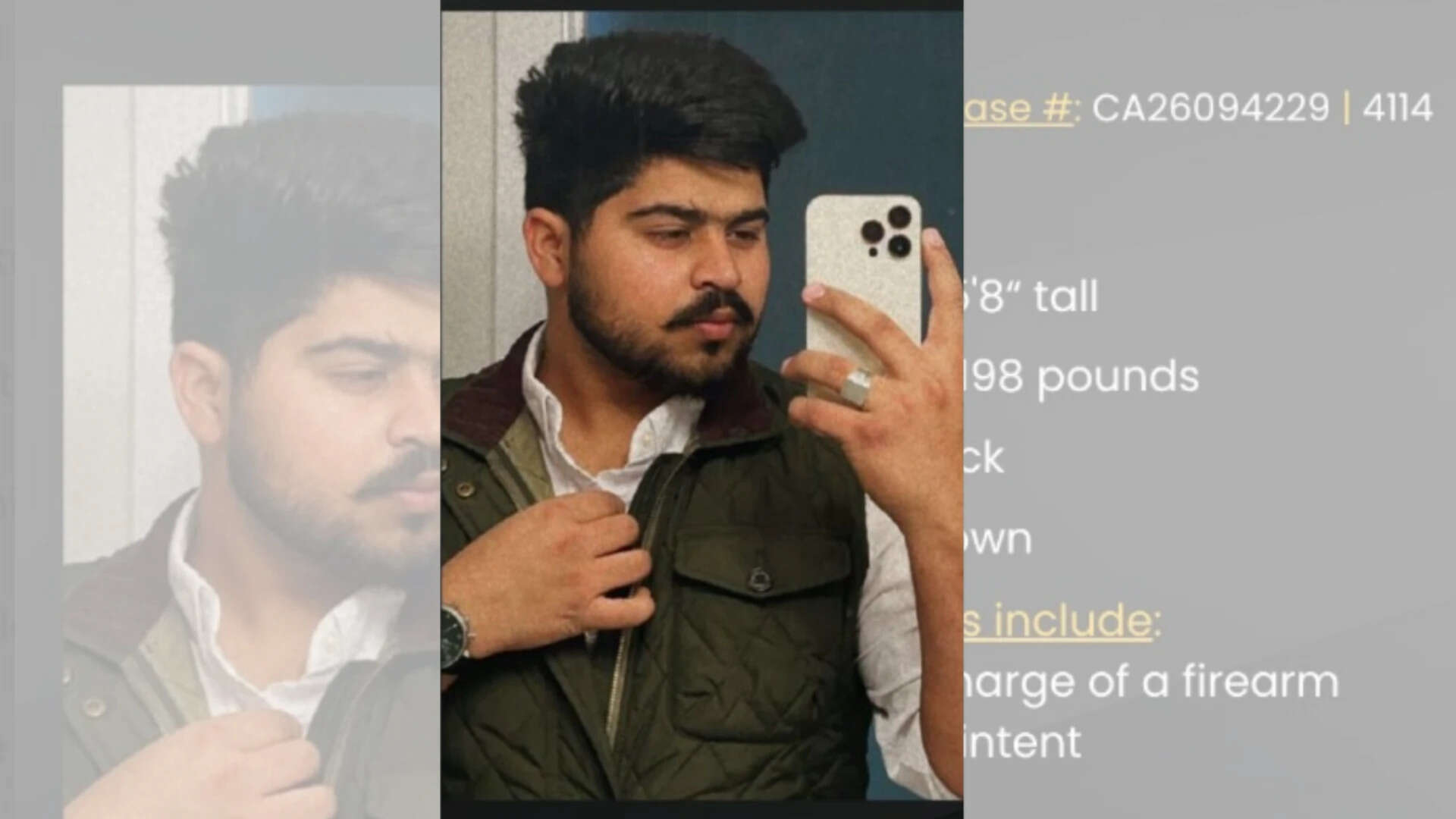
Now, the Calgary Police Service is looking for a man named Germanpreet Singh. He is twenty-four years old. He is thin, standing about six feet tall. And according to the authorities, he is the reason that neighborhood is still looking over its shoulder.
The Friction of the Unseen
Violence is rarely a spontaneous combustion. It is usually a slow burn, a series of frictions that finally catch a spark. While the official police reports focus on the "what"—a shooting, a suspect, a warrant—the "why" is what keeps a community awake. We don't yet know what led Germanpreet Singh to that moment. We don't know the grievance, the desperation, or the flash of anger that allegedly prompted him to pull a trigger with the intent to cause harm.
What we do know is the aftermath.
Consider a hypothetical family living three doors down. Let’s call them the Millers. They aren't real, but their fear is. When the shots rang out at 11:30 p.m., the Millers didn't check the news; they hit the floor. They crawled to their children’s rooms. They waited for a second sound that never came. For people like the Millers, the crime isn't just the discharge of a weapon. The crime is the permanent theft of their sense of safety. You can fix a window. You can paint over a bullet hole. You cannot easily repair the instinct that tells a mother her child is safe in their own bed.
The Calgary Police arrived to find the evidence of a confrontation, but the man they believe was behind it had already vanished into the sprawling grid of the city.
A Shadow in the Northeast
The search for Singh has moved from the physical pavement of Redstone to the digital registers of every police cruiser in the province. He is wanted on several charges, the most chilling of which is "discharging a firearm with intent."
In the eyes of the law, "intent" is a heavy word. It distinguishes an accident from a choice. It suggests a mind that had reached a conclusion—a conclusion that the only way to resolve a situation was through the lethal mechanics of a gun. When the police release a photo of a suspect like Singh, they aren't just asking for a location. They are asking the public to help them close a wound in the community’s psyche.
Singh is described as having a slim build, with black hair and brown eyes. In his last known photographs, he sports a short beard, looking like any other twenty-something you might pass in a coffee shop or see at a gas station. That is the most unsettling part of modern urban crime. The people the authorities warn us about don't look like monsters. They look like neighbors. They look like the person in the car next to yours at a red light.
The Logic of the Hunt
Tracking a person in 2026 is a strange paradox of high-tech surveillance and old-fashioned legwork. While we live in an era of digital footprints, a person determined to stay lost can still find the cracks.
The Calgary Police Service’s Firearms Investigative Unit is leading the charge. These aren't just beat cops; these are specialists who understand the ballistics of a crime scene and the psychology of a flight risk. They have spent weeks piecing together Singh’s movements, interviewing associates, and scouring CCTV footage. Every lead is a thread. Some threads are strong; others snap the moment you pull on them.
The challenge lies in the "intent." To prove Singh is the man they want, they need more than just a name. They need to place him at the scene with the weapon in his hand. They need to show that the shots fired weren't just a reckless act, but a targeted one.
Think of it like a puzzle where the pieces are made of smoke. The police have the frame—the time, the place, the caliber of the shell casings—but they are missing the center of the picture. They are missing Germanpreet Singh.
The Burden of the Witness
There is a certain bravery required to call in a tip. We often talk about "community safety" as if it’s a government product, something delivered by mail or installed like a streetlight. It isn't. Safety is a social contract.
When the police ask for information regarding Case #CA24436531, they are asking citizens to take a risk. There is a fear of retaliation, a fear of "getting involved," a fear that your name might end up on a document it shouldn't be on. But the alternative is worse. The alternative is a world where men can fire guns in the street and then simply melt into the background, emboldened by the silence of their neighbors.
Crime thrives in the gaps between us. It grows when we decide that a shooting three blocks away isn't our problem because it didn't hit our house. But bullets don't respect property lines, and fear doesn't stop at the fence.
The Mechanics of Disappearance
How does a twenty-four-year-old vanish in a city of over a million people?
It requires a network. Or, conversely, a total isolation. If Singh is still in Calgary, he is likely relying on the shadows of the informal economy—places where ID isn't checked and questions aren't asked. Or perhaps he has long since left the city limits, heading toward the mountains or across the prairies, hoping that his face is just one more in a sea of strangers.
The police have been clear: do not approach him.
That warning isn't a formality. It is a recognition of the stakes. Someone accused of firing a weapon with intent has already demonstrated a willingness to cross a line that most people can't even imagine. When that line is crossed once, the second time becomes much easier. The desperation of being hunted only adds a layer of volatility to an already dangerous situation.
The Cost of the Wait
Every day that Singh remains at large is a day the residents of Redstone Common have to remind themselves how to breathe normally.
We often overlook the economic and social toll of unsolved violent crime. Property values don't just drop because of a headline; they drop because a neighborhood loses its "hum." The parks stay empty a little longer. The evening walks get shorter. People stop looking each other in the eye because they are too busy looking at every passing car, wondering if the slim man with the black beard is behind the wheel.
This isn't just about one man and one gun. It is about the friction between the city we want to live in and the reality of the one we have. Calgary is a city that prides itself on its grit and its community spirit. It is a place of Stampedes and winter festivals, of high-rises and wide-open spaces. But it is also a place where, on a cold Tuesday in October, someone decided that violence was the answer.
The Final Thread
The search continues. The detectives in the Firearms Investigative Unit are likely sitting in a windowless room right now, staring at a board covered in names and locations. They are waiting for the one phone call that makes sense. They are waiting for the one person who knows where Germanpreet Singh is hiding to decide that their conscience is heavier than their loyalty.
Somewhere in this city, or perhaps far beyond it, Singh is waiting too. He is waiting for the heat to die down. He is waiting for the news cycle to move on to the next tragedy, the next scandal, the next breaking headline. He is counting on our collective amnesia.
But the echo of a gunshot doesn't just fade. It vibrates in the floorboards of the houses on Redstone Common. It lingers in the minds of the officers who processed the scene. And it remains as a standing challenge to a city that refuses to accept that this is just the way things are.
The police have a warrant. They have a description. They have a motive. Now, all they need is the man. Until he is found, the story of that October night remains unfinished, a jagged sentence waiting for a period.
The silence hasn't returned to Redstone yet. It’s still just a held breath.