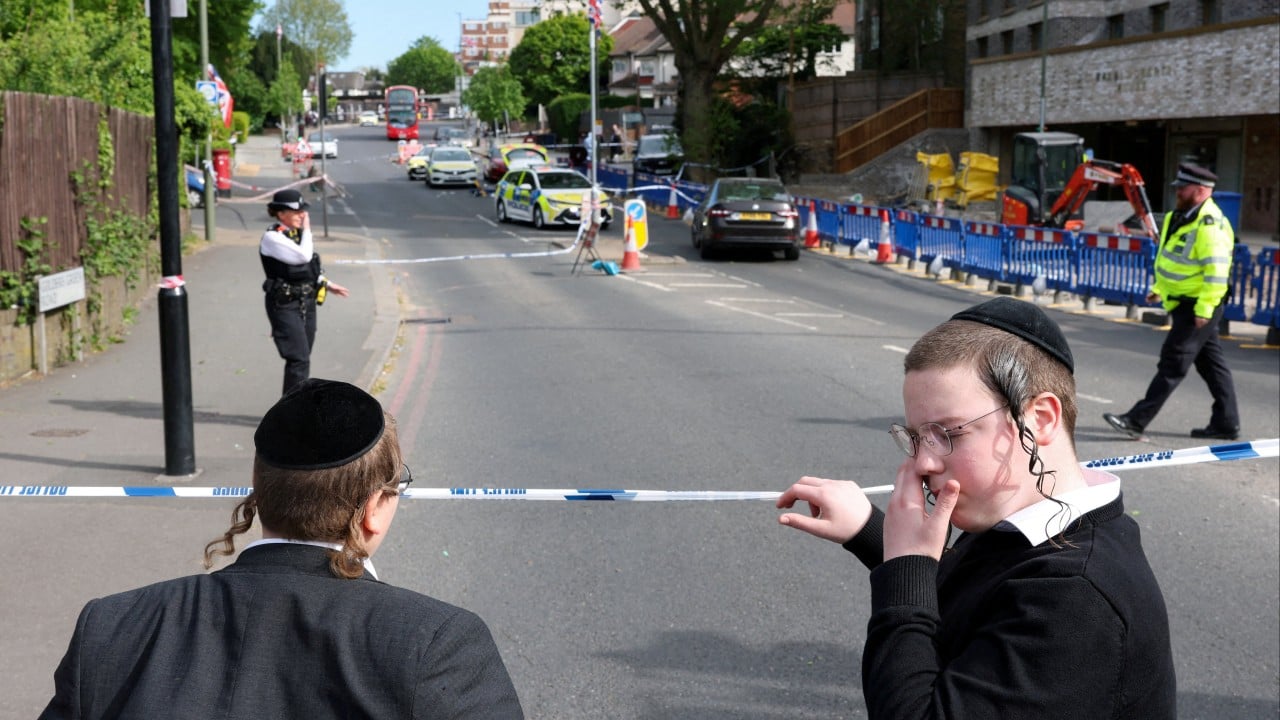
The air in Stamford Hill doesn’t just carry the scent of rain or the sound of traffic. It carries history. It is a place where the past and the present walk side-by-side in long black coats and velvet yarmulkes. On a Friday night, as the sun dips below the Victorian rooftops of North London, a profound stillness usually settles over the streets. Shops shutter. The frantic pace of the city slows to a rhythmic, ancient crawl. This is the Sabbath. It is supposed to be the safest time of the week.
But safety is a fragile glass. And in June 2024, that glass didn’t just crack; it shattered.
Stanley Elliott, a 54-year-old man from Leytonstone, was not part of this rhythm. He arrived in the neighborhood with a different purpose. He didn't come to pray or to find peace. He came with a knife. What followed was a series of events that would leave two men bleeding on the pavement and an entire community questioning if the walls they had built around their lives were thick enough to keep out the world’s growing darkness.
The Anatomy of a Moment
Violence is rarely a cinematic explosion. It is often a series of mundane movements that suddenly turn lethal. One minute, you are walking home, thinking about dinner or a conversation you had an hour ago. The next, the world has tilted on its axis.
The first victim, a man in his 50s, was simply standing on the street. He was an easy target only because he was there, visible, and identifiable by the traditions he wore on his sleeve. There was no argument. No prior history. Just the sudden, cold flash of steel. Elliott struck, the blade finding its mark in the man’s back.
Consider the shock of that first contact. The brain doesn't immediately register "stab wound." It registers heat. It registers a strange, heavy pressure. It is only when the cold air hits the internal warmth of the body that the reality of the situation screams into the consciousness.
Elliott didn't stop there. He moved on to a second man, aged 62. The pattern repeated. A quick, brutal intersection of two lives that should never have met. By the time the sirens began to wail through the narrow streets of Hackney, the quiet of the Sabbath had been replaced by a frantic, jagged energy.
The Invisible Scars
We talk about "non-life-threatening injuries" in news reports as if they are a relief. We see the phrase and we exhale, thinking, thank God, they lived. But that clinical language does a massive disservice to the survivors. It ignores the invisible stakes of surviving an attempted murder.
When a man is stabbed while walking through his own neighborhood, the wound in his flesh eventually heals. The skin knits back together, leaving a silver cord of scar tissue. But the wound in the psyche remains open far longer. Every footstep behind you on a quiet street becomes a potential threat. Every glint of a kitchen knife in a drawer sends a jolt of adrenaline through the heart.
For the Jewish community in London, these attacks weren't just isolated incidents of madness. They were a message. In a city that prides itself on being a global melting pot, these stabbings felt like a reminder that some people are still hunted for the "sin" of existing in public. It changes how a father looks at his son before he heads out to the synagogue. It changes how a mother feels when her husband is ten minutes late coming home.
The physical toll was documented in a courtroom. The emotional toll is documented in the quiet, fearful glances exchanged across dinner tables for months afterward.
Justice in a Wood-Paneled Room
The legal system is a machine designed to strip away the emotion of a crime and replace it with the cold logic of the law. In the case of Stanley Elliott, the machine worked. He was charged with two counts of attempted murder and possession of an offensive weapon.
During the trial at Snaresbrook Crown Court, the facts were laid out like pieces of a grim puzzle. There was the evidence of the blade. There was the testimony of those who saw the shadow of a man moving through the streets with ill intent. There were the medical reports detailing the damage done to two human bodies.
The defense might talk about "state of mind" or "mitigating circumstances," but the jury is tasked with a simpler, heavier burden: Did this happen? And was it intended?
In the end, the court found Elliott guilty. Not just of an assault, but of the attempt to end lives. He was sentenced to life imprisonment, with a minimum term of 15 years to be served before he can even be considered for parole.
But 15 years is a strange measurement. To a judge, it’s a standard sentence. To a taxpayer, it’s a cost. To the victims, it’s a countdown. It’s a period of time where they can perhaps breathe a little easier knowing that the man who haunted their reality is behind a door that won't open for a very long time.
The Weight of the "Why"
Why does a man from Leytonstone travel to Stamford Hill to hurt people he has never met?
The police investigated the possibility of a hate crime, a label that carries its own specific weight in the UK legal system. When a crime is motivated by hostility toward a victim’s disability, race, religion, sexual orientation, or transgender identity, it isn't just an attack on a person; it’s an attack on a demographic.
It’s the difference between a bar fight and a statement of war.
While the court proceedings focused on the physical acts and the intent to kill, the community was left to grapple with the motivation. We live in an era where the internet can act as a radicalization chamber, turning quiet resentments into violent actions. We see a rise in antisemitic incidents globally, a trend that feels like a ghost from a century we thought we had moved past.
When you look at the statistics, they are just numbers on a page.
- Percentage increases in reported incidents.
- Number of arrests per borough.
- Budgets allocated for community security.
But statistics don't bleed. They don't have families who stay awake at night wondering if it’s safe to wear a kippah in public. The reality of these crimes is found in the communal response—the way the Shomrim, the neighborhood watch group, increased their patrols, and the way neighbors who had never spoken before suddenly began checking in on one another.
The Long Walk Home
The trial is over. Stanley Elliott is in a cell. The news cycle has moved on to the next tragedy, the next political scandal, the next viral moment.
But for the two men in North London, the story isn't over. They are the ones who have to wake up every morning and decide that they will not be defined by those few minutes of terror. They have to decide that their neighborhood still belongs to them, not to the shadows.
There is a specific kind of bravery in returning to the scene of your own trauma. To walk the same pavement where you felt the steel. To stand in the same spot where you thought your life might end and choose to keep standing there.
London is a city of millions, a sprawling, chaotic organism that usually doesn't care about the individual. It keeps moving. The buses keep running. The rain keeps falling. Yet, in the heart of Stamford Hill, there is a defiance in the routine. There is a power in the Sabbath candles being lit, week after week, regardless of what happened in June.
The law can lock a man away, but it cannot heal a neighborhood. That work is done in the small moments. It’s done when a stranger helps an elderly man across the street. It’s done when a community refuses to retreat behind locked doors.
The blade was sharp, but the spirit of a people who have survived far worse than Stanley Elliott is significantly sharper. As the sun sets again over North London, the shadows stretch long across the pavement, but they are just shadows. The light, flickering in a thousand windows, remains.


