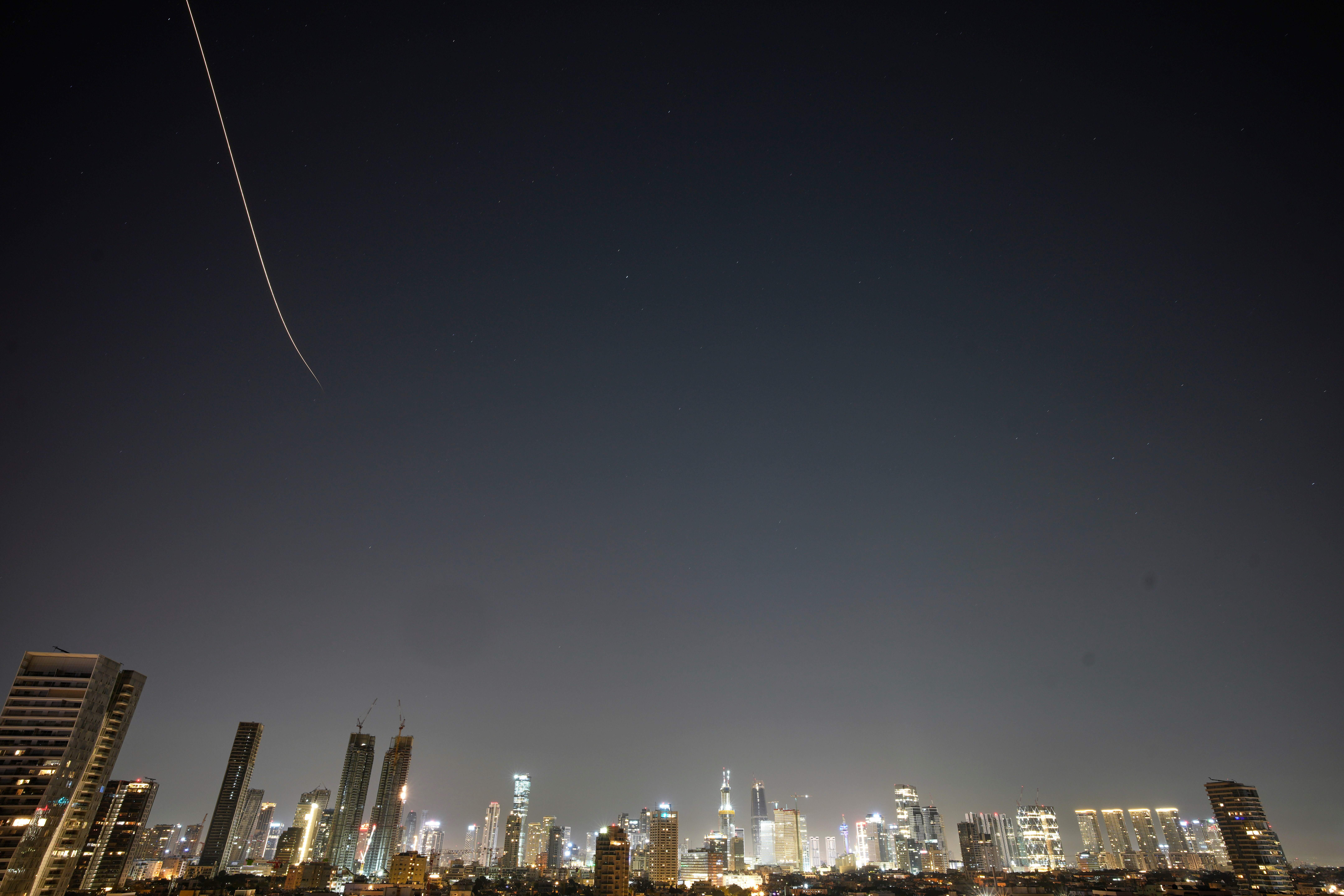
The tea in Tehran stays hot long after the sun dips behind the Alborz Mountains. It is a ritual of endurance. In the small, tiled kitchens of the city, the steam rises from glass cups, carrying the scent of cardamom and the quiet, heavy weight of waiting. On this particular night, the waiting felt different. It wasn't the usual patience of a city used to the grinding gears of geopolitics. It was the stillness that precedes a fracture.
Four hundred miles to the west, in the bunkers and command centers of Tel Aviv, the air is filtered and sterile. There is no cardamom here. Only the hum of servers and the flickering glow of monitors mapping out trajectories that haven't happened yet.
For months, the world has watched Iran and Israel trade blows like exhausted heavyweights in a ring that has grown too small for both of them. We see the headlines about "strategic depth" and "deterrence signaling." We read the dry tallies of intercepted drones and ballistic missile counts. But the data points are ghosts. They don't capture the way a mother in Isfahan instinctively moves her child’s bed away from the window when she hears a sonic boom. They don’t describe the hollow thud in the chest of a father in Haifa who realizes the siren isn't a drill this time.
The reality of modern warfare between these two powers is less a grand conquest and more a series of violent, expensive conversations. Each strike is a sentence. Each intercepted missile is a rebuttal.
The Grammar of Escalation
Consider the mechanics of the recent exchanges. This isn't the blitzkrieg of the twentieth century. It is a high-stakes chess match played with Mach 5 projectiles. When Iran launched its massive wave of drones and missiles earlier this year, it wasn't just an act of aggression; it was a demonstration of a new kind of reach.
Hypothetically, imagine a technician named Abbas. He isn't a warmonger. He is a man who understands physics. He watches the coordinates feed into a system, knowing that every launch is a calculated risk designed to prove a point without necessarily starting a fire that consumes his own home. He operates in a world where "success" is measured by how much of the enemy's expensive air defense you can force them to use up.
Then there is the Israeli response. It is surgical. Quiet. It arrives in the dark, often targeting a single radar array or a specific military facility. It says: We can see you. We can touch you. And we can do it whenever we choose.
The technical term for this is "gray zone warfare." It is a state of being where you are neither at peace nor in a total, declared war. It is a limping status quo. The problem with the gray zone is that it eventually turns black. The margin for error shrinks with every exchange. A single malfunctioning sensor or a misunderstood signal from a back-channel diplomat can turn a "calculated strike" into a regional catastrophe.
The Shadow of the Table
While the missiles fly, the talk continues. This is the great irony of the current moment. Even as the strikes are traded, there are whispers of a grand bargain. Diplomats in neutral capitals—places with quiet rivers and expensive chocolate—spend their days trying to find a linguistic bridge between "security" and "sovereignty."
The signals are mixed because the objectives are contradictory.
Israel seeks the total dismantling of threats on its borders, specifically the influence of Tehran's proxies. Iran seeks to maintain those proxies as a shield, a way to keep the conflict far from its own borders. Between these two poles lies a vast, scorched earth of human displacement and broken infrastructure.
We often think of diplomacy as a polite alternative to war. In reality, it is often just the same war fought with different tools. The strikes are intended to create leverage at the negotiating table. "I will stop hitting you if you give me X," is the unspoken subtext of every explosion. But leverage is a fickle thing. If you hit too hard, the person across the table can no longer afford to talk to you without looking weak to their own people.
The Hidden Toll of the "Almost" War
The most profound cost of this conflict isn't found in the craters. It is found in the psychological erosion of tens of millions of people.
To live in a state of permanent "almost" war is to live with a background radiation of anxiety. It affects the economy. It stops a young couple from buying an apartment because they don't know if the building will be there in five years. It makes a student wonder if their degree will matter in a world of rubble.
In Israel, the "Iron Dome" has become a literal and metaphorical ceiling. It provides a sense of safety, but it also reinforces the idea that the sky itself is a source of potential death. You look up at a clear blue day and you don't just see clouds; you see a corridor for threats.
In Iran, the sanctions and the threat of strikes have created a different kind of pressure. The currency fluctuates with every rumor of a cabinet meeting. The people are caught between a government that views regional influence as a survival necessity and a world that sees that same influence as a primary threat to peace.
The Myth of the Final Blow
There is a dangerous fantasy that persists in military circles: the idea of the "decisive strike." It is the belief that if you hit the right nerve center, the right lab, or the right leader, the whole problem will simply vanish.
History suggests otherwise.
These two nations are locked in a struggle that is as much about identity and historical narrative as it is about geography. You cannot bomb a narrative into submission. Every strike creates a new generation of martyrs, a new set of grievances, and a new reason to build a faster missile.
The "mixed signals" we see in the news are the sound of two powers realizing that they cannot win a total victory, but they are also too proud—and too afraid—to accept a partial peace.
One side sends a drone. The other side sends a jet. Then, both sides send a diplomat to a secret meeting in Oman or Switzerland to see if the other side has had enough. They haven't. They never have.
The Fragility of the Calm
As the sun rises over the Mediterranean, the sterile bunkers in Tel Aviv change shifts. In Tehran, the tea leaves are washed out of the bottom of the cups. The world breathes a sigh of relief because the latest exchange didn't trigger "The Big One."
But the "Big One" isn't a single event. It is the slow, steady accumulation of these smaller ones. It is the hardening of hearts. It is the normalization of the abnormal.
We are told that the goal of these strikes is to "re-establish the rules of the game." But when the game is played with the lives of millions and the stability of the global energy market, there are no winners. There are only survivors and the people who have to clean up the glass.
The next time a headline flashes across your phone about a "limited strike" or "measured retaliation," look past the military jargon. Imagine the cardamom tea cooling on a table while the sirens begin to wail. Imagine the silence in the bunker when the screen goes red.
The sky isn't made of iron. It is made of the same air we all breathe, and right now, that air is thin, cold, and electric with the smell of ozone and the potential for a fire that no one knows how to put out.
The glass is still full, but the table is shaking.


