The silence of a desert night has a specific weight. In the outskirts of Kuwait City, it usually tastes of salt and dust. In the high-rises of Tel Aviv, it smells of the Mediterranean and expensive espresso. But on a Tuesday that began like any other, that silence didn't just break. It shattered.
The alerts didn't start as a roar. They started as a synchronized vibration in the pockets of millions. A digital pulse. A collective intake of breath. Then came the sirens—a wailing, mechanical grief that stretched from the limestone hills of Jerusalem to the oil-rich flats of eastern Saudi Arabia.
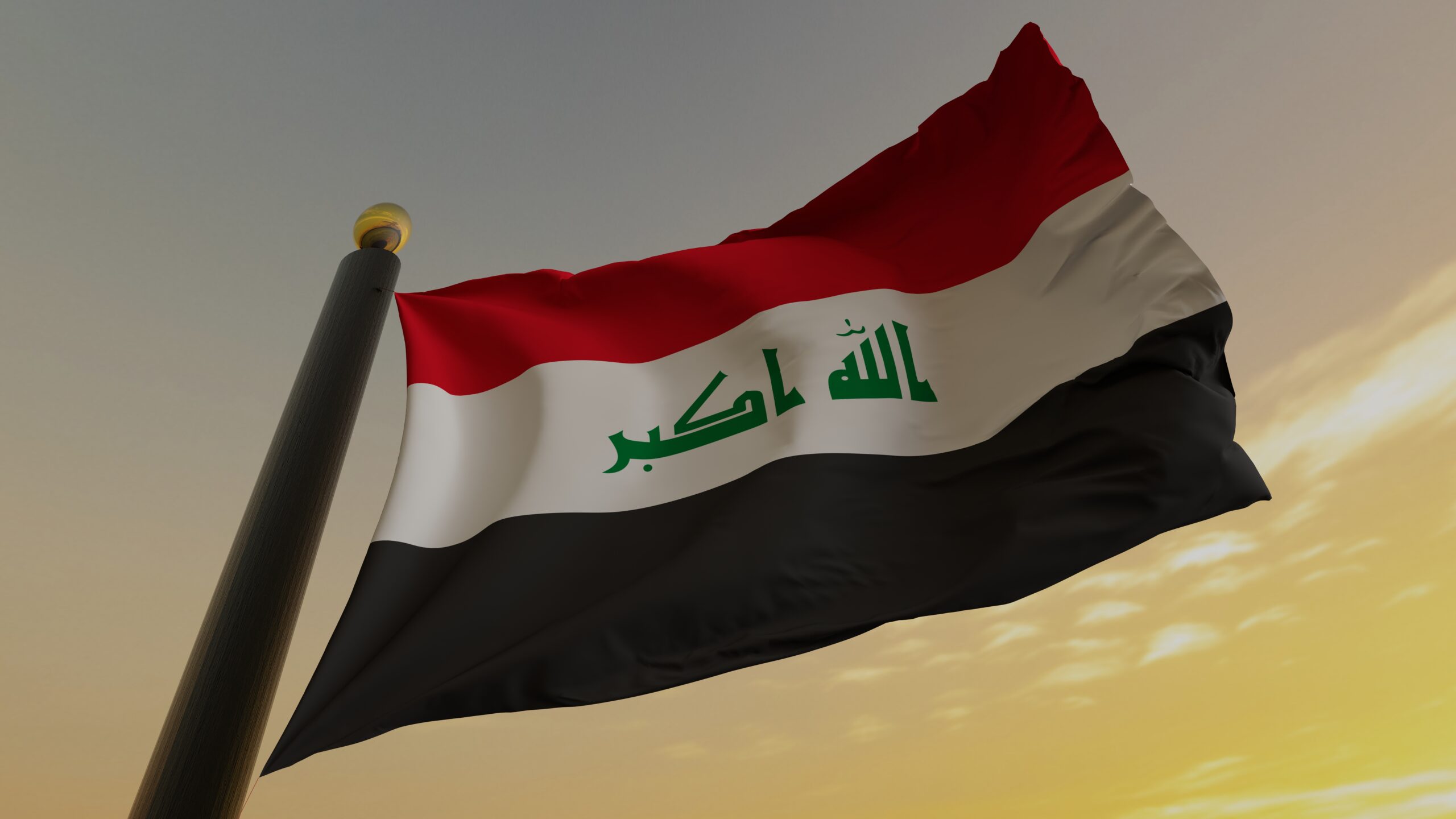
The Islamic Revolutionary Guard Corps (IRGC) had pushed the button.
This wasn't a skirmish in a faraway valley. This was a simultaneous reach across the map, a coordinated strike claiming targets across Israel, Kuwait, and Saudi Arabia. For the person standing on a balcony in Riyadh or a sidewalk in Haifa, the geopolitics mattered less than the streak of orange light tearing through the clouds.
The Calculus of Chaos
War is often discussed in the abstract. Analysts sit in climate-controlled rooms in D.C. or London and talk about "strategic depth," "asymmetric capabilities," and "deterrence signaling." They treat the Middle East like a chessboard where the pieces are made of wood.
They are wrong. The pieces are made of flesh.
When the IRGC announced these strikes, they weren't just launching metal tubes filled with explosives. They were launching a message written in fire. By hitting three distinct nations simultaneously, the Iranian leadership sought to prove that no border is thick enough to provide absolute safety.
Consider the logistical nightmare of a multi-front strike. To coordinate launch windows across hundreds of miles, ensuring that drones and missiles arrive with enough density to overwhelm sophisticated defense systems like the Iron Dome or the Patriot batteries, requires a terrifying level of precision. It is the military equivalent of a conductor leading an orchestra where every instrument is a weapon of mass destruction.
A Tale of Three Cities
To understand the weight of this night, you have to look past the press releases.
In Kuwait, a logistics hub and a quiet corner of the Gulf, the shock was visceral. For decades, Kuwait has positioned itself as the mediator, the neutral ground, the Switzerland of the sands. The strikes there represent a tearing of that diplomatic veil. Imagine a father in Jahra, waking his children not for school, but to move them to the interior hallway of their home. He isn't thinking about the Strait of Hormuz. He is thinking about the structural integrity of his ceiling.
In Saudi Arabia, the targets often center on the heartbeat of the global economy: oil. When an IRGC missile or a suicide drone aims for a processing plant, it isn't just attacking a kingdom; it is attacking the fuel gauge of the world. Every flickering light in a London flat or a Tokyo hospital is tethered to the stability of these desert facilities. The "invisible stakes" here are the literal gears of modern civilization.
In Israel, the experience is different but equally harrowing. There, the sky is a battlefield of physics. You see the interception—the $E = mc^2$ of it all—as a Tamir interceptor meets a ballistic threat in a shower of white sparks. It looks like fireworks. It feels like the end of the world.
The Myth of the Precision Strike
We are told that modern warfare is surgical. We are led to believe that "smart" weapons have the moral clarity to distinguish between a command center and a kitchen.
That is a lie.
Even when a missile hits its intended target, the shockwave doesn't stop at the perimeter fence. It travels through the ground, rattling the teeth of neighbors. It travels through the air, shattering windows and eardrums. Most importantly, it travels through the psyche.
The IRGC’s claim of "successful hits" is a term of art. In reality, success in this context means the successful implantation of fear. If you can make a mother in Kuwait City afraid to turn on the lights, you have won a battle without ever occupying a single inch of her territory.
The technical reality of these strikes involves a complex dance of trajectories. A ballistic missile, like the Fattah or the Kheibar Shekan, exits the atmosphere before screaming back down at several times the speed of sound. At those velocities, the air around the missile turns to plasma. It is a man-made meteor.
Against this, the defense must be perfect. The attacker only has to be lucky once; the defender has to be lucky every single time.
The Shadow of the Long Game
Why now? Why these specific targets?
The IRGC doesn't act in a vacuum. Every launch is a response to a perceived slight, a move in a decades-long shadow war that has finally stepped into the light. For years, this conflict was fought with computer viruses, assassinations in the streets of Tehran, and "unattributed" explosions at sea.
The transition from shadow to sunlight is the most dangerous phase of any conflict.
When a state actor like Iran openly claims responsibility for strikes across three sovereign nations, the "deniability" phase of the war is over. We have entered the era of the direct confrontation. This isn't a proxy fight in Yemen or a skirmish in Lebanon. This is a regional power center flexing its muscles to see who flinches first.
The problem with flexing is that it often leads to a snap.
The Human Cost of High Stakes
Suppose there is a woman named Leila. She lives in a modest apartment on the outskirts of Kuwait City. She isn't a politician. She doesn't follow the IRGC on Telegram. She is a teacher who worries about her students' grades and the rising cost of groceries.
When the strikes hit, Leila doesn't see a "geopolitical shift." She sees the sky turn an unnatural shade of copper. She hears a sound that is too deep for a car crash and too sustained for thunder. She realizes, in a cold flash of clarity, that her life is being used as a footnote in someone else's grand narrative.
This is the reality for millions of people across the Middle East. They are the "collateral" in a game of regional dominance. Their nights are no longer theirs. Their peace is a borrowed commodity, subject to recall at any moment by a commander in a bunker hundreds of miles away.
The strikes aren't just about the rubble they create. They are about the things they destroy that cannot be rebuilt with concrete and rebar. They destroy the assumption of tomorrow. They burn the bridge between "us" and "them" until only the fire remains.
The Invisible Architecture of Defense
To counter these strikes, the targeted nations rely on a web of sensors and satellites that most people never think about. It is an invisible architecture of radar beams and infrared eyes.
When a missile lifts off from an IRGC base, a satellite hanging 22,000 miles above the Earth detects the heat bloom of the engine within seconds. That data is beamed to a processing center, then to a command post, and finally to a battery of interceptors.
This happens in the span of a few heartbeats.
But technology is a brittle shield. It relies on the hope that the math is right and the sensors are clean. It assumes the enemy will play by the rules of physics. As the IRGC integrates artificial intelligence and swarming drone technology into their salvos, that invisible architecture is being pushed to its breaking point.
We are watching a high-speed evolution of violence. The spear gets sharper, so the shield gets thicker, which only prompts the making of a heavier spear.
Beyond the Headlines
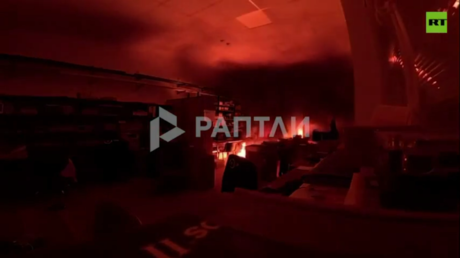
The headlines will tell you the number of missiles fired. They will tell you the official statements from the various ministries of defense. They will show you grainy footage of smoke rising over the desert.
But the real story is written in the silence that follows the sirens.
It is the silence of a region holding its breath, waiting for the other shoe to drop. It is the silence of a world that realizes the old rules no longer apply. The IRGC has signaled that it is willing to strike multiple targets across vast distances simultaneously, effectively turning the entire region into a single, interconnected theater of war.
There is no "over there" anymore.
If a missile can travel from Iran to Kuwait, or Saudi Arabia, or Israel with the push of a single button, then the geography of safety has collapsed. We are all living in the same small room, and someone just started throwing matches.
The fire doesn't care about the name of the country it burns. It only cares about the fuel. And in the Middle East, the fuel is the lives and hopes of people who just wanted to sleep through the night.
As the sun rises over the Gulf, the smoke will eventually clear. The craters will be filled. The "official" damage reports will be filed in folders and forgotten by everyone except the people who have to live near them. But the sky has changed. It carries the memory of that orange streak, a permanent scar on the atmosphere of a region that has already seen too much fire.
The next time the sirens wail, no one will need to check the news to know what is happening. They will simply look at each other and know that the world they used to live in is gone.