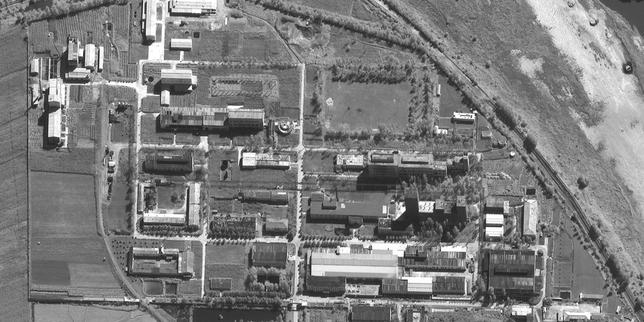
The International Atomic Energy Agency (IAEA) is no longer just watching a rogue state; it is witnessing the industrialization of a nuclear arsenal. While diplomatic circles often treat North Korean provocations as repetitive cries for attention, the latest data from the Yongbyon Nuclear Scientific Research Center suggests a far more permanent and dangerous shift. Pyongyang is no longer just testing bombs. It is building a high-volume assembly line for tactical and strategic warheads, moving from a "demonstration" capability to a "deployment" reality that makes denuclearization look less like a goal and more like a fantasy.
The sheer scale of recent activity marks a departure from the slow-burn escalation of the last decade. Satellite imagery and thermal signatures indicate that the 5-megawatt reactor at Yongbyon is running at full tilt, churning out spent fuel rods for plutonium extraction. Simultaneously, the centrifuge enrichment facility has expanded, likely doubling its capacity to produce highly enriched uranium. This dual-track approach ensures that even if one supply chain is disrupted, the other continues to feed the regime’s hunger for fissile material.
The Industrialization of the Hermit Kingdom
Western intelligence often underestimates the North Korean ability to innovate under extreme pressure. We have spent years focusing on the theater of missile launches while the real story was happening in the plumbing of the nuclear facilities. The recent IAEA reports confirm an "unprecedented" level of activity, but they don't fully capture the grim engineering reality. Pyongyang has moved beyond the crude designs of the early 2000s. They are now refining the chemistry of their fuel cycle to maximize yield and minimize the size of the warheads.
Size matters. For years, the bottleneck was "miniaturization"—the technical hurdle of making a nuclear device small enough to fit on a missile. That hurdle is in the rearview mirror. By shifting focus to tactical nuclear weapons, the Kim Jong-un regime has signaled a change in military doctrine. These are not just deterrents meant to sit in a silo to prevent an invasion; these are battlefield tools designed for actual use in a regional conflict.
The increase in production capacity allows for a diversified inventory. They are building a "triad" of sorts: short-range missiles for the South, medium-range threats for Japan and Guam, and intercontinental ballistic missiles (ICBMs) capable of reaching the American mainland. When a factory can produce dozens of warheads a year instead of two or three, the calculus of global security changes fundamentally.
The Fatal Flaw in Global Monitoring
The IAEA finds itself in an impossible position. They are expected to sound the alarm, yet they have had no inspectors on the ground since 2009. They are essentially trying to solve a jigsaw puzzle by looking through a telescope from miles away. This lack of direct access creates a dangerous information gap that the North Korean regime exploits with precision.
Without boots on the ground, the international community relies on "remote sensing." We look at steam coming from pipes. We measure the shadows of new buildings. We track the movement of specialized trucks. But what we cannot see are the underground facilities. Defector testimony and historical construction patterns suggest that the known sites at Yongbyon represent only the tip of the iceberg. There are hidden enrichment plants buried deep in the mountains, shielded from the heat-sensitive cameras of orbiting satellites.
This hidden infrastructure means that the "worrying increase" cited by the IAEA is almost certainly a conservative estimate. If the visible sites are this busy, the invisible ones are likely working at a similar or greater pace. The global monitoring system is built for a cooperative world, not one where a state is committed to total opacity.
The Plutonium Versus Uranium Math
To understand the threat, one must understand the recipe. Plutonium-239 is the gold standard for compact, powerful warheads. It is produced in a nuclear reactor and requires a complex reprocessing plant to extract. It is messy, hot, and relatively easy to spot from space. Uranium enrichment, however, is a different beast. It uses cascades of centrifuges to spin gas into fuel. These facilities have a small physical footprint, consume less power, and emit very little heat.
$$^{235}U + n \rightarrow \text{Fission Products} + 2.4n + 180 \text{ MeV}$$
The energy released in the fission of Uranium-235 is the foundation of the threat, but the logistics of producing it are what haunt intelligence agencies. North Korea sits on massive natural deposits of uranium ore. They don't need to import the raw materials; they just need the electricity and the specialized alloys to keep the centrifuges spinning. By expanding their enrichment halls, they have created a surplus of "pit" material that can be stored indefinitely, ready to be slotted into a missile at a moment’s notice.
The Myth of the Negotiated Freeze
For three decades, the diplomatic strategy has been to offer sanctions relief in exchange for a "freeze" of these facilities. This approach is dead. The regime has seen what happens to leaders who give up their nuclear programs—look at Libya’s Muammar Gaddafi or the collapse of the Iran Deal. Kim Jong-un views his nuclear arsenal not as a bargaining chip, but as the only thing keeping him alive and his family in power.
The recent activity at the Punggye-ri nuclear test site, where tunnels have been refurbished and expanded, suggests that a seventh nuclear test is a matter of "when," not "if." But even without a test, the daily operations at the production plants are doing the work. Every day that the centrifuges spin is a day that the North Korean position strengthens. They are no longer a "problem to be solved" through dialogue; they are a nuclear power that must be managed.
Geopolitical Shielding and the New Cold War
Pyongyang is not operating in a vacuum. The breakdown of relations between the United States, Russia, and China has provided a massive strategic umbrella for North Korean expansion. In the past, China and Russia would at least nominally support UN sanctions to curb nuclear proliferation. Those days are gone.
Moscow now sees Pyongyang as a vital supplier of conventional munitions for the war in Ukraine. In exchange for artillery shells and rockets, Russia is almost certainly providing the technical expertise that North Korea lacks—specifically in missile reentry technology and perhaps even satellite launch capabilities. This quid pro quo makes UN Security Council action impossible. China, meanwhile, views a nuclear-armed North Korea as a useful, if volatile, buffer against American influence in the Pacific.
This geopolitical alignment means the regime faces zero consequences for its "worrying" behavior. The sanctions have reached a point of diminishing returns. The North Korean economy has adapted to permanent isolation, fueled by state-sponsored cybercrime and illicit ship-to-ship transfers of oil and coal. When the world is divided, the rogue state thrives in the cracks.
The Tactical Shift and Regional Panic
The most overlooked aspect of the recent buildup is the shift toward "preemptive" nuclear doctrine. North Korea recently updated its laws to allow for the automatic launch of nuclear weapons if the leadership is threatened. This is a "dead man's switch" designed to deter any attempt at a decapitation strike.
But the real fear in Seoul and Tokyo isn't just a big bomb; it's the sheer number of small ones. If North Korea possesses 60 to 100 warheads, they can afford to use ten of them in a tactical strike and still have enough of a "strategic reserve" to threaten the US mainland. This creates a terrifying scenario for South Korea. Would Washington risk Los Angeles to save Seoul?
The doubt sowed by this question is exactly what Pyongyang wants. They are using their nuclear production line to drive a wedge into the heart of the ROK-US alliance. As the IAEA warns of increased capacity, the underlying message is that the window for a conventional defense is closing. The proliferation is outpacing the diplomacy, and the technology is outpacing the defense systems designed to stop it.
The Reality of Permanent Proliferation
We have to stop talking about "preventing" a nuclear North Korea. That ship has sailed, hit the horizon, and disappeared. The focus must shift to containment and the brutal reality of living with a nuclear-armed neighbor that has no interest in the rules of the 20th century.
The facilities at Yongbyon are not just buildings; they are the physical manifestation of a state that has chosen a path of total militarization. The IAEA can issue all the warnings it wants, but without a fundamental shift in the global power structure, those warnings are just footnotes in the history of a growing nuclear power. The machines are running. The fuel is cooling. The missiles are being fitted.
The threat is no longer a future possibility; it is a current inventory. Every morning the sun rises over Yongbyon, another few grams of fissile material move closer to a warhead. The world's inability to stop this process isn't a failure of intelligence, but a failure of will. We are watching a slow-motion explosion, and we have run out of ways to extinguish the fuse.